コンテンツ
要点
コンセンサスとテクノロジー
戦略的支援と提携
エコシステムと開発者活動
競争環境
採用とオンチェーン指標
供給とアンロックスケジュール
成長ドライバーとリスク
成長ドライバー
リスク
評価とシナリオ
投資論文と主要な兆候
投資論文の概要
監視すべき主要な兆候

市場が複雑すぎますか?Edgen Searchに聞いてみてください。

答えはすぐに表示され、情報は正確で、あなたが未来を決めるトレーディング判断を下せるようにします。

今すぐ Search を体験

XRP 2025年第2四半期レビュー:グローバル金融の架け橋

· Mar 31 2026
XRP 2025年第2四半期レビュー:グローバル金融の架け橋

Ripple($XRP) は、高速で低コストなグローバル決済のために設計されたデジタル資産であり、分散型XRP Ledger上で動作し、フィンテック企業Rippleによって推進されています。

要点

  • 中核的使命XRPは、SWIFTのような従来のシステムに代わる、より速く、より安価で、よりスケーラブルなソリューションを銀行や金融機関に提供することで、クロスボーダー決済に革命を起こすことを目指しています。
  • 主要な成長ドライバー:Rippleのオンデマンド流動性(ODL)サービスの採用、規制の明確化の進展、現物XRP ETFの承認の可能性、スマートコントラクトやネイティブステーブルコイン(RLUSD)などの新機能によるエコシステムの拡大。
  • 主なリスク:Rippleの多大なトークン保有量、所有権の集中度、および継続的な世界的な規制の不確実性による中央集権化への懸念。
  • トークノミクス:固定されたプレマインされた1,000億トークンの供給量で、その大部分はRippleによってエスクローに保持され、毎月リリースされます。少額の取引手数料はバーンされ、デフレ圧力を生み出します。

コンセンサスとテクノロジー

XRP Ledger(XRPL)は、Ripple Protocol Consensus Algorithm(RPCA)と呼ばれる独自のコンセンサス機構を使用する分散型ブロックチェーンです。プルーフ・オブ・ワーク(Proof-of-Work)やプルーフ・オブ・ステーク(Proof-of-Stake)とは異なり、マイニングは伴いません。代わりに、独立したバリデーターノードのネットワークが3~5秒ごとにトランザクションの有効性について合意します。

この設計は、XRPLに重要な技術的利点をもたらします。

  • 速度:トランザクションは3~5秒で決済されます。
  • スループット:ネットワークは1秒あたり1,500トランザクション(TPS)以上を処理できます。
  • 低コスト:取引手数料はごくわずかで、通常は約0.0002ドルです。
  • エネルギー効率:PoWブロックチェーンよりも大幅にエネルギー効率が高いです。

戦略的支援と提携

Rippleは、強力な戦略的投資家、ベンチャーキャピタル企業、金融機関の確かなリストに支えられた非公開企業であり、強い機関投資家からの信頼を示しています。

投資家タイプ

著名な支援者

ベンチャーキャピタル

Andreessen Horowitz (a16z), Google Ventures, Pantera Capital, Lightspeed Venture Partners, IDG Capital Partners

金融機関

Standard Chartered, Santander InnoVentures, SBI Holdings

企業

Seagate Technology, CME Ventures, Accenture

これらの提携は、Rippleに資本、戦略的ガイダンス、および伝統的な金融セクターへの重要な足がかりを提供します。

エコシステムと開発者活動

XRP Ledgerのエコシステムは、決済を超えて拡大しています。開発者活動は、ネットワークの機能を強化するための新しい機能導入に焦点を当てています。

  • Hooks:レジャー上で小さく効率的なコードを実行できるようにするスマートコントラクトの修正で、新しいDeFiのユースケースを可能にします。
  • 自動マーケットメーカー(AMM):ネイティブAMMがXRPLに統合され、ユーザーは流動性を提供し、イールドを得ることができます。
  • ステーブルコイン(RLUSD):Rippleは、XRPLとEthereumの両方で1:1のUSD裏付けステーブルコインであるRLUSDをローンチし、エコシステムにより多くの流動性と安定性をもたらします。

競争環境

XRPの主な競合は、クロスボーダー決済に焦点を当てた他のプロジェクト、特にStellar(XLM)、および既存の伝統的なシステムであるSWIFTです。

機能

Ripple (XRP)

Stellar (XLM)

SWIFT

ターゲット市場

銀行および金融機関

個人および銀行口座を持たない人々

世界の金融機関

テクノロジー

ブロックチェーン (RPCAコンセンサス)

ブロックチェーン (Stellarコンセンサスプロトコル)

安全なメッセージングネットワーク

速度

3-5秒

3-5秒

1-5日

コスト

~$0.0002

数セント未満

1取引あたり$26~$50

構造

営利企業

非営利財団

会員制協同組合

採用とオンチェーン指標

XRP Ledgerは、設立以来40億件以上のトランザクションを処理し、ユーザー採用とネットワーク活動で着実な成長を示しています。

チャート:XRP Ledgerにおける日次トランザクションの増加

ここでは、2013年のわずか50,000件から2025年には220万件以上に劇的に増加した日次トランザクションを視覚的に表現するために折れ線グラフが使用され、ネットワークの採用拡大が強調されるでしょう。

  • 総アカウント数:レジャー上には560万以上のアカウントが存在します。
  • アクティブユーザー:ネットワークは毎日30,000以上のアクティブユーザーをサポートしています。
  • バーンされた取引手数料:取引手数料を通じて1,400万XRP以上がバーンされました。

供給とアンロックスケジュール

XRPのトークノミクスは、固定されたプレマインされた供給量と管理されたリリーススケジュールによって定義されます。

  • 最大供給量:最大供給量は1,000億XRPに固定されています。
  • 流通供給量:約597億XRPが流通しています。
  • エスクローメカニズム:Rippleは、予測可能な供給を確保するために、その保有量の大部分をエスクローに預け、毎月1日に最大10億XRPをリリースしています。
  • 再エスクロー:歴史的に、Rippleは月間アンロックされた量の大部分(しばしば70-80%)を新しいエスクローに戻してきました。2025年8月現在、約356億XRPがエスクローに残っていました。

成長ドライバーとリスク

成長ドライバー

  • 規制の明確化:米国でのSECに対する部分的な法廷勝利により、資産に対する大きな懸念が軽減されました。
  • 現物ETFの可能性:複数の資産運用会社が現物XRP ETFを申請しています。承認されれば、アクセシビリティと流動性が劇的に向上するでしょう。
  • エコシステムの拡大:ネイティブスマートコントラクト(Hooks)、AMM、およびステーブルコイン(RLUSD)の開発は、XRPLのユーティリティを拡大するでしょう。
  • ODLの採用:Rippleのオンデマンド流動性サービスの新しい送金回廊への継続的な拡大は、XRPのユーティリティ需要を直接促進します。

リスク

  • 中央集権化と供給管理:Ripple LabsはXRP総供給量のかなりの部分を保有しており、これは投資家にとって継続的な懸念事項です。
  • 所有権の集中:少数のウォレットが流通供給量の非常に大きな割合を支配しており、市場操作のリスクをもたらします。
  • CBDCからの競争:中央銀行が独自のデジタル通貨を開発するにつれて、直接的な競合相手として浮上する可能性があります。
  • グローバルな規制監視:デジタル資産に対する規制環境は、世界的に断片的で不確実なままです。

評価とシナリオ

2025年9月17日現在、XRPの時価総額は約1811億ドル、完全希薄化評価額(FDV)は3032億ドルです。

シナリオ

条件

2025-2030年価格予測

示唆されるFDV

強気シナリオ

ETF承認とODL拡大

$4.67 ~ $26.97

$4670億 - $2.7兆

基本シナリオ

着実な成長、ETFなし

$2.05 ~ $5.81

$2050億 - $5810億

弱気シナリオ

規制上の課題と停滞

停滞または下落

現在のレベルを下回る

投資論文と主要な兆候

投資論文の概要

XRPへの投資は、XRPがクロスボーダー決済のための中立的なブリッジ資産として機能する、伝統的な金融のデジタル化に関する論文です。その潜在力は、Rippleが機関投資家とのパートナーシップを確保し、グローバル規制に対応する成功に結びついており、潜在的なETF承認による大きな上昇余地があります。主なリスクは、その中央集権的な供給構造とCBDCからの競争に起因します。

監視すべき主要な兆候

  • 現物XRP ETFに関するSECの決定:現物XRP ETFの承認または却下は、短期的に最も重要な触媒です。
  • オンデマンド流動性(ODL)量の増加:ユーティリティの直接的な証拠として、ODL取引量に関するRippleの四半期報告書を監視します。
  • Rippleの月次エスクロー販売:市場圧力と供給規律を測るために、月次エスクロー解除から販売されたXRPの量を追跡します。
  • RLUSDとHooksの採用:Rippleのステーブルコインとスマートコントラクト機能の採用は、決済を超えてエコシステムが拡大する能力を示すでしょう。

紹介
Redeem miles for gift cards and each is worth ~1 cent; redeem for long-haul business and they're worth 2.5-4+. With programs now dynamically priced, the one check that decides every redemption.

How to redeem airline miles without wasting them

The single biggest mistake with miles is redeeming them for the easy stuff: gift cards, merchandise, seat upgrades at the gate. Do that and each mile is worth about one cent. Redeem the *same* miles for flights, especially long-haul or premium-cabin flights, and they're often worth two to five cents each, sometimes more. So the real skill isn't earning miles; it's not throwing away their value at the finish line. Here's how to actually use them. A mile has no fixed price; its value depends entirely on what you redeem it for. The way to judge any redemption is simple math: (cash price of the flight) ÷ (miles it costs) = cents per mile. If a flight costs $400 or 20,000 miles, that's 2 cents a mile, a solid deal. If a $90 flight costs 18,000 miles, that's half a cent, which is terrible; pay cash and keep the miles. Run this check before every redemption. It instantly separates a great use from a waste, and it's the one habit that makes miles worth having. As a rule of thumb, most major ai
Edgen
·
Jun 30 2026
Short-term goals (under ~3 years) belong in safe cash; long-term goals (5+ years) can take market risk. The best HYSAs now pay ~4-5% APY. How to sort yours and run both.

Long-term vs short-term financial goals (and how to plan both)

The difference comes down to one thing: time. A short-term goal is money you'll need within roughly three years (an emergency fund, a trip, a wedding, next year's tax bill), so it has to be *safe and reachable*. A long-term goal is five-plus years out (retirement, a house down the road, a kid's education), so it can take market risk, because time smooths the bumps out. Get that match right and you've done most of the work. It's not the size, it's the deadline. A $2,000 goal you need in six months is short-term; a $2,000 goal you won't touch for fifteen years is long-term, and they belong in completely different places. This is the part that actually matters, and where people lose money without realizing it. Short-term money should not be in the stock market. If your emergency fund is in stocks and the market drops 20% the same month your car dies, you're selling at the worst possible time. Short-term goals go somewhere stable and accessible, and a high-yield savings account is the clas
Edgen
·
Jun 30 2026
Mortgages near 6.5%, home prices flat, and the Fed split on rate cuts vs hikes. With timing a coin flip, the 3 questions that actually decide whether to buy now or wait.

Should you buy a house now or wait? How to actually decide

The honest answer: buy when you'll stay put for at least five years and you'll still have an emergency fund left after the down payment. Otherwise, waiting (and renting) is often the smarter money move, not the weaker one. "Rent vs buy" isn't a math problem with one right answer, and it's almost never really about timing the market. It's about your *life*, in three questions. Before the three questions, here's the mid-2026 backdrop — because "now or wait" usually hides a bet on rates and prices, and the data says that bet is a coin flip. The picture: mortgages are still pricey, prices have gone flat (more than half of the 20 big metros saw year-over-year declines in March), and the cheap-money era hasn't returned. So "buy before it runs away" and "wait for the crash" are *both* weak arguments right now. The whole "wait for rates to drop" plan rests on the Fed, and the Fed is split down the middle. In its June 2026 projections, policymakers were divided: 8 expected no change this year,
Edgen
·
Jun 30 2026
Most financial goals fail because they're wishes, not systems. Here's the 3-part anatomy of a goal that sticks (a number, a date, one automatic move), plus why 37% of adults can't cover a $400 surprise.

How to set financial goals you'll actually hit

A financial goal you'll actually hit has three things a vague wish doesn't: a number, a date, and one automatic move that happens whether or not you remember it. "Save more" is a wish. "$6,000 in a separate account by next December, $500 auto-transferred on payday" is a goal. The gap between those two sentences is the reason most goals quietly die, and it has almost nothing to do with willpower. Key Takeaways A real financial goal answers three questions: how much, by when, and what for. Drop any one and it stops working. "Pay off debt" has no number and no date, so there's nothing to aim at or measure, while "$8,000 of card debt cleared in 18 months" tells you exactly whether you're on track and the day you're done. The "what for" matters more than people expect. A goal tied to something real (a buffer so a bad month isn't a crisis, a deposit on a first place) survives the months when motivation dips. In our experience reading how people actually use a money tool, the goals that get
Edgen
·
Jun 30 2026
A big RSU grant just vested — now what? Here's what a modern money tool actually surfaces first, using Ed as a worked example: a reality check, the 22% tax gap most high earners miss, and the concentration risk nobody flags.

Your RSUs Just Vested. Here's What a Money Tool Surfaces First.

You just had a big RSU grant vest. Congratulations — and now the awkward part: a six-figure pile of your own company's stock, a vague sense you should "do something," and no one actually telling you what. An advisor, a spreadsheet, and a piece of software each handle this moment differently. Here's what a modern money tool surfaces in a moment like this — using Ed as a worked example — so you can decide what kind of help actually fits. Key takeaways You connect your brokerage and bank through read-only aggregation, so the tool can read balances but can't move a dollar. Ed's framing is simple: precise about your money, blind to your identity. Instead of sorting your lattes into categories, Ed opens on a single Financial Reality Check — a read on whether your money could survive a bad month. For a lot of high earners, that one number lands harder than any budget, because it answers a question the other apps never ask. (If the Reality Check is the numbers side, your money type is the beha
Edgen
·
Jun 26 2026
A money personality test is more than a quiz if it measures behavior, not just vibes. Here's the science behind money types, how Ed's test works, and how to use your result.

What Is a Money Personality Test? The Science Behind Your Money Type

The short version: a good money personality test should feel like a roast and work like a mirror — fun on the surface, behavioral underneath. The useful ones don't tell you what you know; they show you how you act with money, and the one blind spot worth watching. Key takeaways Here's the uncomfortable backdrop. U.S. financial literacy has been stuck for a decade — adults answer only about 49% of the standard knowledge questions correctly, essentially flat since 2017 (TIAA Institute–GFLEC, 2025) — even as free financial information became infinite. If facts fixed money, they'd have fixed it by now. They don't, because the thing that actually drives your outcomes lives one level below the facts: how you're wired to behave when money is on the line. That's the whole premise of financial fitness — and it's what a money personality test is built to surface. Not what you know. What you do. The idea has real research behind it — money behavior is patterned and measurable, and a few tradition
Edgen
·
Jun 23 2026
A financial reality check scores where you actually stand across safety, control, progress, upside, and Mental Load. Here's why a money score matters, how Ed's checkup works, and what to do with your weakest area.

What Is a Financial Reality Check? Why Your Credit Score Isn't Enough

The short version: your credit score measures how safe you are to lend to. Almost nobody has ever seen the number that measures whether you are actually secure. A financial reality check is that second number. Key takeaways Ask people for their credit score and many can recite it. Ask whether they could survive three months without income, or where their money quietly leaks each month, and you get a shrug. That's the gap. A credit score answers a lender's question — how risky is it to extend this person debt? It can be high while your life is fragile, or low while you're genuinely fine, because it was never built to measure you. A financial reality check answers the question the credit score ignores: are you safe, clear, progressing, building, and at ease? Here's the simple version, with the research behind each axis.
Edgen
·
Jun 23 2026
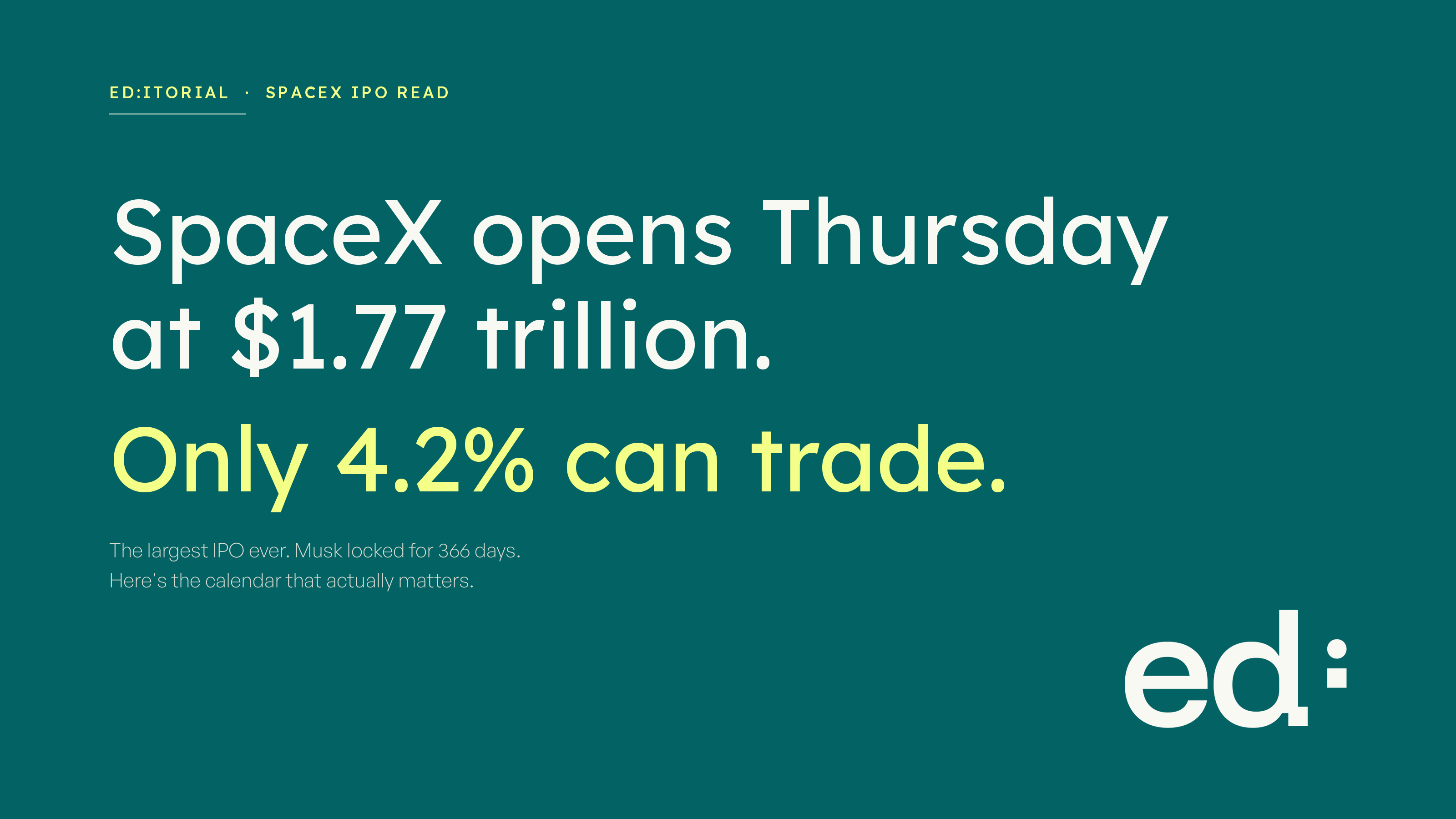
SpaceX opens Thursday at a $1.77 trillion valuation — the largest IPO ever. Only 4.2% of stock actually trades. Musk is locked up for 366 days. The next 366 days run on an unusually clean calendar of supply releases. Here are the 13 dates worth watching.

SpaceX goes public Thursday with a possible $5 trillion hit. Here's the calendar that actually matters.

SpaceX prices Wednesday night and opens Thursday on Nasdaq at $135 per share — a $1.77 trillion valuation, the largest IPO ever. Most coverage will frame what comes next as a sentiment trade, an Elon story, or a race to Goldman's $5 trillion bull case. The reality is more grounded and more useful: the next 366 days are governed by an unusually clean calendar of supply releases — when 95.8% of the company can or cannot trade, when index funds add weight, when the lock-up cliff arrives, when Musk himself becomes a potential seller for the first time. Read the calendar and you've already understood the structure most market commentary will spend the next quarter trying to explain. Here are the 13 dates worth watching. Two things keep showing up in headlines that don't survive a careful read. The first is the idea that index funds are about to be forced into a massive single-event SpaceX buy. They aren't. Nasdaq did create a fast-track inclusion rule that lets SpaceX join the Nasdaq 100 wi
Edgen
·
Jun 10 2026

投資、もうひとりじゃない

Ed を無料で試そう。クレカ不要、縛りなし