Senior White House advisers have privately told President Donald Trump the Iran war could run through the end of his term in January 2029, a timeline that removes the post-midterm de-escalation discount crude traders had been pricing and keeps a structural risk premium in oil.
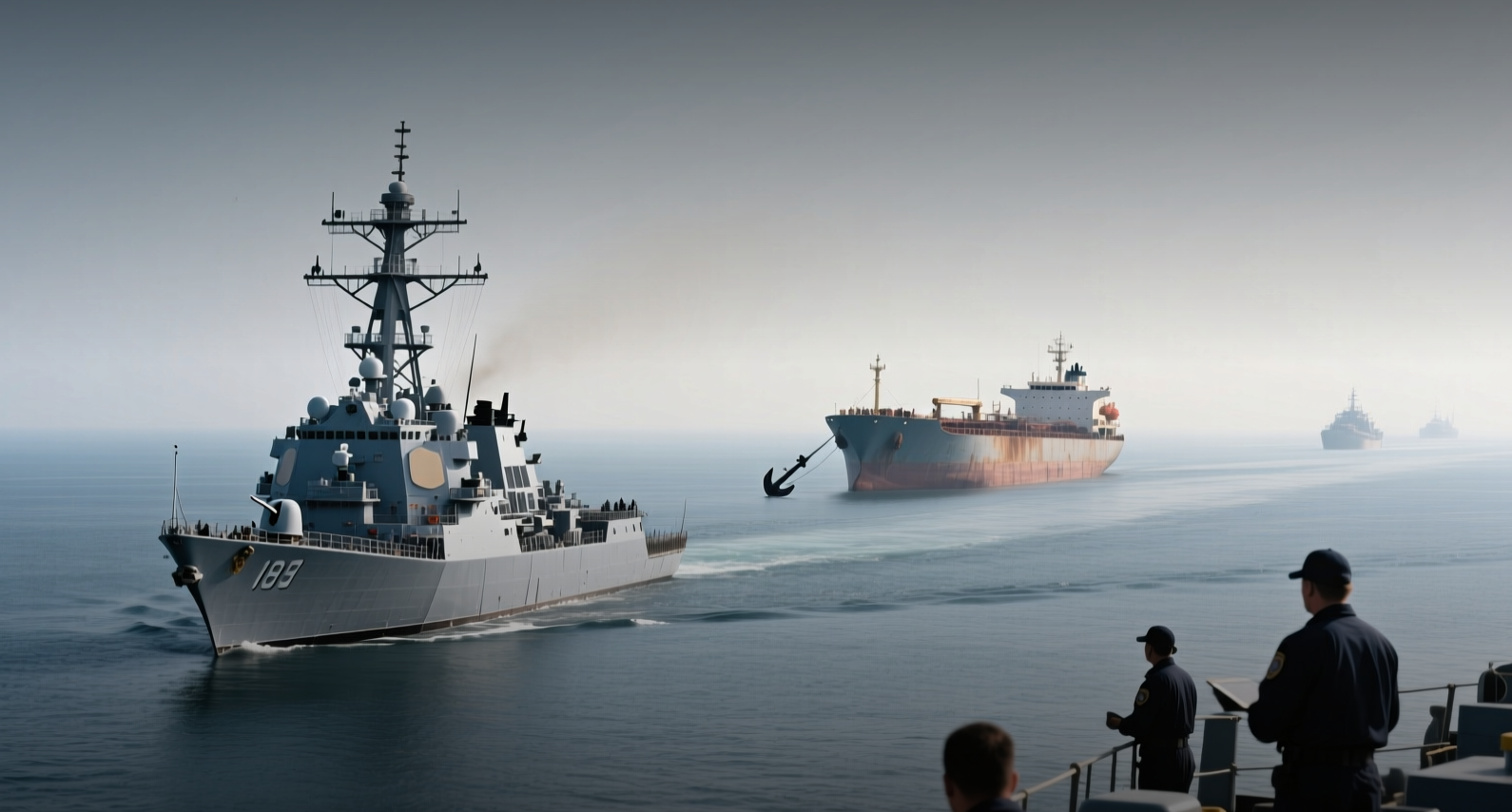
Vice President JD Vance, Secretary of State Marco Rubio and other senior officials raised the prospect in Oval Office and Situation Room meetings that Tehran could keep resisting the US naval blockade and military pressure well past Inauguration Day, the Wall Street Journal reported, citing US officials. The private assessment sits against Trump's public statement this week that the war would end "immediately" after the November midterm elections.
"President Trump has destroyed Iran's military capabilities and is crippling what's left of its abysmal economy with the most powerful naval blockade in world history and crushing sanctions," White House spokeswoman Olivia Wales said. "Only President Trump knows what he will do and when."
The gap between the two timelines is the trade. Brent has held above $100 a barrel, with the front-month contract last near $101 after pushing past $97 on the latest escalation, and US gasoline averaged $4.22 a gallon on Wednesday, up from $4.01 a month earlier and $3.19 a year ago, according to AAA. Defense Secretary Pete Hegseth has already extended some Middle East troop deployments into 2027, with air defence units, Marine expeditionary rotations and fighter squadrons continuing on an open-ended basis.
A blockade is not a deadline
The administration has leaned on a long-term pressure campaign rather than further combat operations. Treasury Secretary Scott Bessent has framed the strategy, which the administration calls "Operation Economic Outcast," as an alternative to major military escalation, and Iranian crude exports have already collapsed roughly 85% as the blockade bites. Rubio, speaking to reporters in Ecuador, said Iran keeps paying for attacks on US vessels: "They don't hit our ships, but they lose five tankers."
Vance has declined to call the confrontation a war and has refused to set an end date, saying it would be irresponsible to signal a timeline Iran could exploit. That refusal is itself the signal. A blockade is a slow instrument — it degrades an adversary's economy over quarters, not weeks — and analysts cited by the Journal warn it is unlikely to produce a quick or decisive outcome. The last time Washington sustained a comparable naval interdiction campaign, against Iraq through the 1990s, oil held a persistent risk premium for years while the standoff ground on without resolution.
The war is now in its seventh month and has killed 18 US servicemembers. Rising pump prices carry a domestic political cost ahead of the midterms, which is why the public messaging and the private planning have diverged. Traders weighing Trump's own comments against the internal reporting may increasingly discount the president as a market signal and treat the blockade and sanctions as the durable base case for supply disruption.
BofA already marked its book to a longer war
Bank of America raised its Brent crude and China coal price forecasts and turned bullish on two Hong Kong-listed energy names, PETROCHINA (00857.HK) and YANKUANG ENERGY (01171.HK), positioning for exactly the supply-constrained, higher-for-longer scenario the White House is now privately planning around. The calls put the bank's estimates closer to the blockade-as-base-case view than to the swift-resolution view Trump has repeated for more than half a year.
The transmission runs beyond crude. A persistent war-risk premium and elevated volatility lift safe-haven demand for gold and the US dollar, while transport, airlines and energy-intensive consumer sectors absorb margin pressure from fuel costs. Higher energy prices feed directly into headline CPI, which raises the odds that rate expectations stay higher for longer — a chain that pressures long-duration equities even as it supports energy producers, oilfield services and coal names.
The next checkpoint is the November midterm elections, after which Trump has said the war ends. If the conflict instead persists into 2027 and beyond, as his own advisers have warned, the de-escalation trade that has repeatedly faded on each escalation will stay off the table, and the risk premium embedded in Brent, coal and gold will look less like a spike and more like a floor.
This article is for informational purposes only and does not constitute investment advice.