

Quest Diagnostics is adding Roche's FDA-cleared pTau217 blood test to its AD-Detect portfolio while launching a multi-biomarker panel with a 10 percent indeterminate rate.
Quest Diagnostics is adding Roche's FDA-cleared pTau217 blood test to its AD-Detect portfolio while launching a multi-biomarker panel with a 10 percent indeterminate rate.
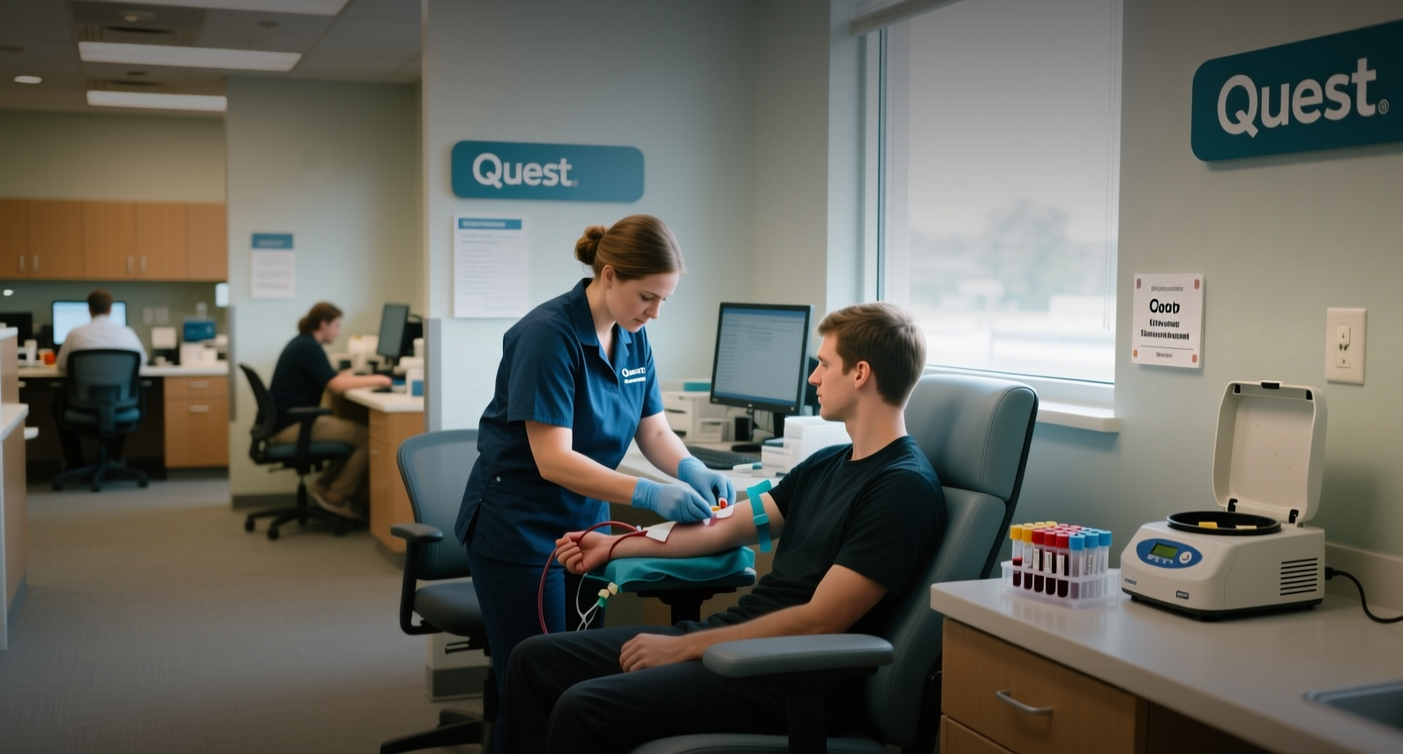
Quest Diagnostics will offer Roche's FDA-cleared Elecsys pTau217 blood test for Alzheimer's disease, adding the first single-assay test that both rules in and rules out amyloid pathology to its AD-Detect portfolio.
"Blood-based biomarker testing has rapidly set a new standard of care for guiding treatment and diagnosis decisions for Alzheimer's disease," Michael K. Racke, MD, senior medical director of neurology at Quest Diagnostics, said.
Quest plans to introduce an AD-Detect-branded laboratory test service based on the Elecsys pTau217 assay in the fourth quarter, and to fold the Roche test into future AD-Detect panels in 2027. Separately, the company is launching AD-Detect ABeta 42/40, p-tau217, and ApoE Evaluation, a lab-developed test that combines pTau217 with amyloid beta 42/40 ratios and APOE genetic risk markers, at the end of August. Research published in Neurology Clinical Practice found the multi-biomarker test achieved a 10 percent indeterminate rate, below the 15-20 percent threshold the Global CEO Initiative on Alzheimer's Disease recommends for a typical clinical population.
The expansion positions Quest in a blood-based Alzheimer's diagnostics market drawing drugmakers and diagnostic companies racing for earlier diagnosis. Quest shares, which opened at $244.34 on Aug. 24, trade above the $235.31 consensus target, after the company beat second-quarter earnings with EPS of $3.12 versus a $2.82 estimate.
The Elecsys pTau217 test measures phospho-tau 217, a protein fragment in blood that tracks with amyloid buildup in the brain, the hallmark of Alzheimer's pathology. Roche said the test can run on more than 4,500 of its laboratory analyzers already installed across the United States, which could broaden access beyond specialty centers. The FDA clearance follows European approval in May.
Quest's new multi-biomarker panel pairs the pTau217 result with amyloid beta 42/40 ratios and APOE isoform status, measured through Quest's mass spectrometry method, to produce a single score predicting the likelihood of Alzheimer's pathology. The test aligns with Alzheimer's Association guidelines, which say blood-based tests reaching roughly 90 percent sensitivity and specificity in specialist settings may confirm a diagnosis without additional testing.
"Quest's extensive research demonstrates that blood-based biomarker testing that includes multiple biomarkers may be more sensitive and specific for Alzheimer's pathology and produces a lower rate of indeterminates compared to the same tests performed individually," Amanda Backner, executive director and general manager of neurology at Quest Diagnostics, said.
The push comes as drugmakers and diagnostic companies race to develop simpler Alzheimer's tests. Fujirebio's Lumipulse became the first blood test cleared by the FDA to aid Alzheimer's assessment in 2025. Labcorp also said it plans to offer the Roche pTau217 test through its laboratory network, setting up a direct head-to-head with Quest in the emerging blood-based diagnostics market.
Current methods to detect amyloid rely on positron emission tomography scans or cerebrospinal fluid testing, which can be costly, invasive and hard to access outside specialty centers. Quest researchers, in a study published in the Journal of Prevention of Alzheimer's Disease, found blood-based biomarker testing was a more efficient and cost-effective way to assess Alzheimer's pathology in patients with cognitive decline than amyloid PET scans.
Quest, which serves half the physicians and hospitals in the United States, has set full-year 2026 earnings guidance of $11.05 to $11.25 per share, with consensus at $11.15. The Alzheimer's testing initiative adds a potential revenue stream in specialty diagnostics, where broad biomarker panels can drive provider adoption. The company's roughly 2,000 patient service centers give it a distribution advantage for the new tests, which patients can access with a physician's order through Quest phlebotomists in offices and mobile services.
This article is for informational purposes only and does not constitute investment advice.
