


Roche and Eli Lilly won FDA clearance for a blood test that flags Alzheimer's-linked brain changes from a single biomarker, widening access beyond costly PET scans and spinal taps.
Roche and Eli Lilly won FDA clearance for a blood test that flags Alzheimer's-linked brain changes from a single biomarker, widening access beyond costly PET scans and spinal taps.
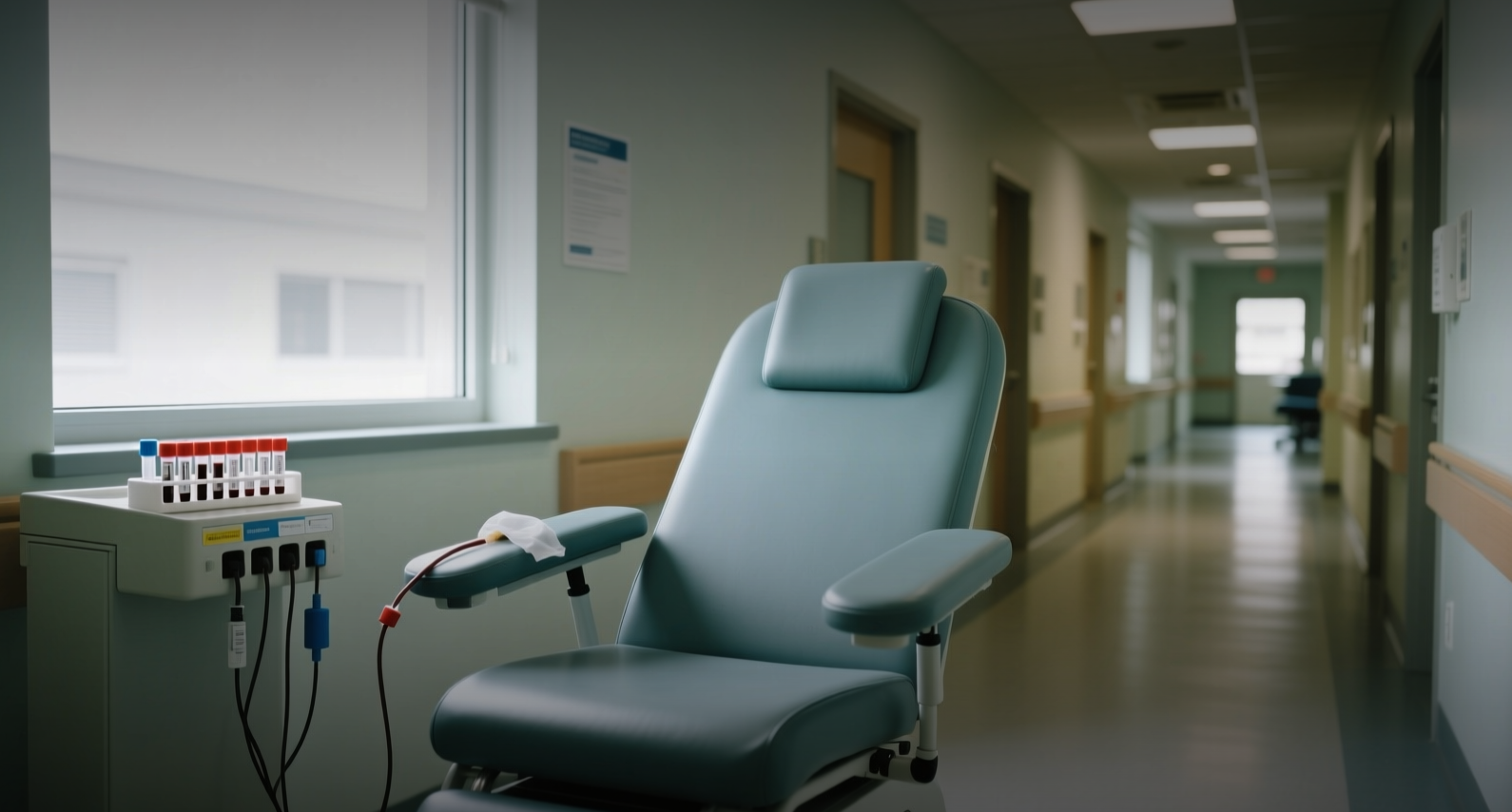
Roche and Eli Lilly won FDA clearance for a blood test that flags Alzheimer's-linked brain changes from a single biomarker, widening access beyond costly PET scans and spinal taps.
Roche and Eli Lilly won US clearance for a blood test that gauges Alzheimer's-linked amyloid pathology from a single biomarker, giving primary-care doctors a cheaper alternative to PET scans and spinal taps.
"While PET imaging and cerebrospinal fluid biomarkers can confirm amyloid pathology in patients with cognitive impairment, these approaches may be costly, invasive and not readily accessible for many patients," Jared R. Brosch, a neurologist at Indiana University Health, said.
The Elecsys pTau217 test, cleared for patients 55 and older with signs of cognitive decline, runs on more than 4,500 Roche analyzers already installed across the US, the company said. Labcorp and Quest Diagnostics both said they plan to offer the test, with Quest rolling it out under its AD-Detect brand in the fourth quarter. The test received Europe's CE mark in May.
The clearance follows the FDA's May 2025 approval of Fujirebio's Lumipulse, the first blood test for Alzheimer's, and last week's nod for C2N Diagnostics' PrecivityAD2. Leerink Partners analysts said the launches point to rising competition as assays push for broader adoption in a market where the CDC projects diagnosed cases will double to more than 13 million by 2060.
The test measures phosphorylated tau 217, a protein whose presence in blood tracks with amyloid plaque buildup in the brain, the hallmark of Alzheimer's. High levels point to a greater likelihood of the disease, while low levels help rule it out in patients experiencing cognitive impairment. Roche said the test uses the same validated clinical cutoffs across primary and specialty care, and that its performance is comparable to cerebrospinal fluid testing and PET imaging, according to Labcorp.
Traditional methods for confirming amyloid pathology — positron emission tomography and cerebrospinal fluid testing — are largely confined to specialty centers and can be invasive and expensive. Roche did not disclose the test's price. The company designed the assay for its Cobas lab instruments to support rapid implementation without requiring labs to buy additional equipment.
The approval deepens a fast-moving contest among diagnostic makers to capture a market that researchers say is heavily underdiagnosed. Alzheimer's Disease International found in 2021 that about 75 percent of the 55 million people worldwide living with dementia remain undiagnosed. In the US, the CDC counts 6.7 million older adults with diagnosed Alzheimer's, the most common form of dementia, and projects that figure will double by 2060.
Fujirebio's Lumipulse, cleared in May 2025, compares the ratio of pTau217 and beta-amyloid proteins. C2N Diagnostics' PrecivityAD2, cleared last week for patients 40 and older, uses mass spectrometry to measure ratios of amyloid and two forms of tau. Labcorp plans to make the Roche-Lilly test available nationwide in the coming months, while Quest said it will fold the assay into future AD-Detect panels in 2027.
For investors, the approvals expand the addressable market for Alzheimer's diagnostics as drugmakers race to pair early detection with new treatments. Roche and Eli Lilly, which developed the test together, stand to benefit from a test that runs on an installed base of thousands of analyzers, while Labcorp and Quest gain a cleared product to anchor their Alzheimer's testing menus. The open question is how quickly primary-care adoption follows — and whether the assay's single-biomarker design holds up against rivals offering multi-marker panels.
This article is for informational purposes only and does not constitute investment advice.
