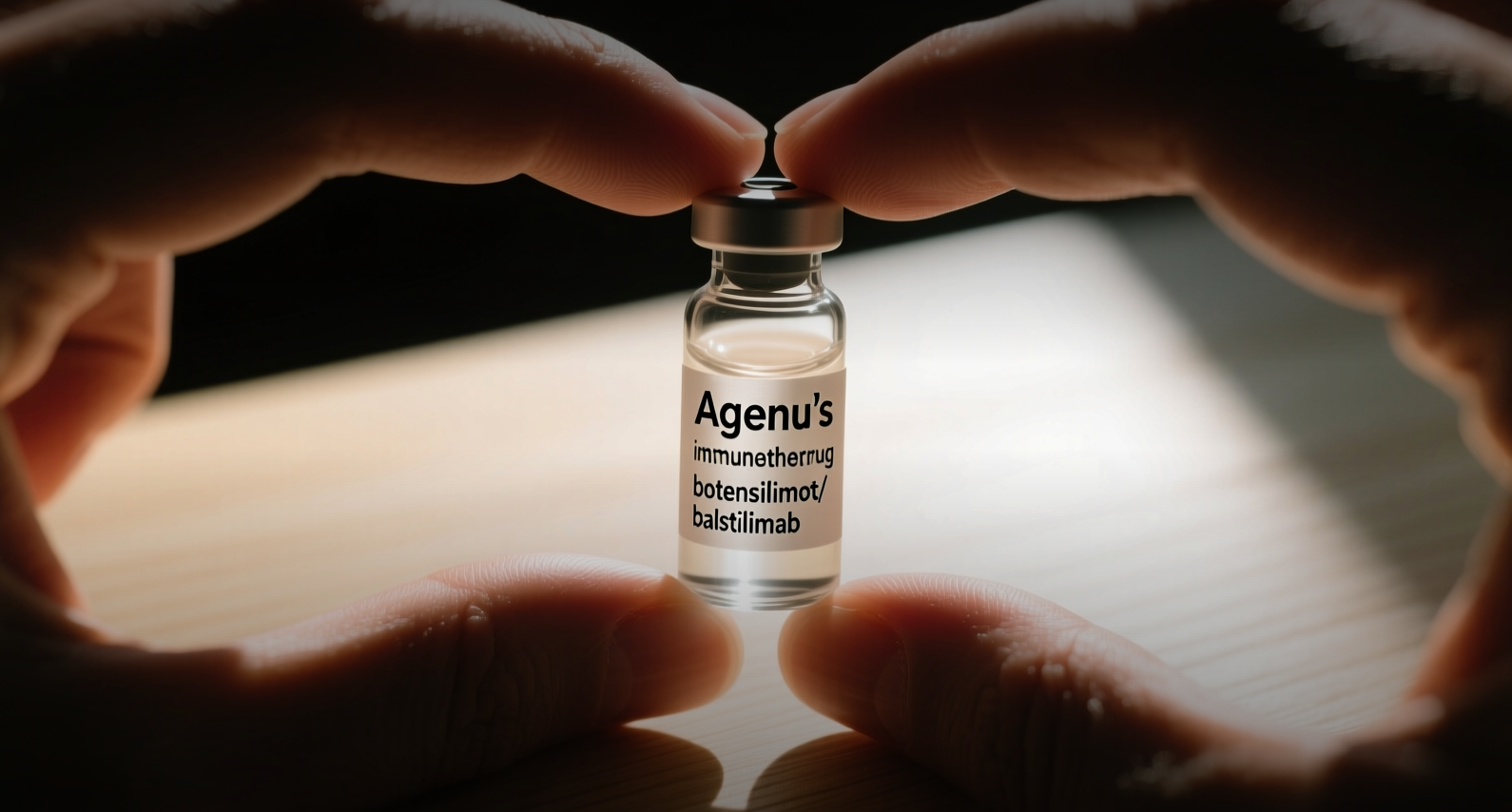
Agenus raised up to $340 million to fund a pivotal Phase 3 trial of its immunotherapy combination in MSS colon cancer, a $7 billion market with no new curative therapies in two decades.
Agenus Inc. secured up to $340 million in an oversubscribed private placement to advance botensilimab and balstilimab into a registrational Phase 3 trial for microsatellite-stable colon cancer, a $7 billion addressable market where no new curative-intent therapy has been approved in more than 20 years.
"Since Agenus was founded 32 years ago, our mission has been to harness the immune system to improve outcomes and, where possible, cure cancer," Chief Executive Officer Garo H. Armen said in a statement.
The financing includes approximately $85 million in upfront gross proceeds, with an additional $255 million available through full exercise of purchase warrants. Commodore Capital led the round, with participation from RA Capital Management, TCGX, Invus and Ligand Pharmaceuticals. Shares surged about 100% on Monday. The ROBBIN trial will enroll 850 patients globally, comparing neoadjuvant BOT+BAL followed by standard of care against standard of care alone, with event-free survival as the primary endpoint. Agenus said it aligned key trial design elements with the US Food and Drug Administration.
Data from two Phase 2 studies showed pathologic responses in approximately 60% to 70% of patients, with all treated patients remaining disease-free at median follow-up of nine to 18 months. If confirmed in Phase 3, BOT+BAL could become the first immunotherapy regimen to demonstrate curative potential in MSS colon cancer, a setting where Merck & Co.'s Keytruda and Bristol Myers Squibb's Opdivo have shown limited efficacy. Agenus expects first patient dosing in the first quarter of 2027, with interim pathologic response data in the second half of 2027 and final EFS analysis in the second half of 2030. The company said the financing, assuming full warrant exercise, provides funding through the end of 2031.
Why MSS Colon Cancer Is a $7 Billion Opportunity
Microsatellite-stable colorectal cancer accounts for about 85% of all colorectal cancer cases and has historically been resistant to checkpoint inhibitors, which work well only in the MSI-high subset. The standard of care — surgery followed by adjuvant chemotherapy — has not changed meaningfully in two decades. Agenus's BOT+BAL combination targets this gap by pairing a CTLA-4 inhibitor with a PD-1 inhibitor, designed to activate both the priming and effector phases of the immune response.
The Phase 2 data underpinning the ROBBIN trial showed pathologic complete responses in about 30% of patients, a rate that would represent a step-change if replicated in the registrational study. For context, Keytruda monotherapy in MSI-high colorectal cancer achieves pCR rates of about 45%, but that population represents only 15% of cases. In the MSS population — the remaining 85% — no checkpoint inhibitor has demonstrated comparable activity.
Cash Runway and Competitive Positioning
Agenus, founded in 1994, has operated as a clinical-stage biotechnology company with limited commercial revenue. The $340 million financing, if warrants are fully exercised, extends its cash runway through 2031, covering the full duration of the ROBBIN trial. The company estimates the annual US addressable market for high-risk Stage II and Stage III MSS colon cancer at more than $7 billion.
Competitors including Merck, Bristol Myers and Roche have explored combinations in MSS CRC with limited success. Agenus's early efficacy signal, combined with the FDA-aligned trial design, positions BOT+BAL as a potential first-in-class option. The company trades on the Nasdaq under the ticker AGEN.
This article is for informational purposes only and does not constitute investment advice.