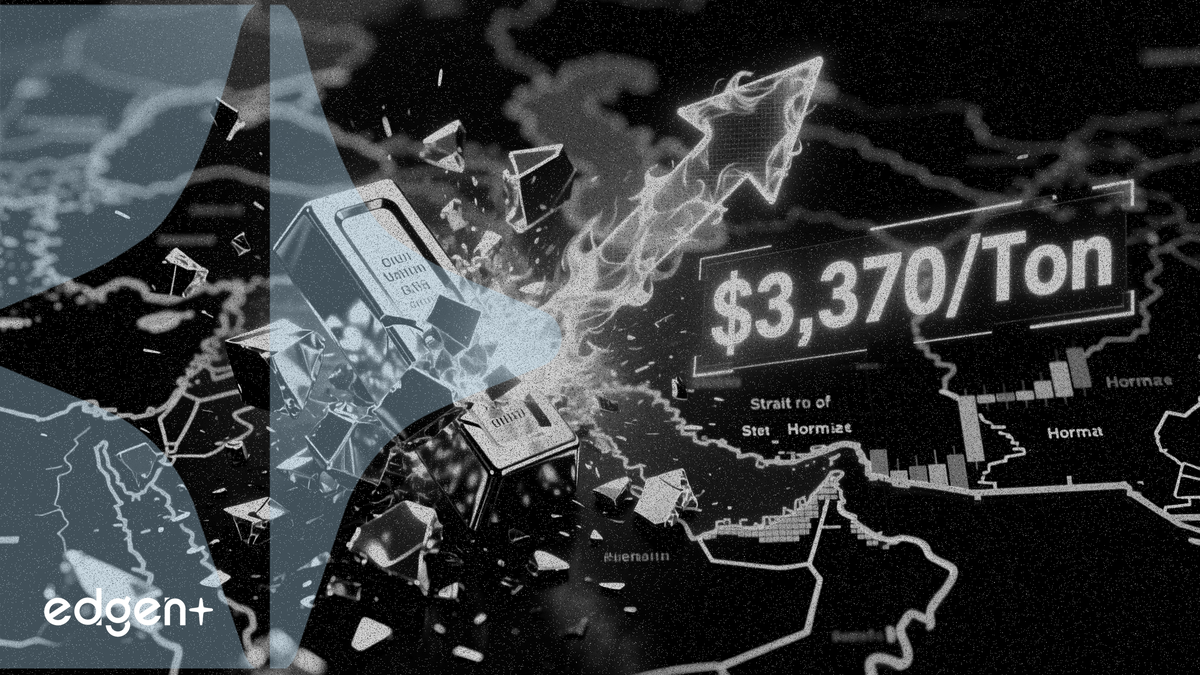
Aluminum Hits 4-Year High of $3370/ton as Supply Shocks Converge
A de facto blockade of the Strait of Hormuz since February 28 has severely disrupted a critical global trade artery, causing London Metal Exchange (LME) aluminum prices to climb approximately 8% to $3370 per ton, a four-year high. The price action is a direct result of a dual supply shock. The first is the logistical paralysis in the strait, where vessel traffic has fallen by 95%. The second is a significant production cut by Bahrain Aluminium (Alba), one of the world's largest smelters. The company announced a 19% reduction in output, removing roughly 300,000 tons of annualized supply from a market already on edge. The Persian Gulf region accounts for nearly 9% of global aluminum production, making any disruption critically important.
Weak Demand Caps Gains as Shorts Build 15,000-Lot Position
The price increase for aluminum has been substantial but is being tempered by slack global demand. Analysts at CRU Group noted that the price climb would have been far more significant without this underlying economic weakness, which is partially reflected in slowing industrial activity in key markets like China. This divergence between supply-side panic and demand-side reality has created a split in market positioning. While prices have advanced, bullish fund positions have not expanded meaningfully. Instead, bearish bets have increased, with short positions growing by approximately 15,000 lots since the conflict began.
This shows a good chunk of investors are expecting prices to fall from here.
— Guillaume Osouf, Chief Analyst at CRU Group.
Broader Economic Impact Extends Beyond Metals
The crisis in the Strait of Hormuz poses a wider threat to the global economy that extends far beyond aluminum. The waterway is a chokepoint for 19% of the world's refined petroleum products and 33% of its seaborne fertilizer trade. The conflict has also halted production at Qatari facilities, which supply 33% of the world's helium—a critical component for manufacturing semiconductors used by companies like Intel and TSMC. The shortage of another derivative, naphtha, threatens to disrupt plastic production for major Asian economies. Reflecting the severity of the supply risk, analysts at both CRU Group and ING believe that if the disruption is prolonged, aluminum prices could ultimately climb toward $4,000 per ton.
 Edgen Stock·Mar 18 2026, 16:17