

Volkswagen's Moia began carrying passengers in self-driving ID. Buzz vans in Hamburg, entering the European robotaxi race.
Volkswagen's Moia began carrying passengers in self-driving ID. Buzz vans in Hamburg, entering the European robotaxi race.
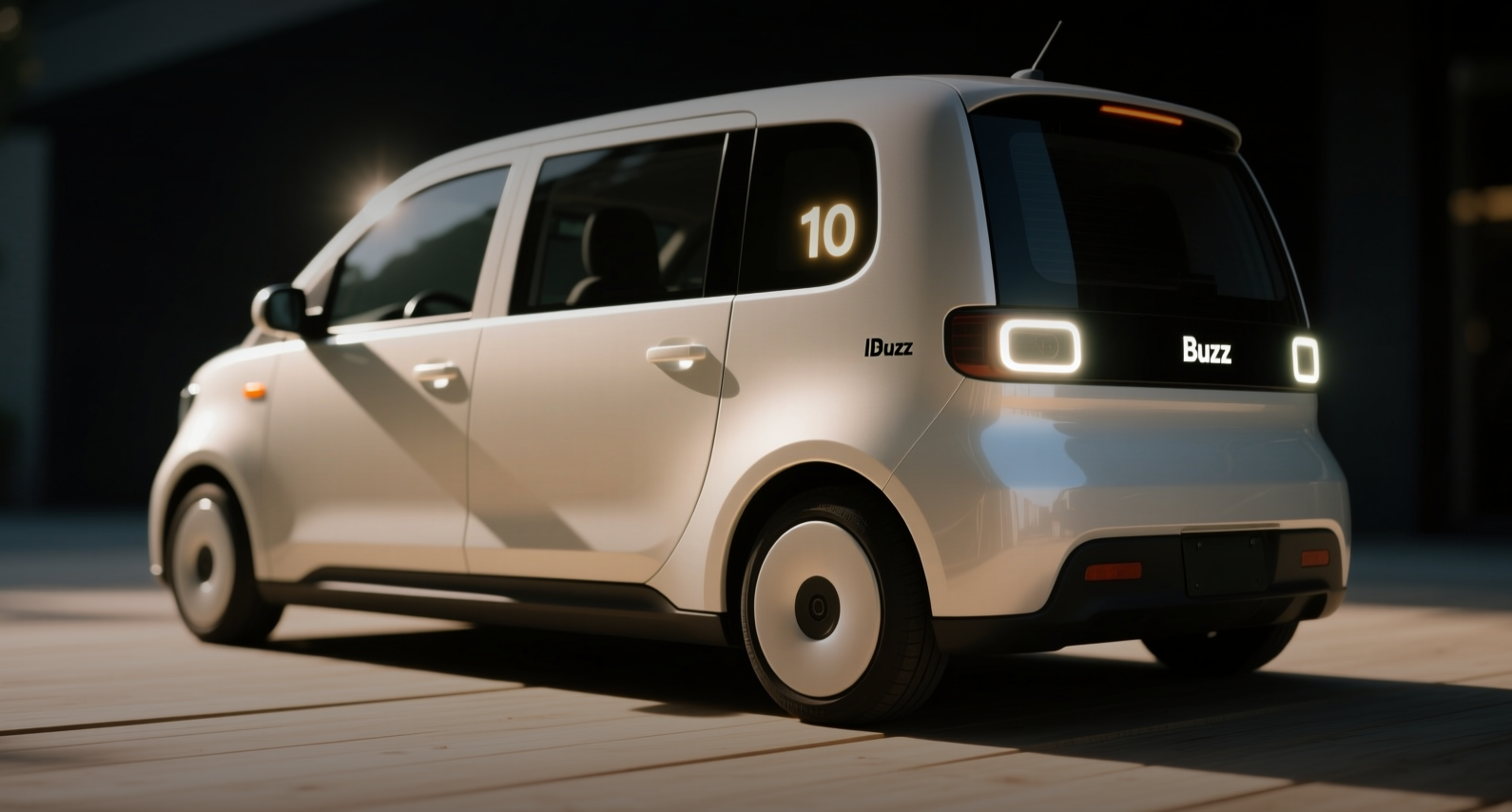
Volkswagen's autonomous mobility arm Moia launched a robotaxi pilot in Hamburg on Thursday, deploying up to 10 self-driving ID. Buzz vans in a challenge to Waymo and Tesla as Europe's autonomous vehicle market takes its first commercial steps.
"Our first passengers are now experiencing autonomous mobility in Hamburg's urban traffic for the first time," Moia CEO Sascha Meyer said in a statement. "For Moia, this marks an important milestone in the development of our European solution."
The ID. Buzz vans operate at Level 4 autonomy using Mobileye's self-driving system, equipped with 13 cameras, nine LiDARs and five radars. They have a range of 234 miles (377 kilometers) and 282 horsepower. The pilot covers about 4 square miles across Hamburg's Winterhude, Barmbek and Wandsbek districts, with plans to expand to roughly 14 square miles. Rides are free during the trial, with several thousand people already on a waiting list, Moia said.
The launch positions Volkswagen among a handful of automakers competing in the robotaxi market, alongside Alphabet's Waymo, Hyundai-backed Motional and Tesla. Moia is targeting European regulatory approval for driverless ID. Buzz operations in 2027, while also preparing US deployments with Beep in Orlando and Uber in Los Angeles later this year.
The pilot operates as a ride-pooling service rather than a private robotaxi like Waymo's offering in San Francisco and Phoenix. Passengers traveling in the same direction may share a vehicle, with pickups and drop-offs at designated virtual stops. The service will eventually be bookable through Hamburg's hvv switch public transit app, Moia said.
Moia has primarily run a human-driven, ride-pooling service in Hamburg using electric shuttles. Over the past several years, the company built an autonomous mobility platform combining vehicles, self-driving software, fleet management and passenger booking technology. The Hamburg deployment integrates Volkswagen's vans with Mobileye's autonomous driving system.
The trial is part of the ALIKE project, backed by the German Federal Ministry for Digital and Transport, which runs through mid-2027. Moia said it plans to license its technology platform to public and private fleet operators rather than operate its own robotaxi service at scale. "Any future commercial deployment and its scope will depend on decisions by the responsible public transport authorities, local mobility strategies, and the regulatory framework," a Moia spokesperson said.
Moia's US expansion is already taking shape. In April, the company announced a partnership with Beep to build a fleet of up to 5,000 autonomous shuttle vehicles for public transport over the next decade. A separate deal with Uber will bring autonomous ID. Buzz vans to Los Angeles before the end of the year.
The Hamburg pilot gives Volkswagen a foothold in a market that Alphabet's Waymo has dominated in the US. Waymo operates more than 700 vehicles across multiple cities and completed over 4 million paid trips in 2025. Tesla has promised a robotaxi network using its vehicles and software but has yet to launch a commercial service. Hyundai-backed Motional operates a pilot in Las Vegas with Uber.
Moia's approach differs from its US competitors by targeting shared mobility and public transport integration rather than private ride-hailing. The company's platform-as-a-service model could appeal to European cities seeking to add autonomous capacity without building their own technology stacks. The UNECE recently adopted a regulation for fully autonomous driving systems, establishing internationally harmonized safety requirements for the first time, which could accelerate Moia's regulatory path across Europe.
This article is for informational purposes only and does not constitute investment advice.
