

The partnership between Germany's Audi and China's Huawei at the 2026 Beijing Auto Show signals a new era of collaboration, putting legacy automakers on a direct path to integrate advanced Chinese technology.
The partnership between Germany's Audi and China's Huawei at the 2026 Beijing Auto Show signals a new era of collaboration, putting legacy automakers on a direct path to integrate advanced Chinese technology.
The partnership between Germany's Audi and China's Huawei at the 2026 Beijing Auto Show signals a new era of collaboration, putting legacy automakers on a direct path to integrate advanced Chinese technology.
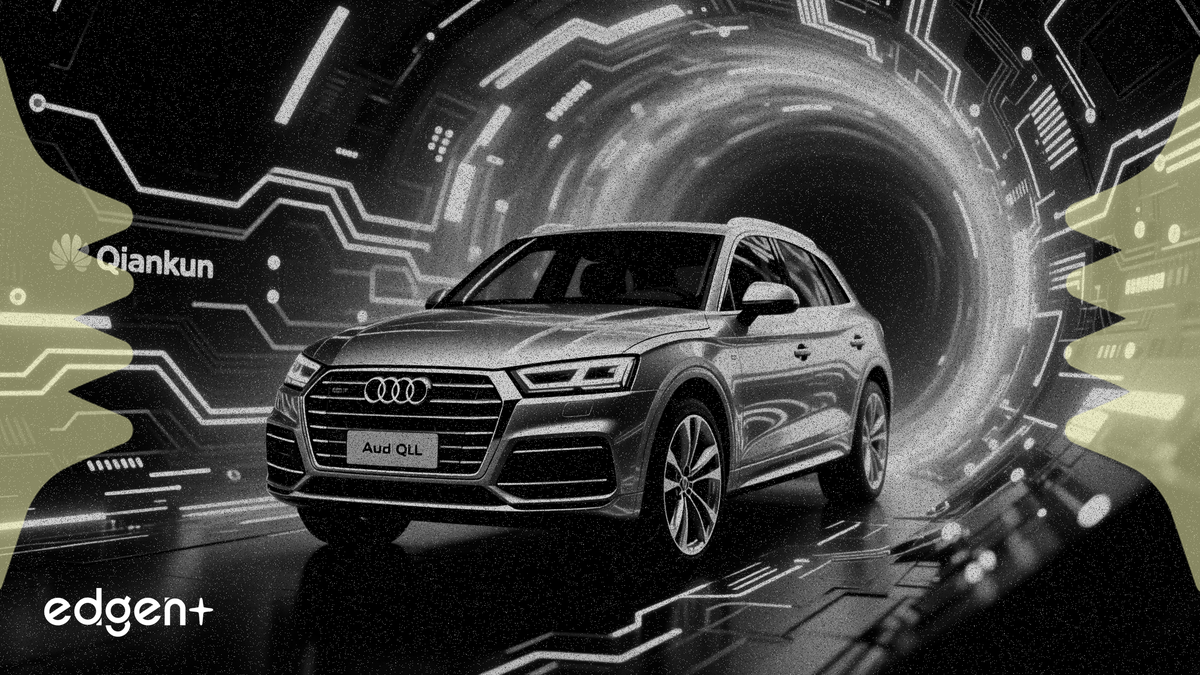
The new Audi Q5L, launched at the Beijing International Auto Show, is the first luxury gasoline SUV to integrate Huawei's full-stack Qiankun intelligent driving system, a move aimed at boosting Audi's competitiveness in China's tech-first automotive market. The collaboration, unveiled on April 25, sees the German automaker turning to a Chinese technology giant to power its flagship SUV's autonomous capabilities, a significant strategy shift for a legacy brand.
"It just reinforces that the Chinese — whether in EVs, batteries, intelligent driving — are setting the pace for all these important sectors," said Tu Le, managing director of consultancy Sino Auto Insights, commenting on the trend at the auto show.
Based on Audi's PPC platform, the new Q5L's Qiankun integration is supported by a hardware matrix of 33 sensors, including two lidars and six millimeter-wave radars. This system enables a suite of advanced driver-assistance features, such as automatic vehicle following, lane changes, navigating on and off highways, and automated smart parking.
This collaboration could significantly impact the stock of Audi's parent, Volkswagen AG, as it pressures rivals like Mercedes-Benz and BMW to accelerate their own technology partnerships in China, the world's largest and most competitive auto market. The move follows Volkswagen's earlier announcement of a partnership with Chinese EV maker XPeng to co-develop new electric vehicle models.
The Audi-Huawei deal is a landmark example of a broader trend where established global automakers are increasingly adopting Chinese technology to stay relevant. The Beijing Auto Show, featuring over 1,450 vehicles and 181 global debuts, has become a showcase for China's rapid advancements in automotive tech. Competitors are displaying equally impressive innovations; BYD presented a battery capable of a near-full charge in nine minutes, while CATL unveiled its "Shenxing" battery that can charge from 10% to 98% in about six and a half minutes.
Huawei, for its part, is making a substantial push into the automotive sector, committing $10 billion to its smart driving division. The Qiankun system in the Audi Q5L is a direct result of this investment, positioning Huawei not just as a consumer electronics company but as a critical technology supplier to the global auto industry, similar to the roles once dominated by Bosch or Continental.
For Volkswagen AG, this strategy represents a pragmatic approach to regaining market share in a region where it has been losing ground. By integrating a locally developed, market-leading technology, Audi can better cater to the preferences of Chinese consumers, who prioritize advanced smart features. The partnership may positively impact Volkswagen's valuation by demonstrating a clear path to competitiveness.
However, the move also highlights the immense pressure on other foreign brands. The hypercompetitive Chinese market has seen vehicle prices drop by a fifth in the last two years, according to AlixPartners. Automakers who fail to match the pace of technological integration offered by domestic Chinese brands and their partners risk further erosion of their sales and profitability. While few of these advanced systems are expected to be exported globally in the short term due to regulatory hurdles, they signal capabilities that will define the auto industry for the next decade.
This article is for informational purposes only and does not constitute investment advice.