Fervo Energy's 400MW power supply agreement with Google marks the largest commercial contract for enhanced geothermal technology, giving the sector its first hyperscaler-scale validation.
Fervo Energy (FRVO) signed a roughly 400-megawatt geothermal power supply agreement with Google, the company's largest deal to date, with deliveries from its $2 billion Cape Station project in Utah scheduled to begin in 2028. The contract includes an option for Google to expand capacity by about 600MW, exercisable by June 2030, which would make the facility the world's largest enhanced geothermal energy project.
"This is the commercial proof point the enhanced geothermal sector has been waiting for," said Tim Latimer, chief executive officer of Fervo Energy, in a statement accompanying the announcement. "A hyperscaler committing to baseload geothermal at this scale changes the economics of what we can build."
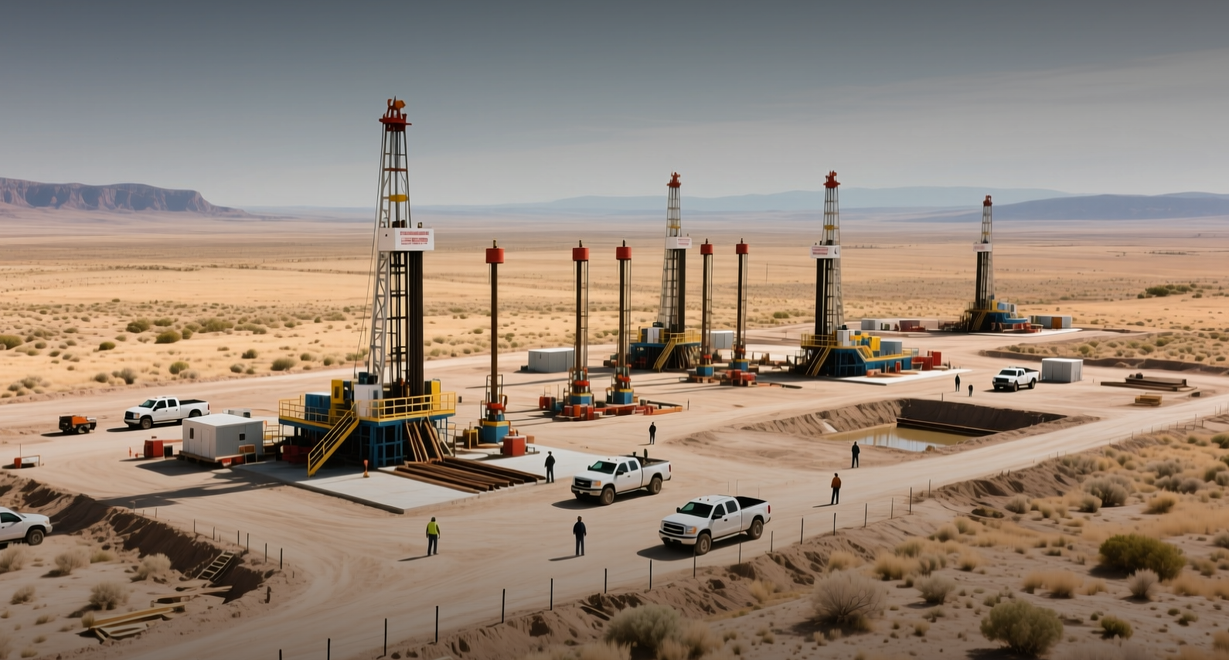
The deal gives Fervo a contracted revenue base that underpins its $2 billion Cape Station build-out in Beaver County, Utah. The project uses horizontal drilling and distributed fiber-optic sensing to fracture hot rock formations and circulate water to generate steam — a technique adapted from the oil and gas industry that unlocks geothermal resources beyond traditional hydrothermal sites. Fervo shares rose 15.4 percent in pre-market trading Tuesday, pushing the company's market value toward $5.2 billion from $4.53 billion at Monday's close.
Why Google's baseload bet matters
Google's commitment reflects a structural shift in how hyperscalers procure power. Data center electricity demand is projected to grow at a compound annual rate of 15 percent through 2030, according to the International Energy Agency, and intermittent wind and solar cannot fill the 24/7 baseload gap. Geothermal offers a capacity factor above 90 percent — comparable to natural gas plants — without the emissions profile. Google has signed power purchase agreements with other clean energy developers including Ormat Technologies (ORA) and Clearway Energy (CWEN), but this Fervo contract is the largest single geothermal commitment from a hyperscaler to date.
The deal also pressures rivals in the enhanced geothermal space. Companies such as Sage Geosystems and Eavor Technologies are pursuing similar closed-loop and fracture-based approaches, but Fervo's first-mover advantage with Google gives it a reference contract that can be replicated across its Utah leasehold and future sites in Nevada and Idaho. The 600MW expansion option, if exercised, would roughly triple Fervo's contracted capacity and position the company to compete with utility-scale solar and wind on price while offering dispatchability that intermittent sources cannot match.
What the deal means for investors
Fervo trades at a premium to traditional renewable developers because the market is pricing in the scalability of its technology. The Google contract converts that thesis from speculative to contractual — a 400MW anchor with a creditworthy counterparty and a clear expansion path. For investors in the broader clean energy complex, the deal validates enhanced geothermal as a bankable asset class, potentially unlocking project finance at lower cost of capital for the entire sector. The key execution risk remains drilling costs and well productivity at Cape Station, which Fervo has not yet fully disclosed for the expanded scope.
This article is for informational purposes only and does not constitute investment advice.