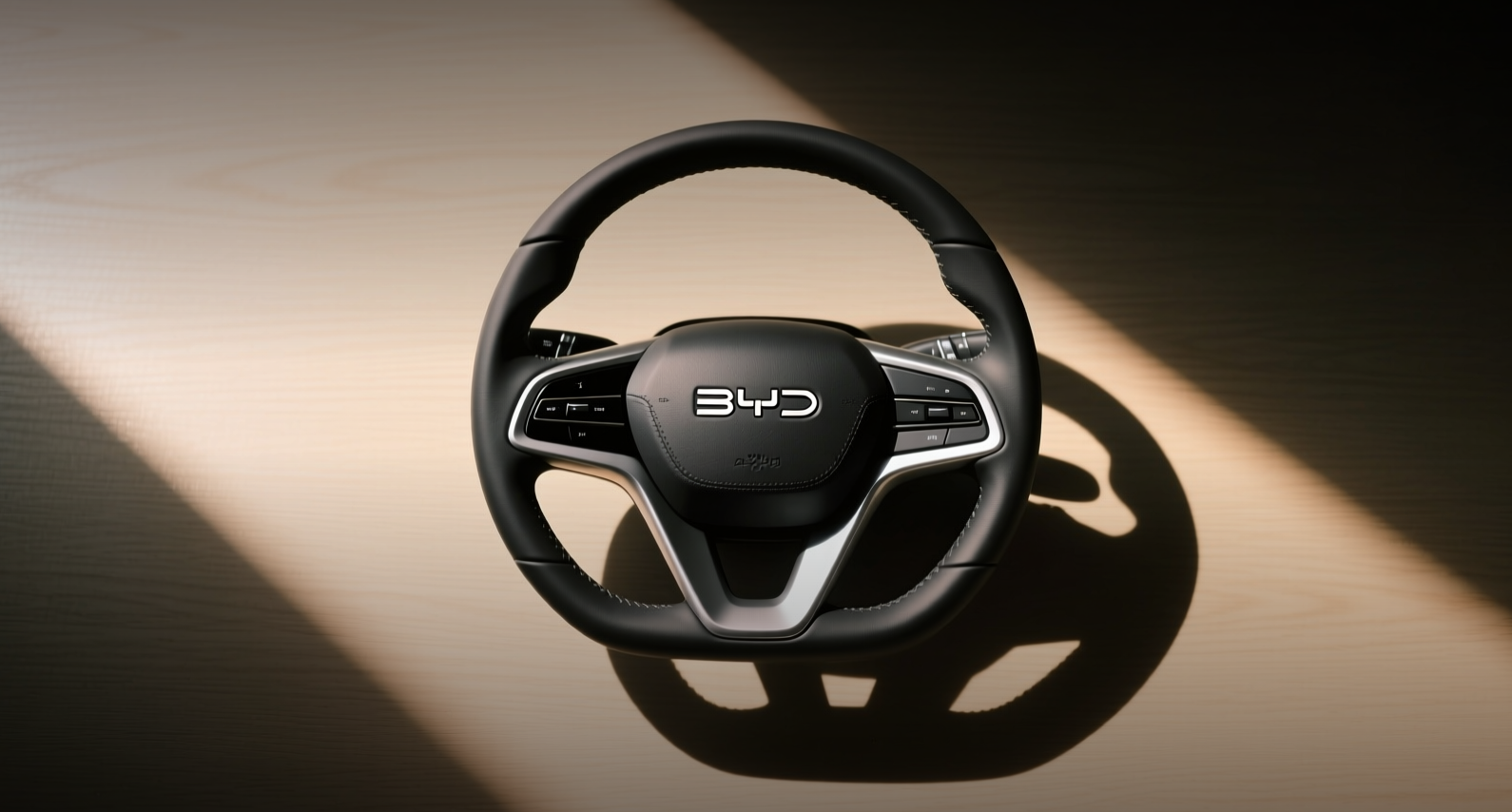
Chinese electric vehicle manufacturers are capturing a growing share of Britain's car market as tariff-free access gives them a pricing advantage over legacy automakers, a dynamic that stands in sharp contrast to the trade barriers rising in the US and Europe.
"Chinese brands have moved from a niche curiosity to a mainstream choice for UK EV buyers in under two years, driven by price points that Western manufacturers simply cannot match," said Lucas Herrera, an EV supply chain analyst. "The absence of tariffs is the single biggest factor — it allows these cars to undercut comparable European models by 25% to 30%."
Chinese brands accounted for 8% of UK new car registrations in the first half of 2026, up from roughly 3% in the same period last year, according to industry data. BYD, which entered the UK market in 2023, now sells more than 2,000 vehicles per month through its expanding dealer network. MG, owned by China's SAIC Motor, has become one of the top 10 best-selling brands in Britain, with its MG4 electric hatchback starting at £26,995 — about £8,000 less than the Volkswagen ID.3.
The UK's open-door policy contrasts sharply with the approach in Washington and Brussels. The US maintains a 100% tariff on Chinese-made EVs, effectively blocking their entry. The European Union imposed additional duties of up to 38% on Chinese EVs in late 2024, a move that raised prices for models like the BYD Atto 3 by several thousand euros across the continent. Britain, by contrast, has imposed no new tariffs beyond the standard 10% levied on all car imports.
The Price Gap That Opened the Door
The cost advantage of Chinese EVs is rooted in two decades of industrial policy. Between 2009 and 2022, Chinese authorities directed more than A$41 billion (US$27 billion) in tax breaks and subsidies toward developing electric cars, taxis and buses. That investment created the world's most vertically integrated EV supply chain, anchored by CATL, the world's largest battery manufacturer, which produces lithium iron phosphate (LFP) cells at an estimated cost of $56 per kilowatt-hour — roughly 30% below the industry average.
BYD, which began as a battery maker for consumer electronics before moving into cars, now produces most of its components in-house, including batteries, motors and semiconductors. This vertical integration allows the company to maintain gross margins above 20% on vehicles that sell for less than £30,000 in the UK — a combination that European rivals such as Volkswagen and Stellantis have struggled to match.
Volkswagen, once the largest carmaker in China, announced plans in June to cut 100,000 jobs worldwide as it grapples with declining sales and the high cost of transitioning to electric production. Honda CEO Toshihiro Mibe, after visiting a BYD factory in Shanghai, told reporters his company had "no chance" of competing on cost.
Geely Brings China's Best-Seller to Britain
The latest entrant is Geely, whose EX2 crossover — the best-selling car in China in 2025 — arrived in UK showrooms this year with a starting price of £22,495. The model, a compact electric SUV with a claimed range of 248 miles, targets the mass-market segment that accounts for the bulk of new car sales in Britain.
Geely's entry underscores the breadth of China's EV offensive. While BYD and MG have focused on the mainstream family car segment, Geely is targeting first-time EV buyers and urban commuters. The EX2's price undercuts even the MG4 by more than £4,500, putting it within reach of buyers who might otherwise consider a petrol-powered Ford Puma or Nissan Juke.
China produced nearly 75% of the world's EVs in 2025, according to industry data, and exported roughly 5 million cars to more than 180 countries last year, overtaking Japan as the world's largest car exporter. The pace of expansion is accelerating: BYD founder Wang Chuanfu predicted last month that his company would overtake Toyota in global sales within five years.
What This Means for Investors
The UK's tariff-free stance creates a testing ground for whether Chinese EVs can gain lasting traction in a mature Western market without trade barriers. If British consumers continue to adopt Chinese brands at the current rate, the pressure on European automakers to cut prices or accelerate their own EV transitions will intensify.
Legacy automakers face a structural disadvantage. Chinese manufacturers benefit from lower labor costs, government-backed supply chains and years of experience scaling battery production. European and US carmakers, by contrast, are saddled with legacy combustion-engine factories, dealer networks and union agreements that make rapid retooling expensive and slow.
For investors, the key question is whether Western governments will follow the UK's open-market approach or the protectionist path of the US and EU. A UK decision to maintain tariff-free access would further pressure European automakers' margins. A reversal, however, would risk higher prices for British consumers and slower EV adoption in a market where the government has banned new petrol car sales from 2030.
This article is for informational purposes only and does not constitute investment advice.