
Samsung Electro-Mechanics has locked in at least $1.5 billion in AI server component contracts this year, pushing the humble MLCC — a ceramic capacitor found in every electronic device — into the era of long-term supply agreements.
Samsung Electro-Mechanics has locked in at least $1.5 billion in AI server component contracts this year, pushing the humble MLCC — a ceramic capacitor found in every electronic device — into the era of long-term supply agreements.
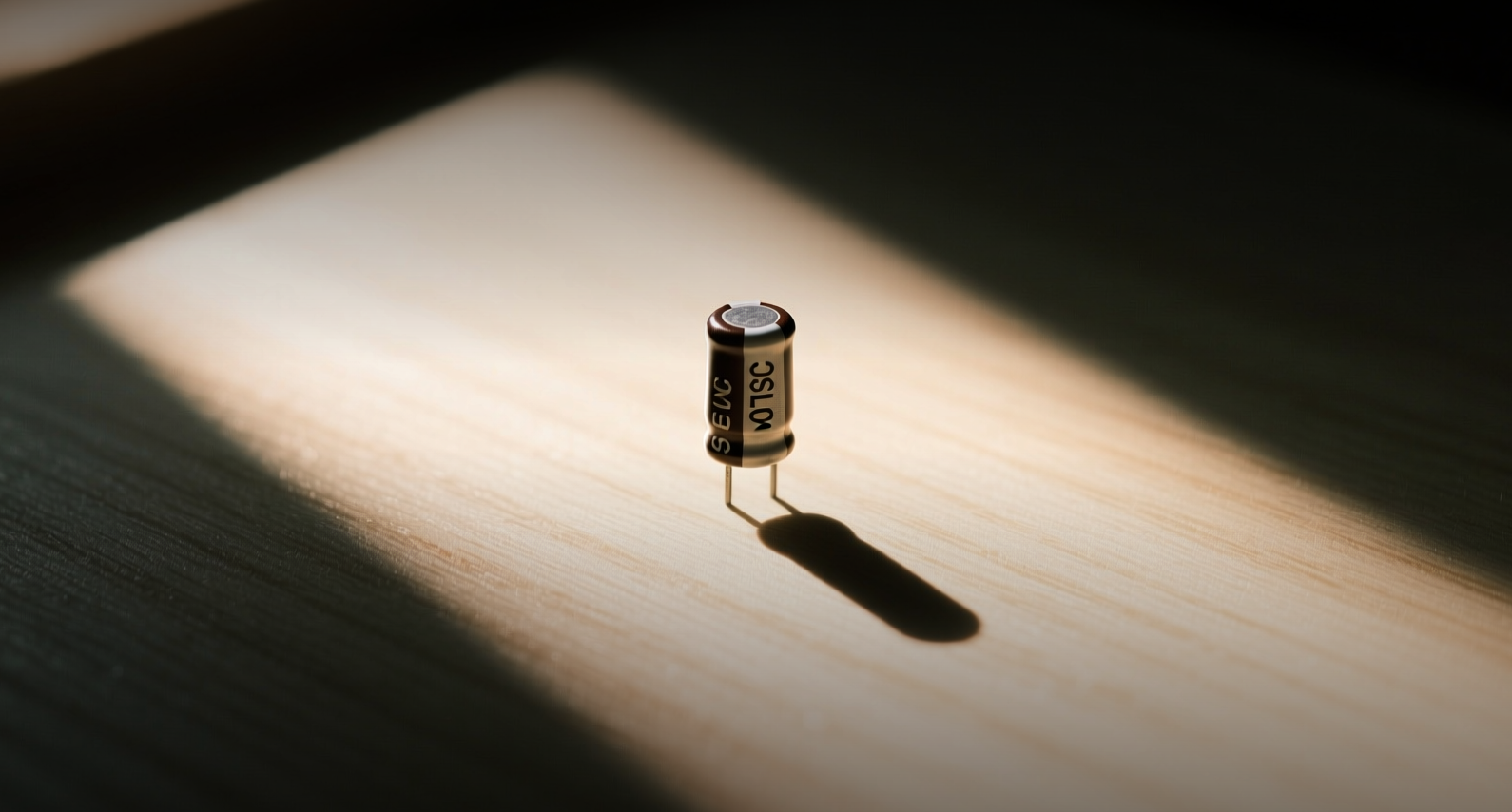
Samsung Electro-Mechanics has locked in at least $1.5 billion in AI server component contracts this year, pushing the humble MLCC — a ceramic capacitor found in every electronic device — into the era of long-term supply agreements.
Samsung Electro-Mechanics disclosed Wednesday it signed a 295.12 billion won ($204 million) contract to supply multilayer ceramic capacitors to an undisclosed global technology company for the full 2027 calendar year. The deal marks the third large-scale AI server component agreement the company has announced in as many months, following a roughly 450 billion won MLCC order in June and a 1.5 trillion won silicon capacitor long-term contract in May.
"This large-scale contract is the result of Samsung Electro-Mechanics' MLCC technology being fully recognized as a core component of AI infrastructure," Chief Executive Chang Duck-hyun said in a statement. "Based on our customers' deep trust, we will accelerate the development of next-generation cutting-edge products and build a stable supply chain to lead the AI component market."
Shares of Samsung Electro-Mechanics surged as much as 8.2% to 1.475 million won on the Korea Exchange, outperforming heavyweight stocks including Samsung Electronics and SK Hynix. The contract represents about 2.6% of the company's 11.31 trillion won in consolidated revenue last year.
Why MLCCs became an AI bottleneck
MLCCs — multilayer ceramic capacitors — serve as microscopic power reservoirs that stabilize voltage in electronic circuits. In AI servers, their role has become strategically critical. Each AI server rack can require up to 600,000 MLCCs, more than 10 times the number needed in a standard server, according to industry estimates.
The technical requirements for AI-grade MLCCs are far more demanding than consumer-grade components. They must be ultra-miniaturized while delivering high capacitance, and must withstand high temperatures, high voltage, and board flexing during operation. The combination of extreme volume and stringent specs has created a supply dynamic where only a handful of manufacturers can reliably deliver.
Samsung Electro-Mechanics holds more than 40% of the global AI server MLCC market, a position that has made it the primary beneficiary of hyperscaler buildout spending. The company's silicon capacitors — installed inside AI chip packages alongside GPUs and high-bandwidth memory — offer roughly one-hundredth the electrical resistance of traditional MLCCs, a performance advantage that becomes material at the scale of modern AI clusters.
The shift to long-term contracting
The three contracts signed since May represent a structural shift in how MLCCs are procured. Historically, these components were ordered on short cycles tied to consumer electronics production schedules. The move toward multi-year, fixed-volume agreements — common in the memory chip and foundry businesses but rare in passive components — signals that AI hyperscalers are treating MLCC supply as a strategic constraint on their infrastructure expansion.
Samsung Electro-Mechanics said it is in further discussions with multiple global customers on medium- to long-term MLCC supply plans. The company is accelerating its portfolio shift toward high-value products for industrial, automotive electronics, and AI server applications.
For investors, the question is whether the long-term agreement model can sustain the revenue visibility that drove the stock's 8% surge. Samsung Electro-Mechanics trades at a premium to passive component peers, reflecting its AI exposure. The company's ability to convert its market share lead into recurring, contracted revenue — rather than spot-market orders — will determine whether that premium is justified. Competitors including Murata Manufacturing and TDK Corp. are also investing in AI-grade MLCC capacity, though neither has disclosed comparable long-term agreements at this scale.
This article is for informational purposes only and does not constitute investment advice.
