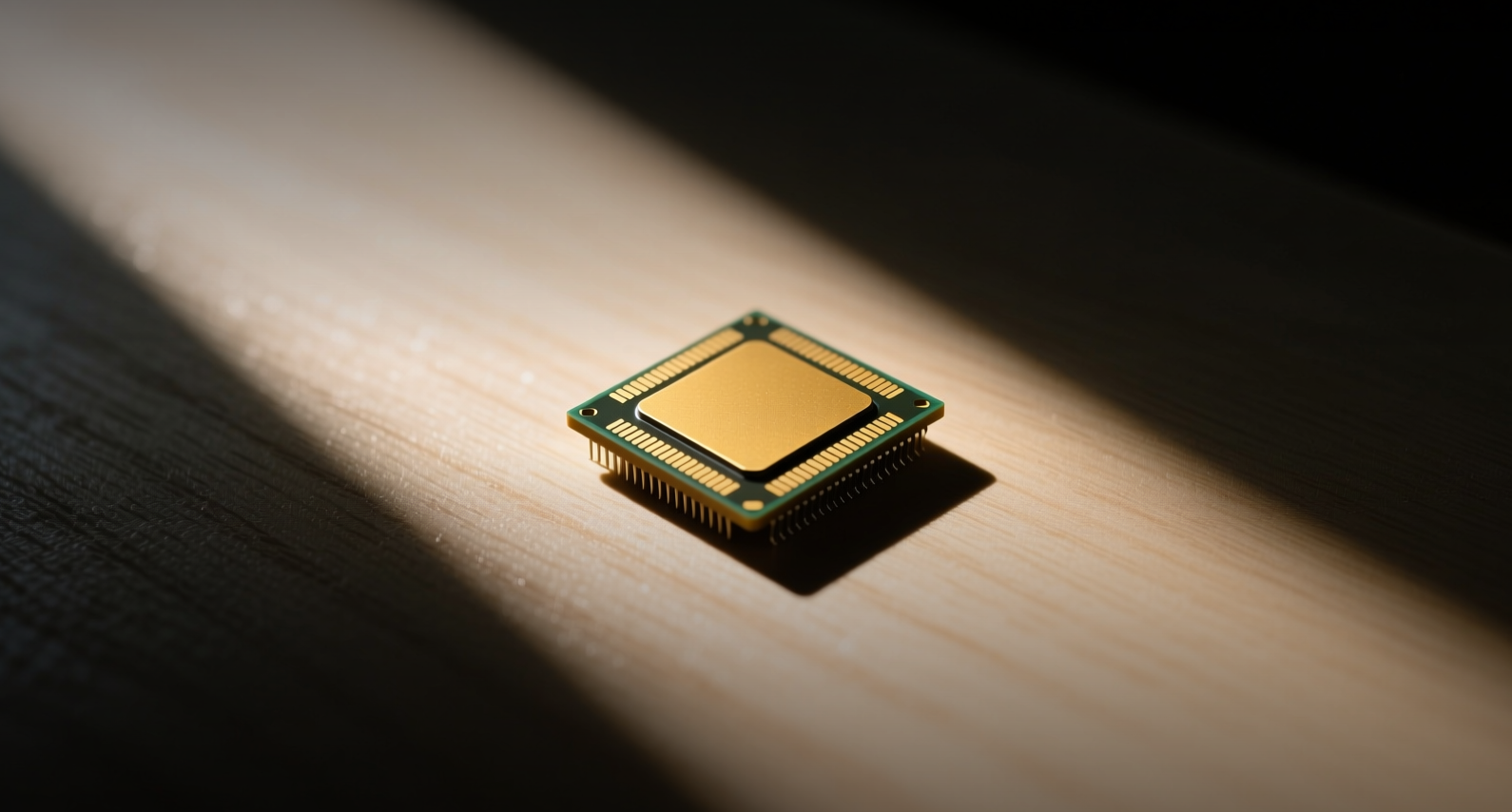
The artificial-intelligence investment cycle remains in its early stages, with the recent semiconductor sell-off reflecting position unwinding rather than a structural demand slowdown, according to Dan Ives.
The artificial-intelligence revolution remains in its "third inning" despite a rout that has wiped nearly 19% from the Philadelphia Stock Exchange Semiconductor Index, with the sell-off driven by crowded-trade unwinding rather than deteriorating fundamentals, Dan Ives said.
"We're in the third inning of this AI revolution, not the ninth," Ives, partner and senior managing director at Yorkville Ives & Co., said on Bloomberg Surveillance. "The sell-off is about crowded trades unwinding, not about AI demand slowing."
The Philadelphia semiconductor index has fallen 18.9% from its peak less than a month ago, approaching the 20% threshold that would mark a technical bear market. TSMC, the world's largest contract chipmaker, posted a 77% jump in quarterly profit — its fifth consecutive record — yet its shares dropped 5.3% in Asia trading after the company flagged higher-than-expected capital expenditure. Japan's Nikkei 225 slumped nearly 5%, with chipmaker Kioxia plunging 16%. Memory and storage makers Sandisk, Western Digital and Seagate each fell more than 9% in US trading.
The disconnect between record earnings and falling stock prices reflects valuations that had run ahead of fundamentals, according to Swissquote. Jefferies' positioning indices show semiconductor positioning dropped from +6.5 in mid-June to +1.3 as of Wednesday's close, suggesting the unwind still has room to run. Ives' "third inning" framing implies the structural AI investment cycle — spanning data center buildout, enterprise adoption and inference deployment — has years of growth ahead.
TSMC's Record Quarter Fails to Calm Nerves
TSMC reported net profit of $12.1 billion for the quarter ended June 30, beating consensus estimates of $11.4 billion, according to data compiled by Bloomberg. Revenue rose 45% from a year earlier to $23.5 billion, driven by demand for Nvidia and Advanced Micro Devices AI accelerators fabricated on the company's 3-nanometer and 5-nanometer nodes. Yet the stock fell as investors focused on management's view that 2026 capital expenditure would exceed the previously forecast $36 billion to $40 billion range, raising concerns about returns on investment.
"The inability of such impressive results to trigger a positive market reaction shows one thing: valuations across chipmakers have run ahead of themselves," Swissquote said in a note.
Chinese AI Models Add Competitive Pressure
The sell-off coincides with China's push to close the AI gap through open-source models. President Xi Jinping endorsed open-source AI development at a Shanghai conference on Friday, touting an approach that has helped Chinese companies such as Alibaba's Qwen team and DeepSeek narrow the performance gap with US rivals. Xi cast China as a champion of openness, implicitly criticizing US export controls on AI semiconductors.
Ives said the emergence of competitive Chinese AI models does not diminish the US investment opportunity. "China is catching up, but the US ecosystem — from Nvidia's CUDA software moat to the hyperscaler CapEx cycle — remains years ahead," he said. "The third inning means there's still six innings of investment to go."
Nvidia shares, which have fallen 12% from their June peak, trade at 35 times forward earnings, below their five-year average of 42 times, according to data compiled by Bloomberg. The broader VanEck Semiconductor ETF has shed about $840 billion in market value since its June high. Ives' thesis suggests the sell-off has created entry points for long-term investors, though near-term volatility may persist as positioning continues to normalize.
This article is for informational purposes only and does not constitute investment advice.