Soitec is converting surging AI demand into locked-in, multi-year supply contracts with deposits and fixed pricing, securing revenue visibility through the current photonics boom.
Soitec is converting surging AI demand into locked-in, multi-year supply contracts with deposits and fixed pricing, securing revenue visibility through the current photonics boom.
Soitec is converting surging AI demand into locked-in, multi-year supply contracts with deposits and fixed pricing, securing revenue visibility through the current photonics boom.
Soitec is converting surging AI demand into locked-in multi-year supply contracts with deposits and fixed pricing, as photonics-SOI revenue is set to more than double past $200 million this fiscal year.
"We are using the current situation to find the right balance between the value we bring and the price we can ask," Laurent Remont, chief executive of Soitec, said.
Soitec told investors last month that photonics-SOI revenue would more than double this financial year from slightly above $100 million. Remont now calls the implied $200 million-plus "absolutely a floor." UBS estimates Soitec holds a 95 percent share of the silicon photonics substrate market, and the stock has almost quadrupled this year as hyperscalers shift to optical connections for moving data within AI infrastructure, where copper links are losing appeal because of power and performance limits.
Around 80 percent of Soitec's capacity reservation agreements with photonics customers — more than 10 in total — should be signed within a week or two, with the remainder expected within a month. The contracts fix prices and require deposits tied to committed demand, giving Soitec revenue visibility through the current AI infrastructure buildout while forcing customers to put "skin in the game."
Silicon photonics uses light (photons) rather than electricity (electrons) to transmit data on silicon chips. The technology is becoming critical in AI data centers, where the volume of data moving between compute nodes has pushed copper interconnects to their power and performance limits. Optical links carry more data over longer distances while consuming less power, making them the preferred choice for the scale-out architectures hyperscalers are deploying.
The cash deposits have not yet been paid and will arrive in stages as customers ramp production. Customers that take the agreed volume get their deposit back; those that fall short forfeit it. Volumes above the agreed level trigger new pricing discussions.
"That's a way for us to have our customer with skin in the game," Remont said.
Customers must also share inventory data, a requirement aimed at preventing companies from over-ordering capacity to keep wafers away from competitors, he added.
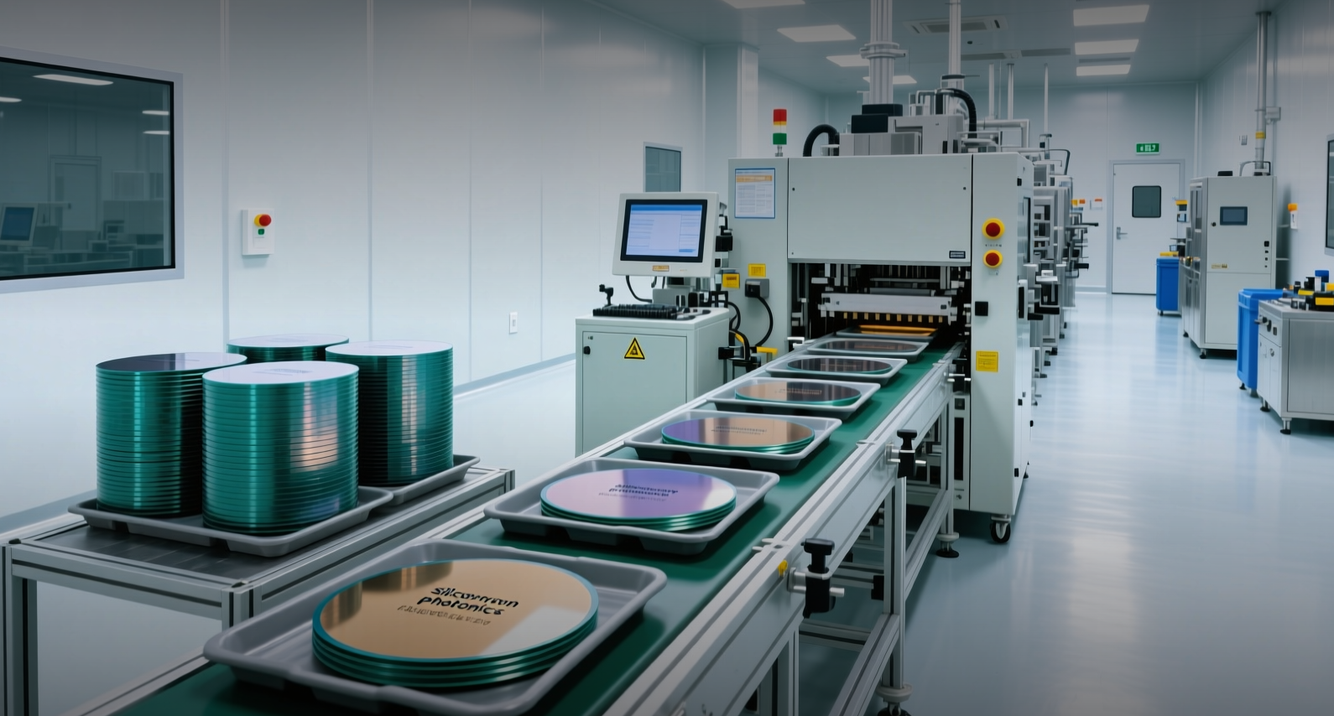
Soitec does not expect to need a new plant until around 2029. The company is pursuing two expansion levers already: shifting output between businesses using shared underutilised facilities and installing additional tools in existing cleanroom space.
"With that we will cover easily this year and next year," Remont said.
The cleanroom capacity includes part of a French facility originally built for silicon carbide production, which was written down by 41 million euros ($47.7 million) last year. Soitec produced photonics-SOI only in France until five months ago; since then, it has qualified customers at a facility in Singapore.
A third lever, an unequipped building in Singapore, could add capacity within six to 12 months if required. "We can increase quickly without building a completely new fab, just equipping a building," Remont said.
He sees no need for a U.S. plant "at this stage." Customers, he said, are "more desperate to get wafers than being too picky about where the location for production is."
The contract structure gives Soitec unusual pricing power in the semiconductor supply chain, where most materials suppliers accept spot-market volatility. With a 95 percent substrate market share and revenue visibility through multi-year agreements, Soitec's photonics business is becoming a structural growth engine rather than a cyclical bet. The stock's near-quadrupling this year suggests investors have already priced in much of the upside, but the deposit-backed contracts reduce downside risk if AI infrastructure spending slows.
This article is for informational purposes only and does not constitute investment advice.
