
SK Hynix's record Nasdaq debut gave way to a 9.9% ADR plunge as investors questioned the sustainability of AI memory demand.
SK Hynix's record Nasdaq debut gave way to a 9.9% ADR plunge as investors questioned the sustainability of AI memory demand.
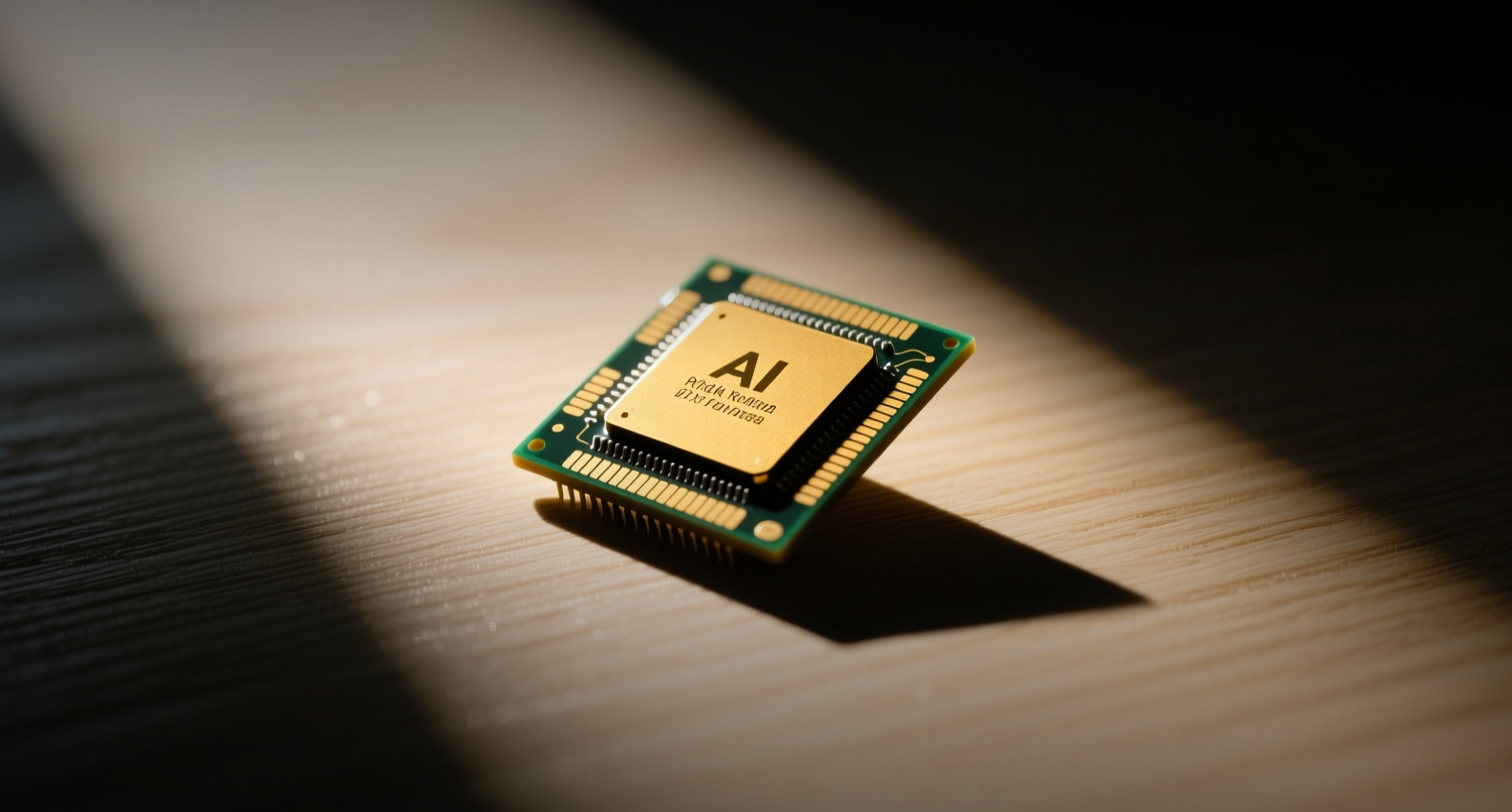
SK Hynix's American depositary receipts fell as much as 9.9% to $151.30 on Monday, erasing gains from the chipmaker's record $26.5 billion Nasdaq debut as profit-taking and concerns over high-bandwidth memory volumes rattled investors.
"The demand cycle is still very strong and I don't think we're at the end of it yet," Phil Blancato, president and chief executive officer of Ladenburg Thalmann Asset Management, said. "You're looking at demand for multiple companies out into late 2027, into early 2028."
The selloff extended beyond SK Hynix. Seoul-listed shares tumbled 15.4%, their steepest single-day decline on record, dragging the broader Kospi index down 9% and triggering a 20-minute trading halt. Samsung Electronics shed about 11%, while US rivals Micron Technology, SanDisk and Western Digital fell 6.4%, 8.4% and 6.8%, respectively. The Philadelphia SE Semiconductor Index lost 3.6%.
The reversal highlights a growing tension in AI memory markets. SK Hynix commands 58% of the HBM market, per Counterpoint Research, but investors are questioning whether the ramp in next-generation HBM4 chips is materializing fast enough to justify a valuation that had pushed the company past the $1 trillion market cap mark earlier this year.
HBM4 Volumes Disappoint as Supply Fears Mount
Ryu Young-ho, a senior analyst at NH Investment & Securities, said investors had expected shipments of SK Hynix's HBM4 chips to increase from the second quarter, but the ramp-up had not materialized at the expected magnitude. The disappointment compounded caution around the company's second-quarter earnings, with a Korea Investment & Securities note circulating among traders putting operating profit as much as 8% below consensus.
The large-scale capacity investments announced by SK Hynix and Samsung have also fueled oversupply concerns. "Our base case here is the fresh capacity in 2027 and 2028 coming up in earnest will improve supply dynamics, thereby leading to price erosion," said Jing Jie Yu, an equity analyst at Morningstar.
SK Hynix Chief Executive Kwak Noh-jung dismissed those worries, telling Reuters the memory industry is heading for its most severe supply shortage in 2027, with demand set to exceed the company's production capacity well into the next decade.
ADR Premium Creates Arbitrage Pressure
After Monday's rout in Seoul, SK Hynix's US-listed ADRs traded at a roughly 25% premium to the underlying Korean shares, a gap analysts say is unlikely to persist. "It's typical for ADRs to trade at a premium because they give US investors direct access to the stock for the first time," said Nic Puckrin, founder of Coin Bureau. "Though some investors have been taking advantage of the arbitrage opportunity, these trades tend to get crowded and the price eventually evens out."
The volatility has been amplified by leveraged products. In Hong Kong, a single-stock ETF from CSOP that targets twice the daily returns of SK Hynix shares lost more than a third of its value on Monday, its biggest one-day decline since listing in October.
Despite the pullback, SK Hynix's Seoul-listed shares have still roughly sextupled over the prior 12 months. Morningstar values the ADRs at $160 and the Korean shares at 2.4 million won each, implying the stock is fairly valued at current levels. "The current memory upcycle is tracking substantially stronger than expected, but our base case continues to assume normalization in cycle dynamics, limiting upside at current levels," Morningstar's Lorraine Tan wrote.
For investors, the question is whether the HBM-driven growth story has room to run. SK Hynix trades at a premium to Samsung in the HBM market, but with HBM4 volumes yet to materialize at scale and conventional DRAM prices rising more slowly, near-term earnings momentum may disappoint. The ADR's premium to Seoul shares offers a potential arbitrage trade, but one that carries the risk of further convergence as the post-listing euphoria fully unwinds.
This article is for informational purposes only and does not constitute investment advice.
