

Nvidia's Huang identified memory chips as AI's biggest constraint, reshaping the company's system architecture and supply chain strategy.
Nvidia's Huang identified memory chips as AI's biggest constraint, reshaping the company's system architecture and supply chain strategy.
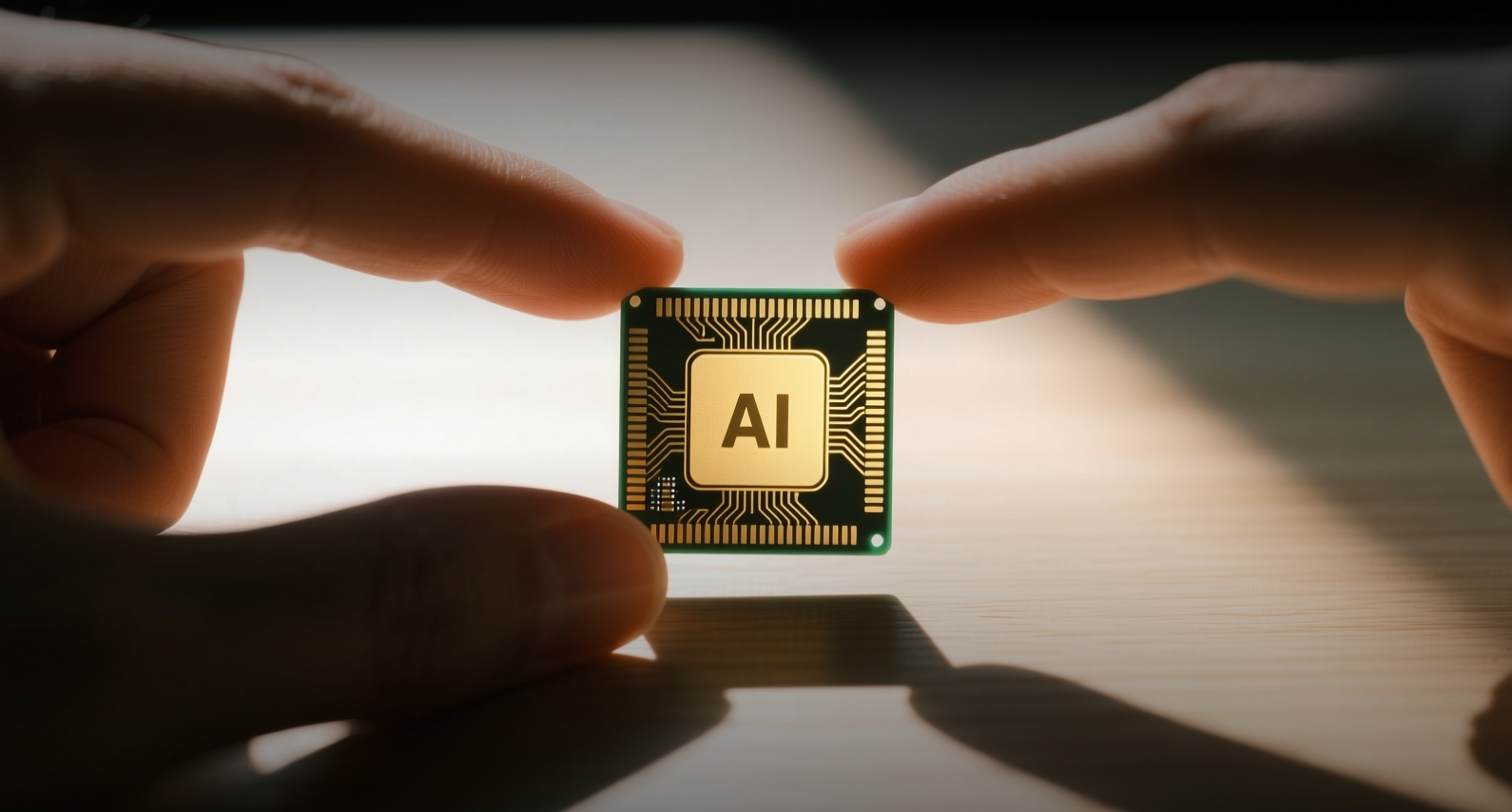
Nvidia's Jensen Huang said memory chips are now AI's biggest bottleneck, as the company shifts from selling standalone GPUs to building systems that pack high-bandwidth memory (HBM) directly into its hardware.
Huang highlighted the constraint in recent remarks, pointing to the specialized memory chips now integral to Nvidia's AI systems. The company relies on a small group of suppliers — Micron, SK Hynix, and Samsung — for continuous high-volume HBM supply, and manufacturing those chips is far from simple.
Nvidia generated $48.6 billion in free cash flow in the quarter ended April 26 and finished with $13.2 billion in cash and cash equivalents, giving it the purchasing scale to secure priority access to HBM supply. The company's stock is up 0.60 percent year to date as of market close on July 29.
The memory shortage puts Nvidia at the mercy of its suppliers, but its cash position lets it pay premiums to corner the market, potentially shutting out smaller competitors and reinforcing its dominance in AI infrastructure.
Why Memory Became the Constraint
At the beginning of the current AI boom, tech giants focused on acquiring as much compute power as possible. Now the emphasis has shifted to memory chips, which have become the limiting factor in scaling AI systems. AI training and inference rely on trillions of data points, and storing and retrieving them quickly requires specialized memory chips. As AI handles more complex tasks — running autonomous agents or processing complicated context rather than generating recipes or travel recommendations — the need for HBM has grown sharply.
HBM stacks multiple DRAM dies vertically and connects them through a high-speed interface, delivering far greater bandwidth than conventional memory. This architecture is essential for feeding data to GPUs at the speeds AI workloads demand. But producing HBM requires advanced manufacturing processes and specialized packaging, which is why only a handful of companies — SK Hynix, Samsung, and Micron — control the vast majority of supply.
If suppliers can't produce HBM fast enough, Nvidia's own production timeline faces delays, potentially affecting its business. The constraint is particularly acute as AI models grow larger and require more memory per accelerator.
Nvidia's Cash Advantage
The upside for Nvidia is that its scale gives it first dibs on available memory supply. With $48.6 billion in free cash flow and $13.2 billion in cash on hand, the company can easily pay a premium to buy HBM in bulk, shutting out smaller competitors and further cementing its stronghold on the industry.
Investors shouldn't read Huang's message as a warning sign. It's the next chapter of the AI evolution — one where Nvidia uses its leadership position to be a long-term force regardless of the current hiccup. The stock's flat year-to-date performance reflects broader sentiment around big tech and the "Magnificent Seven" stocks rather than disappointing business performance from Nvidia.
For memory chipmakers, Huang's comments point to increased demand and pricing power. SK Hynix, Samsung, and Micron stand to benefit from Nvidia's willingness to pay premiums for HBM supply, potentially supporting their own revenue growth as AI infrastructure spending continues to expand. Nvidia's pivot also raises the stakes for TSMC, which handles advanced packaging for HBM integration, and for AMD, which competes with Nvidia in AI accelerators and faces the same memory supply constraints.
The competitive dynamic is shifting. Nvidia's ability to outbid rivals for HBM supply could widen its lead in AI accelerators, where AMD and custom silicon from cloud providers are trying to gain traction. But the memory constraint also creates an opening: if Nvidia can't secure enough HBM, competitors with alternative memory strategies could gain ground.
For investors, the key question is whether Nvidia's cash advantage translates into sustained supply security. The company's $48.6 billion in quarterly free cash flow gives it enormous purchasing power, but HBM production capacity is finite and expanding slowly. Memory makers are investing heavily to increase output, yet the timeline for meaningful capacity additions remains uncertain.
This article is for informational purposes only and does not constitute investment advice.
