

Nvidia's $3 billion bet on power developer Lancium confirms that electricity, not silicon, is now the binding constraint on AI expansion.
Nvidia's $3 billion bet on power developer Lancium confirms that electricity, not silicon, is now the binding constraint on AI expansion.
Nvidia is moving upstream in the AI supply chain, agreeing to invest up to $3 billion in power developer Lancium, as electricity access replaces chip supply as the industry's main constraint. The deal gives the GPU maker a roughly 20 percent stake in the company behind the Stargate project's Texas campus, valuing Lancium and its land and grid assets at about $10 billion.
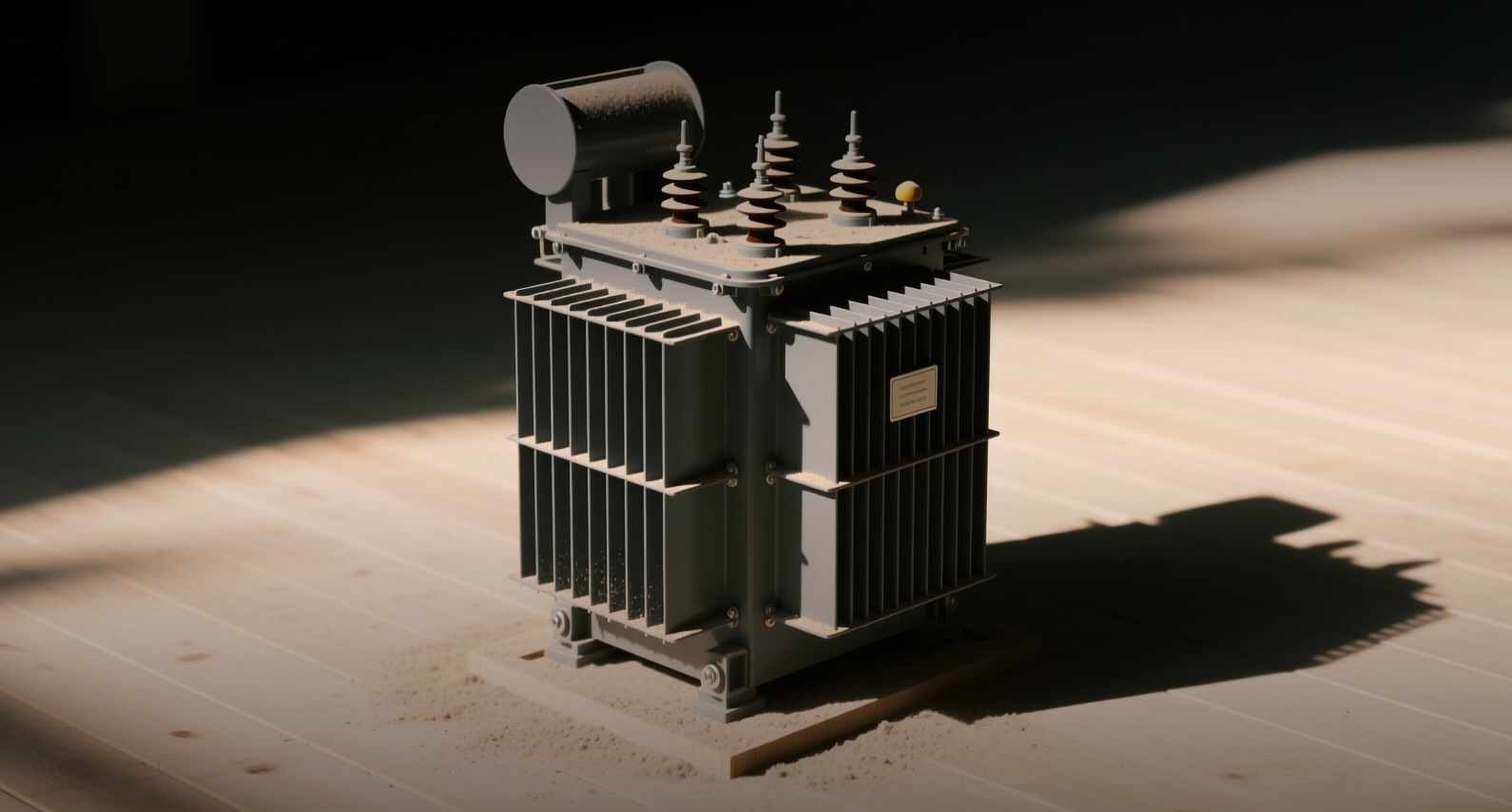
"Easier capital shortens the distance to financial close," Stephen Sopko, practice lead at HyperFrame Research, said. "It does nothing to the interconnect queue, transformer and turbine lead times, or permitting."
Nvidia will invest $2 billion initially, with a commitment to deploy an additional $1 billion as Lancium secures more planned power capacity, according to The Information. Lancium's Abilene Clean Campus in Texas spans about 1,000 acres with a 1.2-gigawatt grid interconnection approved by ERCOT, and the company is developing a 1.0 GW campus in Childress, Texas. Blackstone, which backs Lancium, has been central to Stargate, the AI data center initiative drawing in OpenAI, Oracle, and SoftBank.
The investment lands as the International Energy Agency projects data center electricity use will more than double to about 945 terawatt-hours by 2030, from roughly 415 TWh in 2024, with accelerated servers used for AI workloads growing about 30 percent annually. The U.S. Energy Information Administration forecasts record electricity use of 4,268 billion kilowatt-hours in 2026, rising to 4,391 billion kWh in 2027, with AI and data centers key drivers.
Power becomes the procurement bottleneck
For enterprise operators, the deal confirms that compute availability now depends on megawatts, transmission lines, and land, not just chip lead times. AWS has directed engineers to cut CPU waste as a broader compute crunch builds, according to The Information, an internal directive suggesting capacity headroom at hyperscalers is tighter than in prior cycles. Workload rightsizing and utilization monitoring are shifting from cost-management exercises into contingency planning.
The financing side is moving in parallel. Nvidia has partnered with Apollo, BlackRock, Blackstone, Brookfield, Goldman Sachs, and KKR to establish platforms designed to mobilize more than $500 billion of third-party capital for AI infrastructure. The company and data center operator IREN plan to support deployment of up to 5 GW of Nvidia DSX-aligned AI infrastructure across IREN's pipeline. Rivals AMD and Intel could develop similar financing partnerships to help customers compete, which would narrow the capital advantage Nvidia now holds.
Talent shifts and the climate test
A talent shift is also reordering where frontier AI research happens. Jeff Dean, Alphabet's former chief scientist and one of the most cited figures in machine learning, has co-founded Discovery Loop, backed by Radical Ventures, to apply AI to scientific discovery. The movement of deep research expertise out of hyperscalers increases the odds that specialized AI capabilities reach enterprises through APIs and partnerships outside the traditional hyperscaler channel.
The power buildout also tests Nvidia's climate commitments. The company matched 100 percent of its global electricity use with clean power in fiscal 2026 for sites under its operational control, and targets a 50 percent cut in absolute Scope 1 and Scope 2 market-based emissions by fiscal 2030 from a fiscal 2023 base. But Scope 3 emissions reached 10.7 million metric tons in fiscal 2026, nearly three times the fiscal 2024 figure of 3.64 million tons, as sold GPUs drive most of the footprint.
Nvidia shares fell about 3 percent in the session after the Lancium reports as investors weighed the scale of its infrastructure commitments. The company reported $81.6 billion in revenue for the first quarter of fiscal 2027, up 85 percent from a year earlier, with data center revenue of $75.2 billion up 92 percent. The next marker to watch is whether the additional $1 billion Lancium commitment closes as the developer secures incremental power capacity, a real-time gauge of how fast grid-connected AI land is being absorbed.
This article is for informational purposes only and does not constitute investment advice.
