
ByteDance and ZTE's Nubia are scaling their AI smartphone bet from 30,000 engineering prototypes to 200,000 production units.
ByteDance and ZTE's Nubia are scaling their AI smartphone bet from 30,000 engineering prototypes to 200,000 production units.
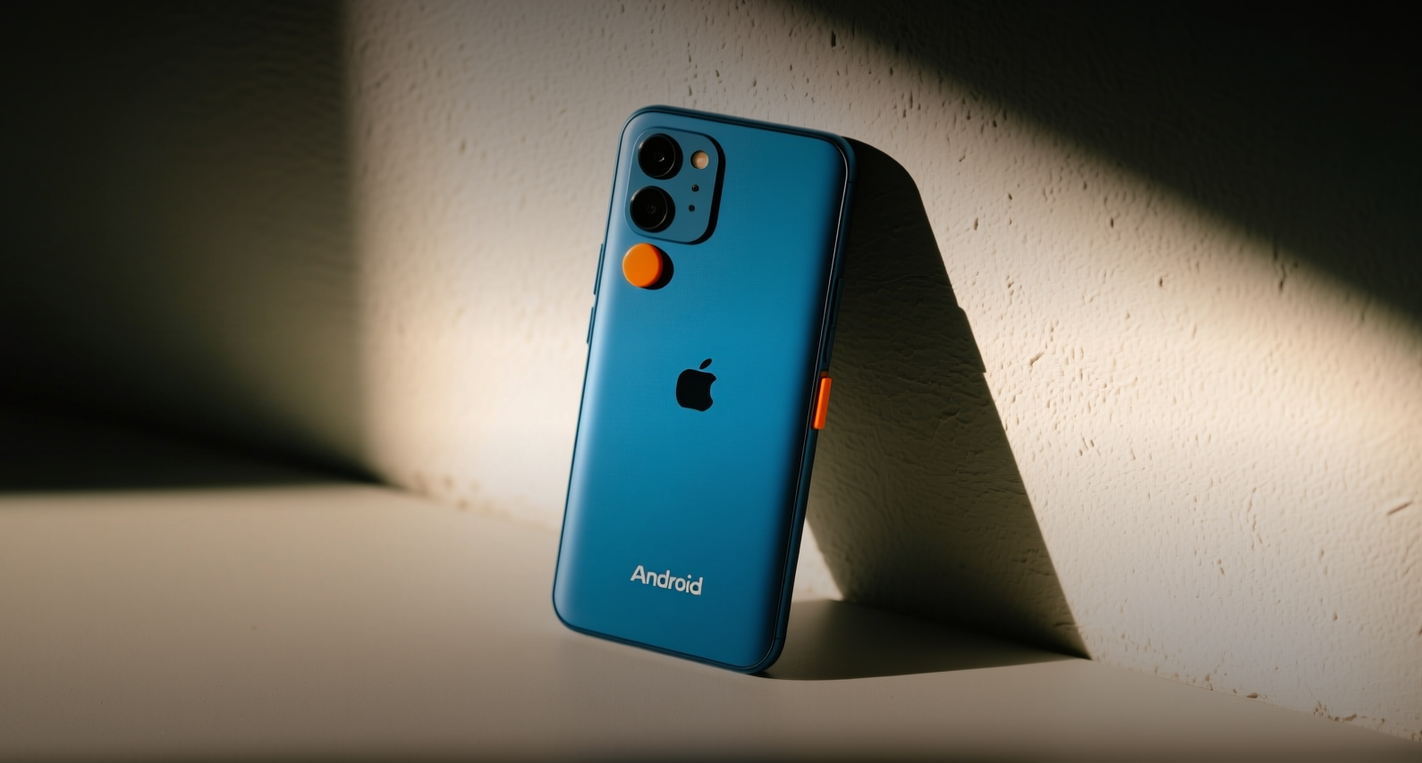
ByteDance and ZTE's Nubia are scaling their AI smartphone bet from 30,000 engineering prototypes to 200,000 production units, with the second-generation Doubao phone debuting at the World Artificial Intelligence Conference in Shanghai on July 17.
The device, which features a dedicated orange AI button and a blue chassis, will run Obric UI 2.3.0.0 — an operating system that ByteDance has iterated 10-plus times over 216 days since the first-generation M153 launched in December 2025. Ni Fei, senior vice president at ZTE and president of Nubia, confirmed the phone will be a mass-produced flagship, according to a post on Weibo.
Supply chain sources told Chinese media Jiemian that total production for the second-generation model stands at roughly 200,000 units, with an initial batch of fewer than 100,000. That compares with the first-generation M153, which sold out its 30,000-unit run at 3,499 yuan ($480) in a single day and never saw a restock. The new phone is expected to carry the Snapdragon 8 Gen 5 processor, with display supplier potentially shifting from Tianma to BOE and battery cells sourced from ATL through Desay's management system, according to industry leaks.
The stakes extend beyond hardware. ByteDance is positioning Doubao as a system-level AI agent that can navigate apps, compare prices and complete purchases autonomously — a capability that puts it in direct tension with China's largest internet platforms. WeChat, Alipay and DingTalk still restrict the Doubao assistant's AI operations, while Taobao and Xianyu maintain limits on automated interactions. Tencent founder Ma Huateng said at the company's annual meeting that transmitting users' mobile screens to the cloud is "extremely insecure and irresponsible," according to people familiar with the remarks.
The ecosystem bottleneck
The Doubao assistant's GUI agent architecture — which reads the phone's screen and taps through interfaces the way a human finger would — has triggered fraud-detection systems across major apps. Banking apps and Alipay refused to cooperate with the first-generation prototype entirely, ByteDance disclosed at the time. The company responded by disabling access to financial apps and certain gaming scenarios.
ByteDance has made progress on compatibility. The assistant now works with Didi, JD.com and WeCom for Enterprise, and the company has implemented granular permission controls that allow non-sensitive operations while blocking payments, transactions and account security scenarios. But the core conflict remains: the persistent-memory architecture that makes an AI companion feel personal is structurally incompatible with the anti-addiction and security requirements that platforms and regulators demand.
That tension intensified on July 15, when China's AI Companion Law took effect, forcing ByteDance to shut down Doubao's personalized companion features and Alibaba to disable Qwen's humanlike agent functions. ByteDance redirected users to a separate app called Maoxiang, where compliance architecture can be built from scratch rather than retrofitted. The regulatory environment adds another layer of complexity for the Doubao phone's mass-market ambitions.
Competitive landscape and investment angle
Nubia's approach differs from the API-based integration strategy that Samsung, Apple and Google are pursuing. Samsung's Galaxy S26 Ultra uses Gemini with app-to-app integrations; Apple Intelligence, cleared for China on July 15, will embed Alibaba's Qwen and Baidu's AI into iOS, iPadOS and macOS devices sold in the country. Apple reported a 24.4% year-over-year increase in iPhone shipments in China in the second quarter, suggesting the AI feature set is becoming a competitive differentiator.
Nubia's GUI agent method bypasses the need for developer cooperation but introduces fragility: the AI takes roughly 30 seconds to complete a simple check-in task that a human can finish in 10, according to hands-on tests by Chinese tech media. Deeper menus and unconventional layouts frequently disorient the system.
For investors, the Doubao phone represents ByteDance's most aggressive hardware bet to date. The company has struck a deal with Qualcomm to supply millions of custom ASICs for its AI systems, signaling long-term commitment to on-device AI processing. ZTE shares, which trade on the Shenzhen Stock Exchange, could see sentiment lift if the phone achieves sellout rates similar to the first generation. But the 200,000-unit production run — compared with 2 million to 3 million units for mainstream flagships — underscores that this remains a controlled market test rather than a volume play. The outcome of negotiations with major app developers over AI permissions will determine whether the Doubao phone can move from niche experiment to mainstream contender.
This article is for informational purposes only and does not constitute investment advice.
