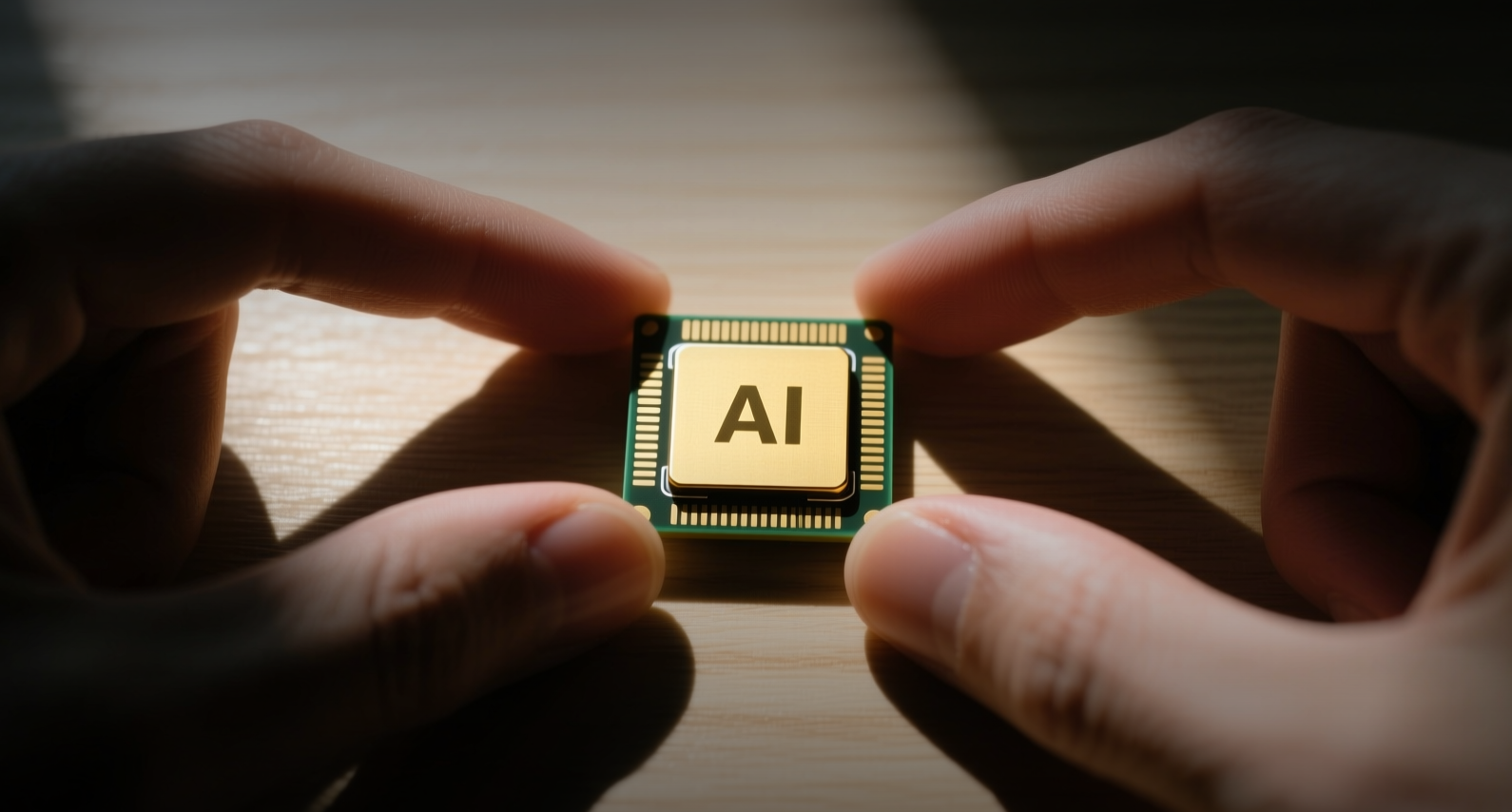
Broadcom's role as the common design partner behind Meta's Iris, Google's seventh-generation TPU, and OpenAI's Jalapeño chip reveals a structural consolidation in AI hardware that no single product announcement captures on its own.
Meta's custom AI chip, code-named Iris, passed six weeks of bug testing without a major architectural flaw and is headed to manufacturing in September, according to an internal memo reviewed by Reuters. The chip is not designed to replace Nvidia or AMD hardware — the memo makes that explicit — but to handle the specific inference workloads that keep Facebook and Instagram running, where purpose-built silicon can outperform general-purpose GPUs on cost.
"The Iris chip is a supplement, not a replacement," Daniel Newman, chief executive of the Futurum Group, said in response to the Reuters report. "It is augmenting to meet ambitious capacity requirements and demand expectations."
Iris belongs to Meta's MTIA program — Meta Training and Inference Accelerators — a four-generation chip roadmap the company unveiled in March 2026. The chip is built on an open-source RISC-V instruction set architecture and runs on PyTorch, vLLM, and Triton, the same tools Meta's AI engineers already use. Published research on the second-generation MTIA design, presented at the International Symposium on Computer Architecture in 2025, found that replacing GPUs with the MTIA 2i cut total cost of ownership by 44% while maintaining competitive performance per watt for recommendation workloads.
The architectural insight behind that saving is straightforward: Meta's dominant AI compute task — the deep learning recommendation model that decides what post, ad, or video appears next in a user's feed — is memory-bound, not compute-bound. It involves enormous, sparsely accessed embedding tables that require irregular memory lookups rather than the dense matrix operations GPUs are optimized for. Running those workloads on an Nvidia H100 leaves most of its raw compute capacity idle while waiting on memory. The MTIA chips use large on-chip SRAM and cheaper LPDDR5 DRAM instead of GPU-standard high-bandwidth memory, matching the actual data access pattern.
Broadcom's consolidation is the bigger story. Three of the five major custom AI chip programs currently running at frontier labs — Meta's Iris, Google's TPU, and OpenAI's Jalapeño — route through the same design firm. Broadcom reported $10.8 billion in AI semiconductor revenue in its fiscal second quarter of 2026, a 143% increase year over year. CEO Hock Tan guided to $16 billion in the third quarter and projected AI chip revenue in excess of $100 billion for fiscal 2027. Together with Marvell, which handles Amazon's Trainium and Microsoft's Maia, Broadcom controls roughly 95% of the custom AI ASIC co-design market.
The hyperscaler race to reduce dependence on Nvidia has simultaneously deepened every major AI company's dependence on a single factory-nation. All five custom chip programs — Meta, Google, Amazon, Microsoft, and OpenAI — are manufactured by Taiwan Semiconductor Manufacturing Co., which produces roughly 90% of the world's most advanced semiconductors. A disruption to TSMC's Taiwan operations would halt all five programs simultaneously.
Meta's own chip program has not earned the benefit of the doubt. Reuters described the MTIA effort as one that "has floundered since its launch more than half a decade ago." In February 2026, Meta scrapped a more ambitious training chip, code-named Olympus, after its supporting software proved less stable than Nvidia's ecosystem and its cutting-edge 2-nanometer design raised manufacturing risk. Meta subsequently signed a multiyear deal worth several billion dollars to lease Google's TPUs while simultaneously expanding its Nvidia purchases.
The scale of the investment being hedged explains the urgency. Meta projects capital expenditure of up to $145 billion on AI infrastructure in 2026 alone. The company added one gigawatt of computing capacity in the first half of the year and plans to reach approximately seven gigawatts by year-end, with a 2027 target of 14 gigawatts. To secure components for that buildout, Meta has locked in long-term supply agreements with Samsung Electronics for memory chips, SanDisk for flash storage, and Sumitomo Electric for fiber-optic equipment.
Deutsche Bank analyst Benjamin Black projected that by combining Iris and Nvidia chips, Meta could reduce data center costs by as much as 35% by 2027, concentrated in inference and recommendation workloads. Bank of America has been explicit that Iris is not responsible for 2026 cost savings, which instead come from Meta's data center construction and procurement discipline. Iris is a 2027-and-beyond story.
Meta trades at 21 times forward earnings, a discount to most Magnificent Seven peers that trade at multiples of around 25 or higher. The company generated $124 billion in trailing cash flow from operations, giving it the financial capacity to fund its AI buildout. Whether Iris delivers the cost savings analysts project will determine if the market re-rates the stock closer to its peers — or concludes that the $145 billion capex bet has not yet produced a commensurate return.
This article is for informational purposes only and does not constitute investment advice.