
Asian memory stocks have shed roughly $200 billion in market value since June as the AI trade shifts from infrastructure buildout to earnings delivery.
Asian memory stocks have shed roughly $200 billion in market value since June as the AI trade shifts from infrastructure buildout to earnings delivery.
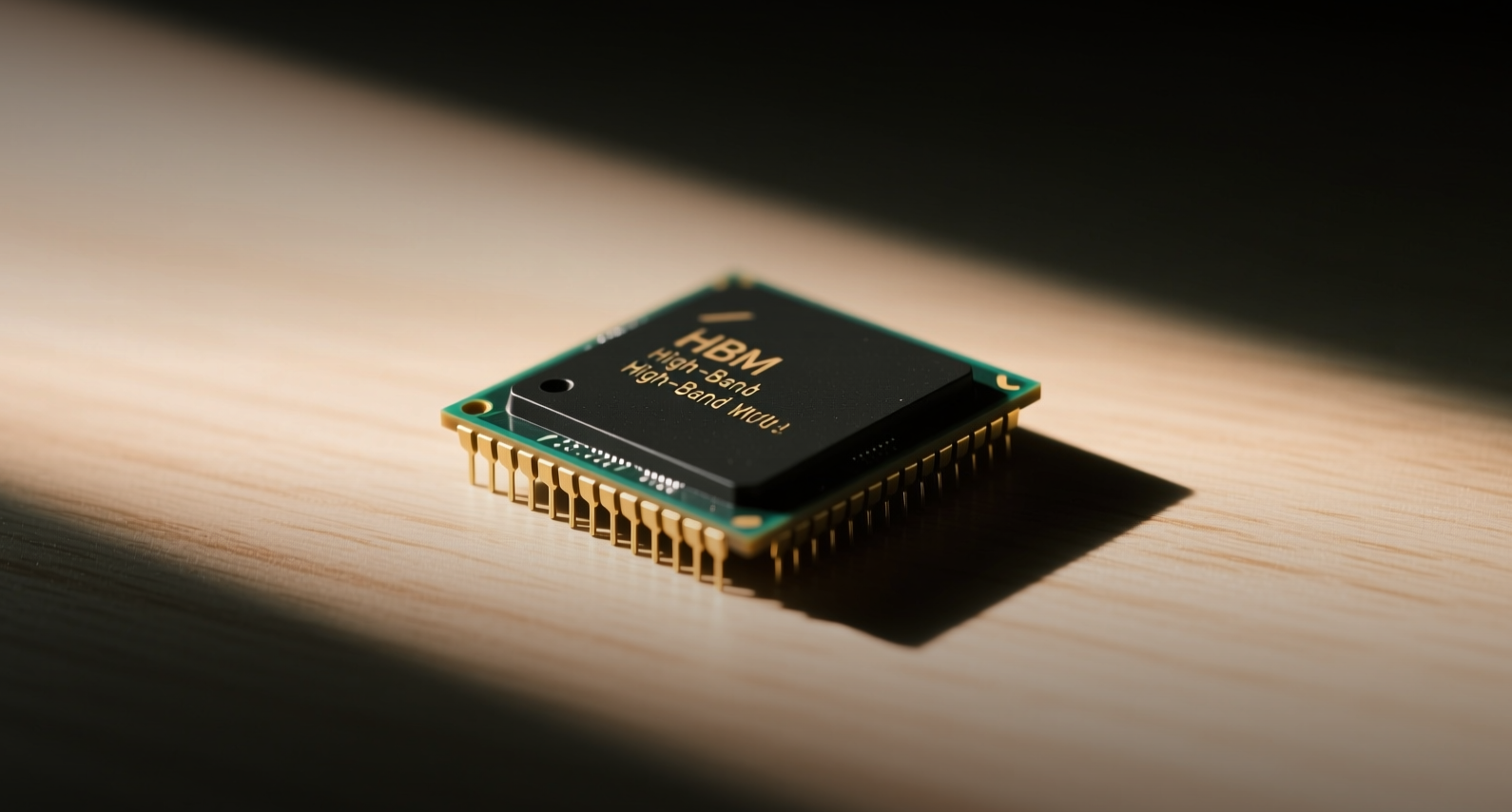
Asian memory stocks have shed roughly $200 billion in market value since June as the AI trade shifts from infrastructure buildout to earnings delivery.
Asian memory stocks have fallen about 30% from their June highs, a rout that reflects a market struggling to reconcile lofty AI expectations with the reality of high-bandwidth memory pricing, according to JPMorgan Chase & Co.'s latest institutional survey.
"The market is moving from the AI infrastructure expansion phase to an earnings validation phase," Jay Kwon, an analyst at JPMorgan, said after走访 more than 50 Hong Kong-based institutional investors.
The selloff has outpaced the Philadelphia Stock Exchange Semiconductor Index's roughly 11% decline over the same period. Kwon estimates about 70% of current market sentiment hinges on whether hyperscale cloud providers can sustain upward revisions to capital expenditure, with investors expecting $1 trillion to $1.5 trillion in cumulative CSP capex over the next three to six months.
At the center of the debate is HBM pricing — the most critical variable for memory makers' future profitability. While many buy-side investors expect HBM per-gigabyte prices to double year-over-year by 2027, JPMorgan forecasts a more modest 25% to 30% increase, a gap that could determine whether the sector's valuation multiples contract further or stabilize.
The HBM Pricing Disconnect
High-bandwidth memory, the specialized DRAM that powers Nvidia Corp.'s H100 and Blackwell graphics processors, currently trades at an industry average of about $1.80 per gigabyte, Kwon estimates — slightly below some high-end server DRAM products. The discrepancy stems partly from how memory makers negotiate with cloud customers: rather than pricing HBM in isolation, suppliers and hyperscalers evaluate the combined profitability of DRAM, NAND and HBM together, capping the upside for any single product line.
The annual repricing cycle for HBM contracts, however, offers a potential upside. Unlike traditional DRAM long-term agreements that lock in prices for three to five years, HBM is renegotiated every year, meaning suppliers retain pricing power if AI demand continues to outpace supply. "If AI demand keeps surprising to the upside, HBM pricing has room to run," Kwon said.
Supply Tightness and the LTA Debate
Long-term agreements have become a flashpoint in investor discussions. More than half of the institutional investors JPMorgan surveyed remain cautious about LTA adoption, citing opaque coverage ratios at South Korean memory makers and difficulty comparing contract quality across Samsung Electronics Co. and SK Hynix Inc.
JPMorgan takes a more constructive view. The bank estimates more than half of all memory contract volume will eventually fall under LTA frameworks, and argues that take-or-pay provisions provide order visibility without capping future price increases. Portions of new orders can still be re-priced at higher rates, while non-LTA volumes benefit from tightening supply-demand dynamics.
The fundamental supply picture supports the bull case. DRAM supply currently satisfies only 50% to 60% of order demand, while NAND meets 70% to 80%, according to JPMorgan's channel checks. The bank expects DRAM tightness to persist through 2027 to 2028 even as wafer capacity expands.
Enterprise solid-state drives are emerging as a new growth vector. Industry estimates project enterprise SSD shipments approaching 500 exabytes in 2027, up roughly 50% year-over-year, driven by AI workloads including KV cache offload. North American hyperscalers are willing to pay $0.50 to $0.55 per gigabyte for enterprise SSDs, providing a floor for NAND pricing.
Investor Implications
For investors, the divergence between market expectations and JPMorgan's more measured HBM forecast represents the single largest risk to the memory thesis. If cloud providers' Q2 earnings fail to validate the capex upgrade cycle, or if HBM pricing disappoints relative to buy-side hopes, the 30% correction could deepen. Conversely, if JPMorgan's moderate view proves too conservative and HBM pricing surprises to the upside, SK Hynix — the dominant HBM supplier with an estimated 50% market share — and Samsung stand to benefit disproportionately.
SK Hynix shares trade at roughly 6 times forward earnings following the selloff, while Samsung Electronics trades at about 1.2 times book value, near five-year lows. The next catalyst is the Q2 earnings season, when hyperscaler capex guidance and memory makers' HBM revenue disclosures will either validate or challenge the market's current pessimism.
This article is for informational purposes only and does not constitute investment advice.
