

The memory chip upcycle has already run longer than any in the industry's history, and $100 billion in contracted demand suggests it is nowhere near its end.
The memory chip upcycle has already run longer than any in the industry's history, and $100 billion in contracted demand suggests it is nowhere near its end.
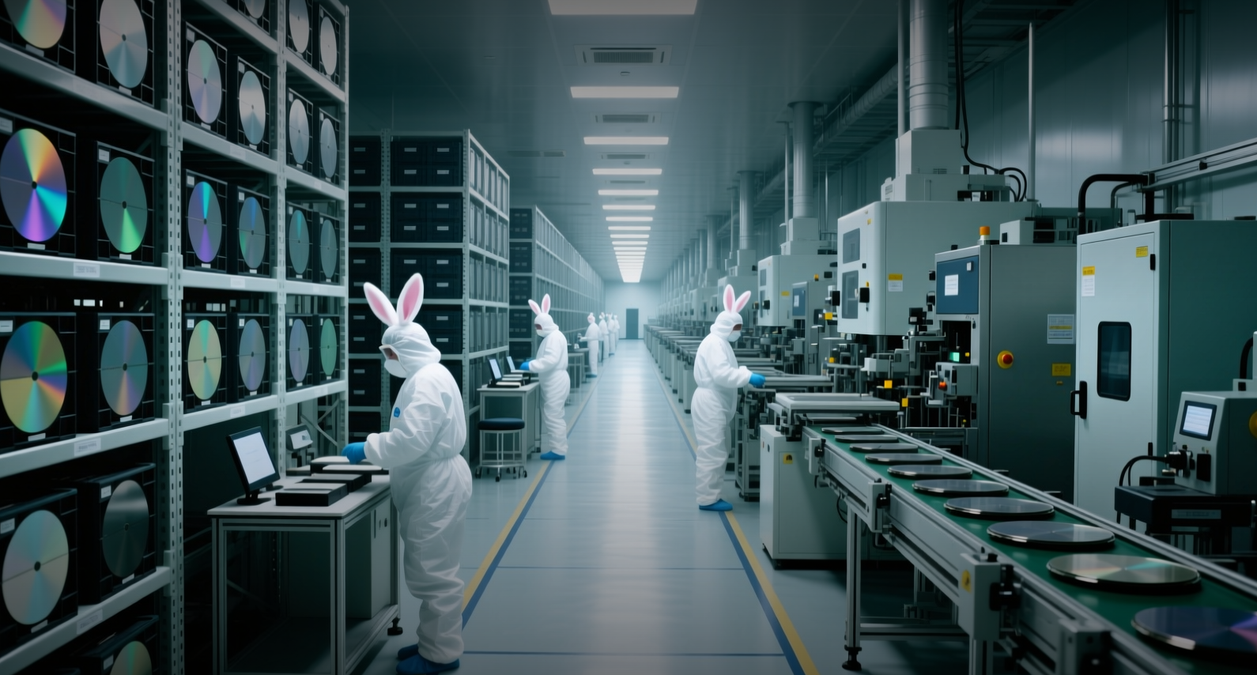
The memory chip boom that lifted Micron Technology, Sandisk, and SK hynix has outlasted every prior upcycle, with $100 billion in take-or-pay contracts through 2030 pointing to a structural break from the industry's boom-bust past. Micron's fiscal third-quarter revenue hit $41.46 billion, up 345.8 percent year over year, and the company guided to $50 billion for the current quarter — figures that would have been unthinkable a year ago.
"The floor prices support margins well above our peak quarterly margins in any past cycle," Micron management said on its earnings call, framing the contracted backlog as a departure from history. The company has signed 16 strategic customer agreements, take-or-pay contracts running five years from calendar 2026 through 2030, with $22 billion in prepayments already on the books.
Non-GAAP EPS of $25.11 crushed the $21.39 consensus, extending a beat streak to seven consecutive quarters, while free cash flow reached $18.30 billion in a single quarter. Micron has shipped over $1 billion in HBM4 revenue, with the 12-high ramp tracking twice as fast as HBM3E 12-high, and its Core Data Center unit posted 87 percent gross margins.
The stakes are high because the memory industry has burned shareholders for decades through cycles that seemed as inevitable as the seasons. The current debate is whether this boom is structurally different — backed by AI infrastructure demand — or a cyclical spike destined to repeat the pattern. Citi reaffirmed its buy rating but cut its price target from $1,400 to $1,150, explicitly warning that DRAM and NAND pricing could cool by 2027.
The Competitive Math Favors the HBM Leaders
The clearest evidence of a longer cycle sits in high-bandwidth memory, the highest-margin slice of AI infrastructure spend. SK hynix commands 58 percent of the HBM market, with Samsung and Micron each holding 21 percent, according to Counterpoint data. HBM4 chips sell for roughly 80 percent more than the previous generation, and Micron is already producing 36-gigabyte, 12-layer modules for Nvidia's Vera Rubin platform.
The gap between the leaders and the rest is stark. Western Digital and Seagate Technology, the HDD and NAND-focused peers, have zero HBM exposure and miss the fastest-growing segment entirely. Micron's Core Data Center unit prints 87 percent gross margins — no HDD-first competitor comes close.
Micron is spending to close the technology gap, committing $250 billion to manufacturing expansion and $10 billion over the next decade to a new research campus in Boise. The company also launched a $250 million venture fund for AI startups and, starting December 9, plans to return 100 percent of excess cash flow to shareholders after CHIPS Act restrictions expire.
The Valuation Debate Is Wide Open
Wall Street's consensus remains firmly constructive — a survey of 57 analysts yields a median price target of $1,585, with nine strong-buy and 31 buy ratings and zero sells. D.A. Davidson raised its target to $2,000 on Saturday, and BMO initiated coverage with an Outperform and a $1,300 target, citing an "AI-memory supercycle."
Yet the skeptics have ammunition. GuruFocus's fair-value estimate of $594.08 implies Micron was overvalued by roughly 63 percent at its August 21 price of $966.78. Insider selling has totaled $181.8 million over three months, with CEO Sanjay Mehrotra's family trust planning to sell 40,000 shares worth about $39.59 million. Ken Griffin's Citadel unwound more than 80 percent of its AI-focused fund through nearly 100 block trades exceeding $4 billion, with Micron among the top positions sold.
Analyst projections for 2029 span an extraordinary range. Optimistic models see Micron reaching $266.1 billion in revenue and $168.9 billion in profit, implying annual growth of 43.4 percent. The bearish counter-case lands at $137.1 billion in revenue and $60.4 billion in profit. The chasm reflects a fundamental disagreement over whether the AI memory cycle is structural or merely cyclical.
Micron shares, up 228 percent since January and 729 percent over twelve months, closed Friday at €827.40, down 0.8 percent and 25 percent below their 52-week high. The stock trades at roughly 13 times forward earnings, a discount to the AI infrastructure complex that has priced in a generational boom. The September 22 fiscal fourth-quarter report — and the December 9 capital-return deadline — will be the next tests of whether the rally has more room to run.
This article is for informational purposes only and does not constitute investment advice.
