Ukraine's drone industry, set to produce 6 million units this year, is drawing US defense tech firms into a rapidly evolving battlefield laboratory.
Lantronix Inc. is supplying edge-compute hardware for autonomous drones in Ukraine, tapping a market where local manufacturers will produce 6 million to 7 million small attack drones this year — roughly 500,000 a month.
"Ukraine has emerged as one of the world's most advanced and rapidly evolving markets for unmanned systems," Kurt Hoff, chief revenue officer at Lantronix, said.
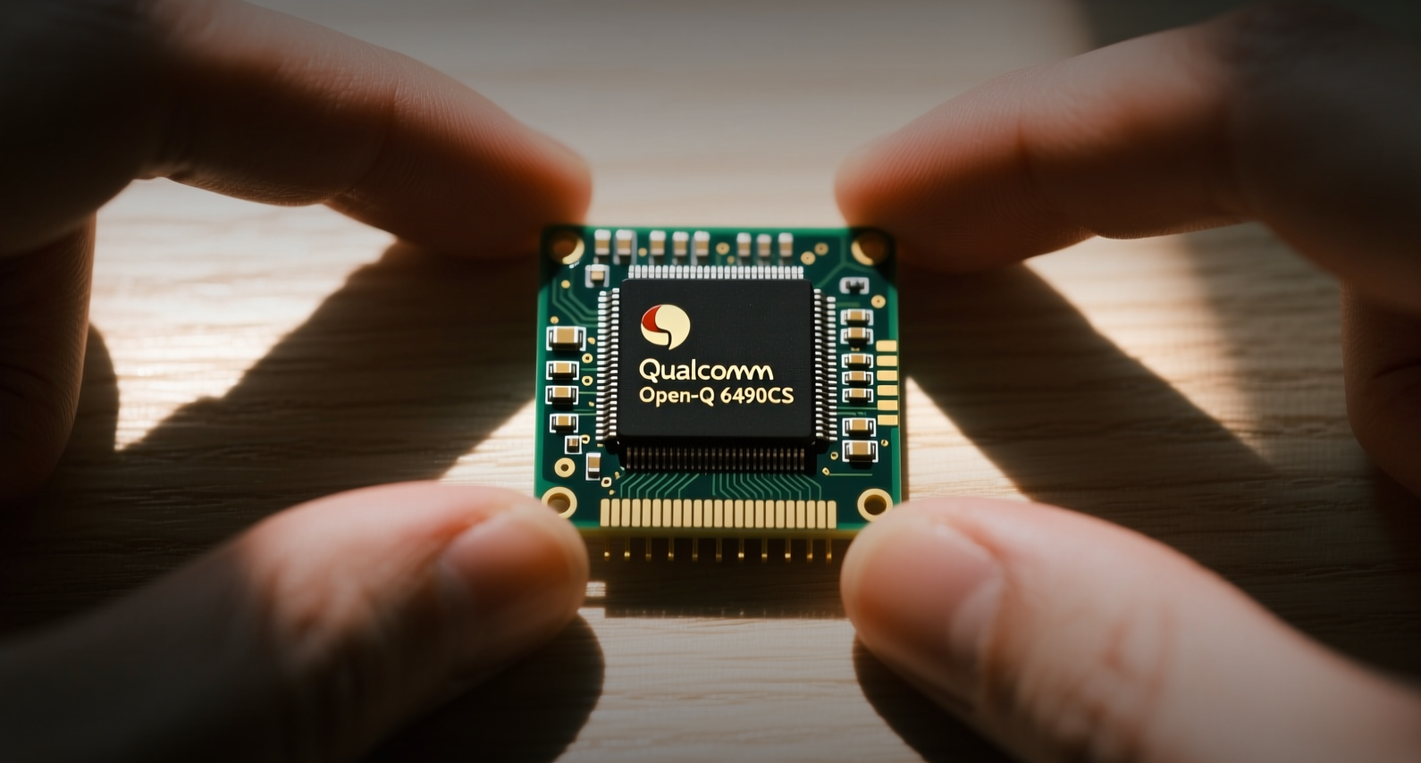
The Irvine, California-based company is integrating its Qualcomm-based Open-Q 6490CS edge-compute module into DoD Solution's AURA AI autonomy platform, which handles perception, visual navigation, target recognition and terminal guidance directly on the aircraft. Engineering teams have completed platform integration, and initial production is underway, the companies said.
Lantronix shares, which trade on the Nasdaq, stand to benefit from a Pentagon push to build a domestic drone supply chain. The Defense Department's $1.1 billion Drone Dominance Program will have ordered just under 200,000 drones cumulatively by February, while requiring that future orders use wholly American-made parts — a rule that favors NDAA-compliant suppliers such as Lantronix.
The partnership places Lantronix at the intersection of two converging trends: Ukraine's wartime demand for autonomous systems and the Pentagon's effort to replicate that production capacity on US soil. Travis Metz, deputy director and chief operating officer of the Defense Innovation Unit who runs the Drone Dominance Program, said the US is still in the earliest, hardest phase of building a domestic drone industry. "It's much harder to get from zero to 200,000" than it will be to scale up further, he told Reuters.
DoD Solution's AURA platform is designed for GPS-denied and communication-constrained environments — conditions that define the Ukrainian battlefield. The Estonian-Ukrainian developer works with unmanned platform manufacturers to integrate AI-powered autonomy across FPV drones, fixed-wing UAVs and interceptor systems. "Modern autonomous drones are defined not only by their sensors, but by the intelligence running onboard," Roman Hapachylo, CEO of DoD Solution, said.
The Pentagon's supply-chain overhaul adds urgency to the collaboration. A revised framework released July 23 states the government's ultimate goal is "a wholly domestic" small unmanned aircraft system supply chain, banning components such as Chinese-made brushless motors and battery packs from future orders. None of the drones from the 19 companies competing in next month's Gauntlet II test at Fort Carson, Colorado, may contain such parts, Metz said — a stricter standard than the program's first phase.
All six Ukrainian companies invited to Gauntlet II have entered or are moving toward joint ventures with US manufacturers as a condition of future orders. F-Drones has partnered with Ohio-based Ukrainian Defense Drones, which opened a facility near Toledo, while General Cherry agreed to a joint venture with New Hampshire's Wilcox Industries.
For Lantronix, the engagement extends beyond hardware sales. The company's advanced engineering services provide a recurring revenue stream through development, integration, testing and ongoing program execution, Hoff said. Lantronix trades at roughly 22x forward earnings, according to data compiled by Bloomberg, as the company seeks to convert its Ukraine foothold into broader defense contracts across Europe and the US.
This article is for informational purposes only and does not constitute investment advice.