


Ford and GM are competing for tariff advantages as Washington's 50 percent U.S.-content proposal threatens to add billions in annual costs for each automaker.
Ford and GM are competing for tariff advantages as Washington's 50 percent U.S.-content proposal threatens to add billions in annual costs for each automaker.
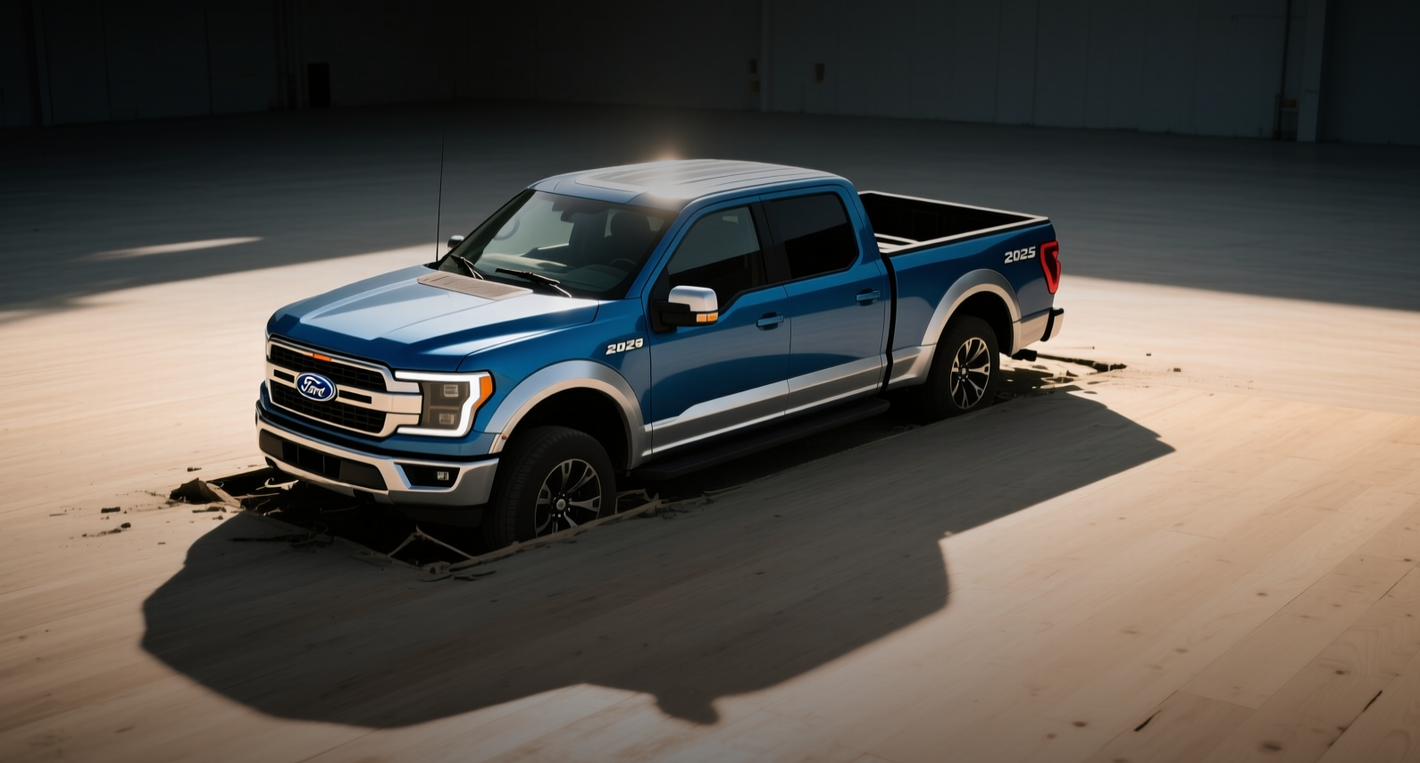
Ford and General Motors are competing for more favorable tariff treatment as Washington's push for 50 percent U.S.-made vehicle content threatens to add at least $2 billion in annual costs for each automaker.
Ford CEO Jim Farley said the company was initially unprepared for the administration's commitment to boosting U.S. auto production but quickly adjusted. "It dawned on us very quickly, 'Hey, look, we need to make some changes here,'" Farley said in a joint interview with Commerce Secretary Howard Lutnick.
GM expects gross tariff-related expenses of $2.5 billion to $3.5 billion this year, potentially exceeding 20 percent of operating profit. Ford has pegged its net tariff hit at about $1 billion. Both automakers currently face roughly 25 percent duties on imports from Mexico and Canada, while Japanese, South Korean and European rivals exporting into the U.S. face a flat 15 percent tariff.
The stakes extend beyond near-term costs. Washington's proposal to raise the U.S.-content threshold to 50 percent from the current North American requirement of 75 percent would force supply chain restructuring across the industry. With a fourth round of U.S.-Mexico trade talks scheduled next month, the outcome will determine whether Detroit's automakers can compete against foreign rivals that face lower tariff burdens.
Ford has moved first to show compliance. The Dearborn, Michigan-based automaker said it will shift production of some Lincoln models from China to the U.S. beginning in 2030, citing the 52.5 percent tariff on the Lincoln Nautilus — its main China-built vehicle — as a driving factor. Ford sold about 34,000 Nautilus vehicles in the U.S. last year. GM has announced it will move production of its Buick Envision to the U.S. from China starting in 2028.
The onshoring announcements come as Detroit's automakers prepare to argue to the Trump administration that its proposals for a revised North American trade deal could cost the companies billions and hurt their competitiveness. The American Automotive Policy Council, which represents Ford, GM and Stellantis, said in a June 30 statement that U.S. automakers are at a disadvantage to foreign rivals who export into the U.S. and face a flat 15 percent tariff.
GM CEO Mary Barra said on a July earnings call that the company is focused on "making sure that the U.S. automakers are going to be able to compete and win when we look at what the tariff rates are for Europeans, the Japanese and the Koreans."
One U.S. auto executive noted that Trump more quickly forged deals with Korea and Japan because those governments could advocate on behalf of their automakers as part of broader trade agreements. "We don't have a president or a prime minister who can call up Trump on our behalf," the executive said.
The tariff burden is already substantial. GM's gross tariff expenses of $2.5 billion to $3.5 billion this year could represent more than 20 percent of its operating profit. Ford's net tariff hit of about $1 billion comes on top of the costs of restructuring its supply chain. The Connected Vehicle Rule, which bans some Chinese technology and hardware in U.S. models, has added another layer of compliance pressure. Ford was among several companies requesting authorization from the Commerce Department to continue selling vehicles potentially restricted under the rule.
U.S. and Mexican officials are planning a fourth round of trade talks next month, while Canadian trade officials have been meeting with their U.S. counterparts this week to avert another round of tariffs on Canada set to take effect next week. The outcome of these negotiations will determine whether the 50 percent U.S.-content requirement becomes reality — and whether Detroit's automakers can absorb the added costs without losing ground to foreign competitors.
The last major escalation in U.S. auto tariffs came in 2025, when the administration imposed 25 percent duties on vehicles and parts from Mexico and Canada. That move pushed GM's tariff bill to billions and forced both automakers to accelerate plans to shift production. If the new content requirements are implemented, the added compliance costs could push some vehicle prices up by thousands of dollars, potentially dampening demand in an already competitive market.
This article is for informational purposes only and does not constitute investment advice.
