

Key Takeaways:
- DFSX launched the DF1000 AI chip using a fully domestic supply chain
- The chip bypasses US export controls that block Nvidia H100 sales to China
- Performance specs remain undisclosed; commercial viability is unverified
Key Takeaways:
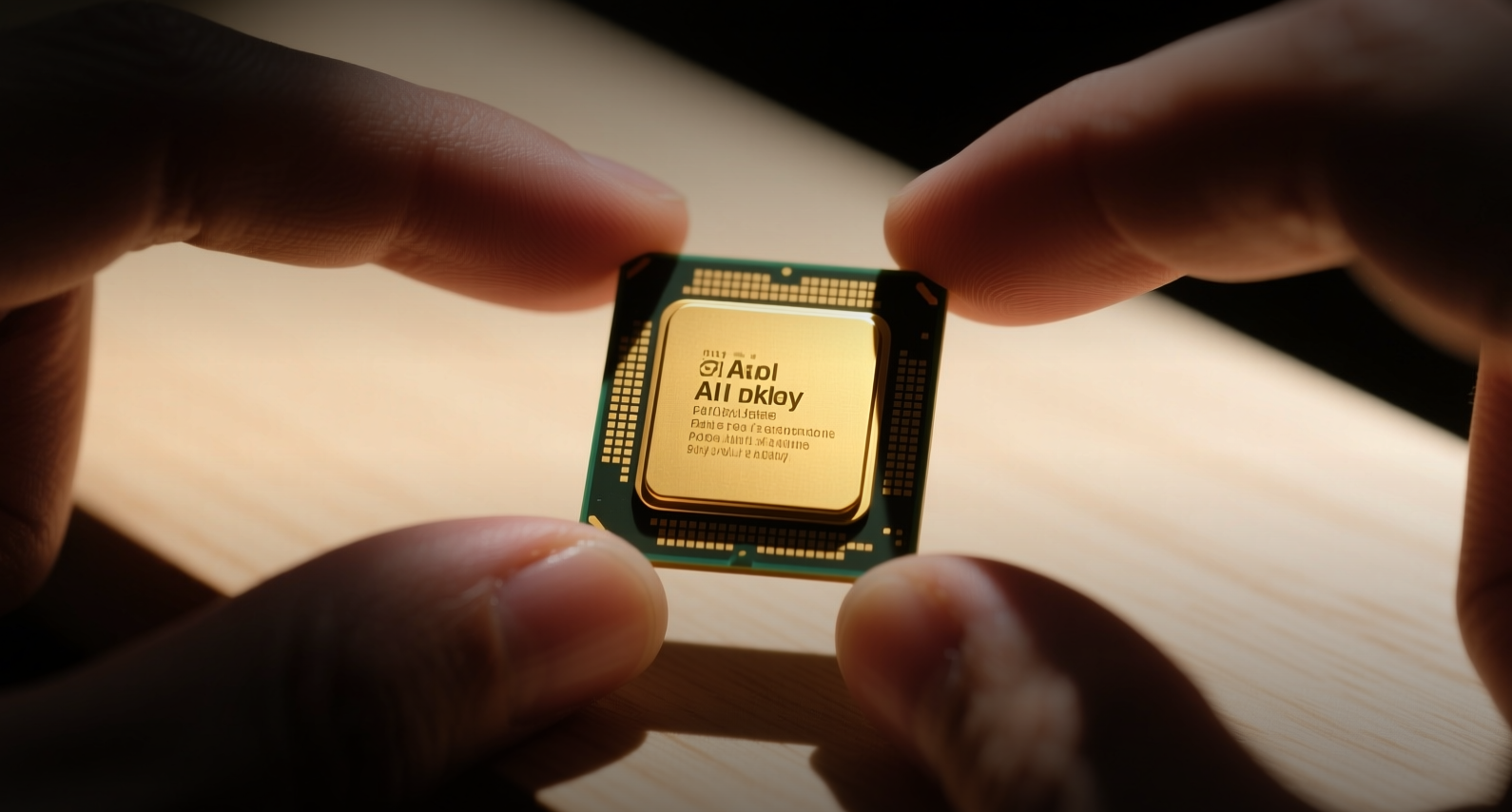
Chinese AI chip startup Dongfang Suanxin released the DF1000 processor built entirely through domestic suppliers, bypassing US export controls that have blocked Chinese access to advanced semiconductor technology.
Chinese AI chip startup DFSX introduced the DF1000 processor built through a fully domestic supply chain, bypassing US export controls that have blocked Chinese access to advanced Nvidia chips.
"The DF1000 represents a milestone in domestic AI chip production, using a fully indigenous supply chain to circumvent restrictions on high-end technology," DFSX said in a statement. The company did not disclose the chip's process node or performance specifications.
For context, Nvidia's H100 — built on TSMC's 4nm process with HBM3 memory — delivers 990 TFLOPS of FP16 performance but has been barred from sale to China since October 2022. The US expanded restrictions in 2023 to cover Nvidia's China-specific A800 and H800 variants. Huawei's Ascend 910B, the most advanced domestically produced alternative, has faced production yield challenges and performance gaps versus Nvidia's offerings.
The DF1000's commercial viability remains unverified without independent benchmarks or disclosed customers. If the chip delivers competitive inference performance, it could reduce Chinese AI companies' dependence on restricted processors and pressure Nvidia's data center business, which accounts for the majority of its $130 billion-plus market capitalization. Chinese semiconductor equipment makers and foundries stand to benefit from the domestic supply chain narrative, though the timeline for mass production remains unclear.
The DF1000's launch comes as the US and its allies tighten controls on semiconductor manufacturing equipment. Dutch lithography tool maker ASML has been barred from exporting its extreme ultraviolet machines to China, while the US has restricted exports of chip design software from Cadence and Synopsys. These measures have forced Chinese chip designers to rely on older domestic fabrication technology, typically at 7nm or larger process nodes from Semiconductor Manufacturing International Corp.
DFSX's achievement — if verified — would demonstrate that Chinese chip startups can produce competitive AI accelerators using domestic foundry services, potentially at larger process nodes than the 3nm and 4nm nodes used by TSMC for Nvidia's latest chips. The trade-off typically comes in power efficiency and transistor density, which affect operating costs for data center operators running large-scale AI workloads. Chinese foundries have made progress on advanced packaging techniques such as chiplet-based designs, which can partially compensate for node disadvantages by combining multiple smaller dies.
The broader Chinese AI chip sector includes Huawei's Ascend series, Cambricon Technologies, and Biren Technology, all of which have faced varying degrees of US sanctions. DFSX's fully domestic supply chain approach differentiates it from peers that still rely on TSMC or Samsung for fabrication. The Chinese government has prioritized semiconductor self-sufficiency under its "Made in China 2025" initiative, directing billions of dollars in state funding toward domestic chip production capacity.
Beijing has invested more than $140 billion through its National Integrated Circuit Industry Investment Fund, known as the "Big Fund," to build domestic chip manufacturing capacity. SMIC, China's largest foundry, has been producing 7nm-class chips using deep ultraviolet lithography equipment, a workaround that achieves resolution normally requiring ASML's extreme ultraviolet machines.
For Western AI chip investors, the key question is whether DFSX's DF1000 can match the inference performance of Nvidia's H100 or the forthcoming Blackwell architecture at a competitive price point. Even partial success — achieving 60 percent to 70 percent of H100 performance at a lower cost — could shift procurement decisions among Chinese cloud providers such as Alibaba Cloud, Baidu AI Cloud, and Tencent Cloud, which collectively spend billions annually on AI accelerators.
Nvidia shares, trading at roughly 35 times forward earnings, have priced in continued dominance of the AI training and inference market. Any credible threat to that position — even years away from material revenue impact — could introduce a risk premium. Conversely, Chinese semiconductor foundry stocks such as SMIC could see re-rating if the DF1000 proves commercially viable, which would show that domestic process technology has reached a threshold sufficient for AI workloads. The lack of disclosed specifications means investors should treat the announcement with caution until independent benchmarks emerge.
This article is for informational purposes only and does not constitute investment advice.
