
All 12 economists surveyed by The Wall Street Journal expect the Bank of Canada to hold its overnight rate at 2.25% on Wednesday.
All 12 economists surveyed by The Wall Street Journal expect the Bank of Canada to hold its overnight rate at 2.25% on Wednesday.
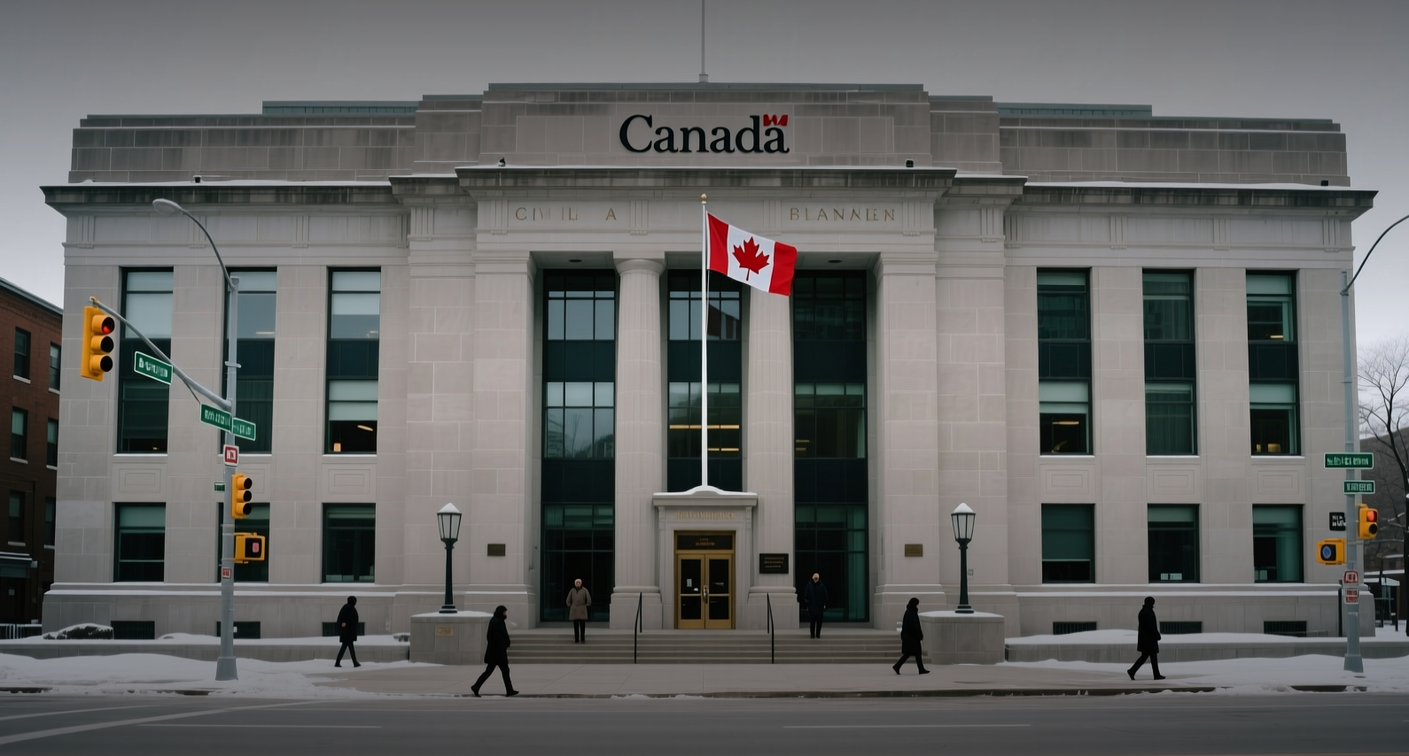
The Bank of Canada is set to hold its benchmark rate at 2.25% for a seventh straight decision Wednesday, keeping policy steady as a reignited trade war with the US clouds the growth outlook.
"The current standoff with the U.S. is dramatic and awful and frightening, but it's too fresh to impact the Bank's thinking," Clay Jarvis, mortgage and financial expert at NerdWallet Canada, said.
All 12 economists polled by The Wall Street Journal last week predict the hold, saying officials are unlikely to overreact after the collapse of trade talks last month. Washington has layered 50 percent tariffs on selected Canadian manufacturing and agricultural categories since mid-2026, on top of a universal 25 percent levy on most imports and a 10 percent duty on energy imposed in February 2025.
A hold would signal the central bank sees the economy as resilient enough to wait for clearer data on the tariff fallout, even as the US absorbs roughly 75 percent of Canadian merchandise exports. The next decision follows in October, with markets watching whether a sustained deterioration forces a cut.
The decision comes as Ottawa-Washington ties deteriorate sharply. US President Donald Trump announced a unilateral renaming of Lake Ontario as "Lake America" in US records, and reciprocal tariffs have drawn public attacks from the White House. Canadian Finance Minister Francois-Philippe Champagne sought to play down the impact at the G20 meeting in Asheville, saying Canada has "always been at the table and constructive, ready to discuss."
The Bank's July statement flagged "signs of improvement," with growth picking up and inflation expected to ease gradually, while noting risks from the Middle East war and US trade policy. Consumer spending has remained solid, and the housing market, despite continued weakness, is showing signs of stabilizing as the economy adjusts to tariffs.
The labor market has surprised to the upside. The unemployment rate fell 0.1 percentage point to 6.4 percent in July, according to Statistics Canada, giving officials room to hold. Jarvis said the Bank "may be forced to act if Trump's tariffs damage Canadian industry, but they'll require a few months of data before they can discern the true fallout."
The trade conflict has exposed Canada's structural dependence on its southern neighbor. The US accounts for roughly 75 percent of Canadian merchandise exports, while Canada takes less than 18 percent of US exports. Canada ships about 4 million barrels of crude oil a day to the US, representing over 90 percent of its total petroleum exports, leaving the energy sector directly exposed to the 10 percent duty.
The last time Ottawa faced a comparable tariff shock was in 2018, when the US imposed 25 percent duties on Canadian steel and 10 percent on aluminum under Section 232. Canada retaliated with surtaxes on 16.6 billion Canadian dollars of US goods, and the two sides eventually reached the USMCA. This cycle has escalated further, with Washington's universal tariffs and energy duties exceeding the sector-specific measures of the first Trump term.
For the Bank of Canada, the calculus is a waiting game. Holding keeps borrowing costs stable for households and businesses while policymakers gather data on how tariffs transmit through the economy. A cut would ease pressure on exporters but risk fueling inflation if the trade war pushes up import prices. The central bank's next scheduled decision comes in October, when the first full quarter of tariff data will be available.
This article is for informational purposes only and does not constitute investment advice.
