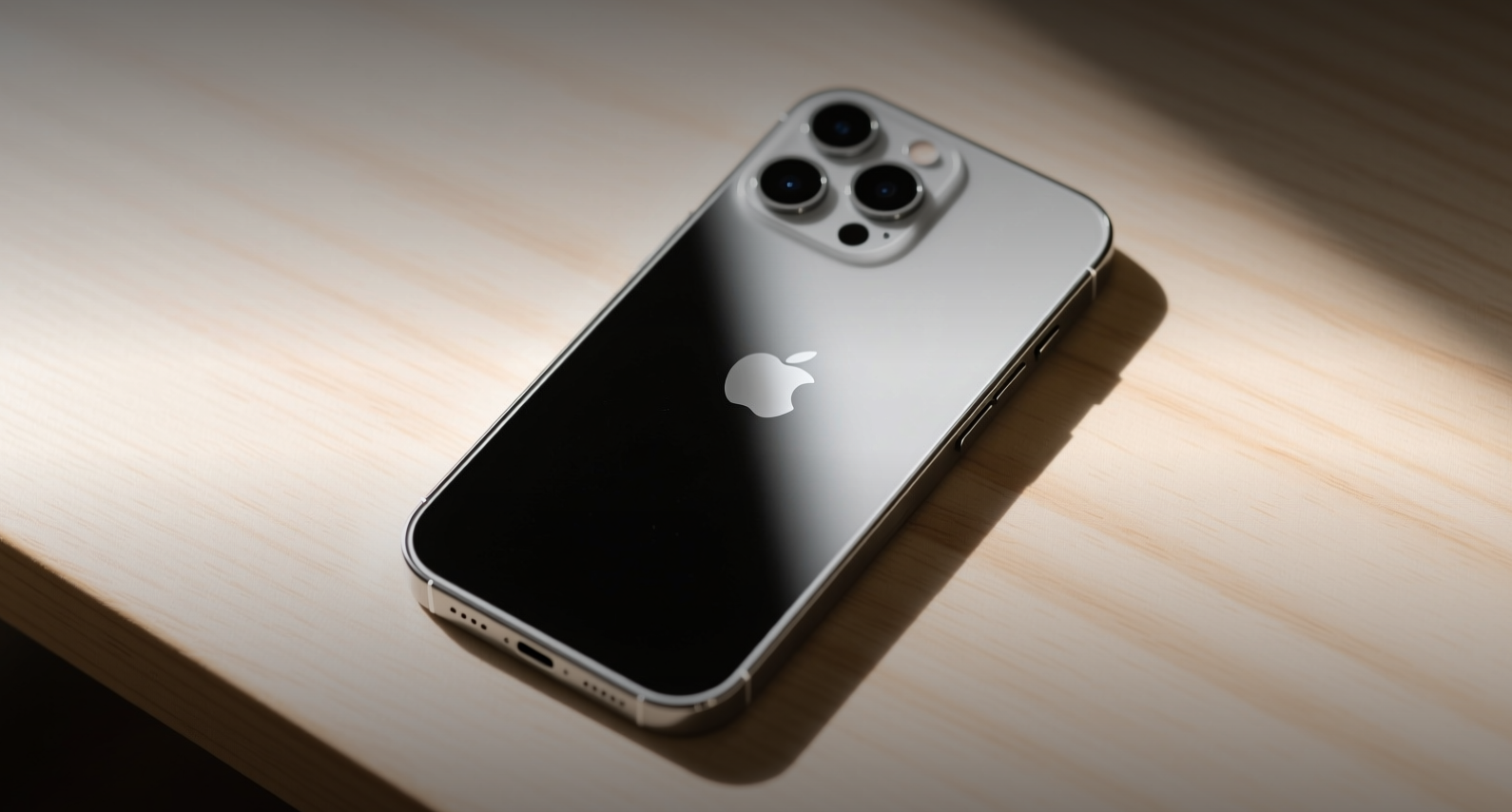
A Silicon Valley startup claims it can compress a 27-billion-parameter AI model small enough to run entirely on an iPhone, potentially reshaping Apple's on-device AI strategy.
Apple is evaluating technology from PrismML that compresses AI models to as little as one-fifteenth their original size, letting a 27-billion-parameter model run directly on an iPhone 15 without cloud processing.
"They're really evaluating our technology right now," Babak Hassibi, chief executive officer of PrismML, told CNBC, describing the discussions as early but "progressing nicely."
PrismML reduces each model value from 16 bits to one or three possible values, cutting memory requirements by 10 to 15 times. The compressed models generate responses six to eight times faster and consume three to six times less energy than conventional versions, according to the startup. The trade-off: a few percentage points of accuracy, with factual recall weakening before reasoning or coding skills.
Running more AI on the device rather than in the cloud would reduce latency, lower Apple's cloud-computing costs and strengthen its privacy pitch — a critical advantage as it tries to make Siri competitive with assistants from OpenAI and Anthropic. Morgan Stanley estimates Apple's memory costs per bit could rise roughly 190% year over year in fiscal 2027, making on-device efficiency gains increasingly valuable.
The technology emerged from Hassibi's research group at Caltech, which owns the underlying patents and licenses them exclusively to PrismML. In March, the startup raised a $16.25 million seed round backed by Khosla Ventures and other investors. PrismML publicly released two compressed versions of Alibaba's open-source Qwen model on Tuesday, designed to run on iPhones, MacBooks and Nvidia-powered PCs.
Apple already runs some AI features locally, including translation and certain summarization tasks. More complex requests are routed to its private cloud infrastructure or outside models. The company opened the public beta of iOS 27 this week, giving users their first broad access to the long-delayed Siri overhaul.
What It Means for Apple's Chip Strategy
Apple's ability to integrate the technology may hinge on its tight control over hardware and software. The company designs its own chips, giving it more flexibility to optimize memory usage and power consumption for on-device AI than rivals that rely on Qualcomm or MediaTek processors.
Horace Dediu, founder of Asymco, said the advantage is not simply using less memory but fitting a more capable model within the same physical limits. "They're trying to figure out how big a model and how clever a model they can fit on the device," he said.
Carolina Milanesi, president and principal analyst at Creative Strategies, said smaller models could let Apple move more demanding features onto the iPhone, including computational photography, video generation and health or fitness tools that rely on sensitive personal data. "The more you can do on device, the better it is," she said.
The Memory Demand Debate
PrismML's release comes as an intense debate unfolds over whether AI efficiency gains could eventually reduce demand for memory chips and expensive data center infrastructure. The startup said its approach could allow a cloud model that normally requires eight graphics processing units to run on one, while also moving models from servers onto phones.
Gil Luria, an analyst at D.A. Davidson, said shrinking models would not eliminate the need for processors or memory — it could simply shift more chips from data centers into phones. "It's not that you're not going to need the chip," Luria said. "You're still going to need the GPU, and you're still going to need the memory."
Tarun Pathak, research director at Counterpoint Research, cautioned that PrismML's claims still need to be proven at scale. "The ultimate test will be millions of queries, thousands of device combinations and robust testing at scale," he said.
Phil Solis, who leads IDC's research on client processors, said power consumption may be the biggest open question. A model capable enough to run continuously in the background for agent-like tasks could drain a phone's battery even if it requires less memory.
Investor Takeaway
If PrismML's technology is validated, Apple could reduce its reliance on cloud AI infrastructure while improving Siri's capabilities — potentially justifying premium pricing for future iPhones. Morgan Stanley expects Apple to raise the starting price of comparable iPhone 18 models by about $200 to protect margins against rising memory costs. Apple shares trade at roughly 30 times forward earnings, with the market yet to price in the potential savings from on-device AI processing.
This article is for informational purposes only and does not constitute investment advice.