


Nvidia's $1.5 billion prepayment to Amkor shows advanced packaging has become the next bottleneck in AI chip production.
Nvidia's $1.5 billion prepayment to Amkor shows advanced packaging has become the next bottleneck in AI chip production.
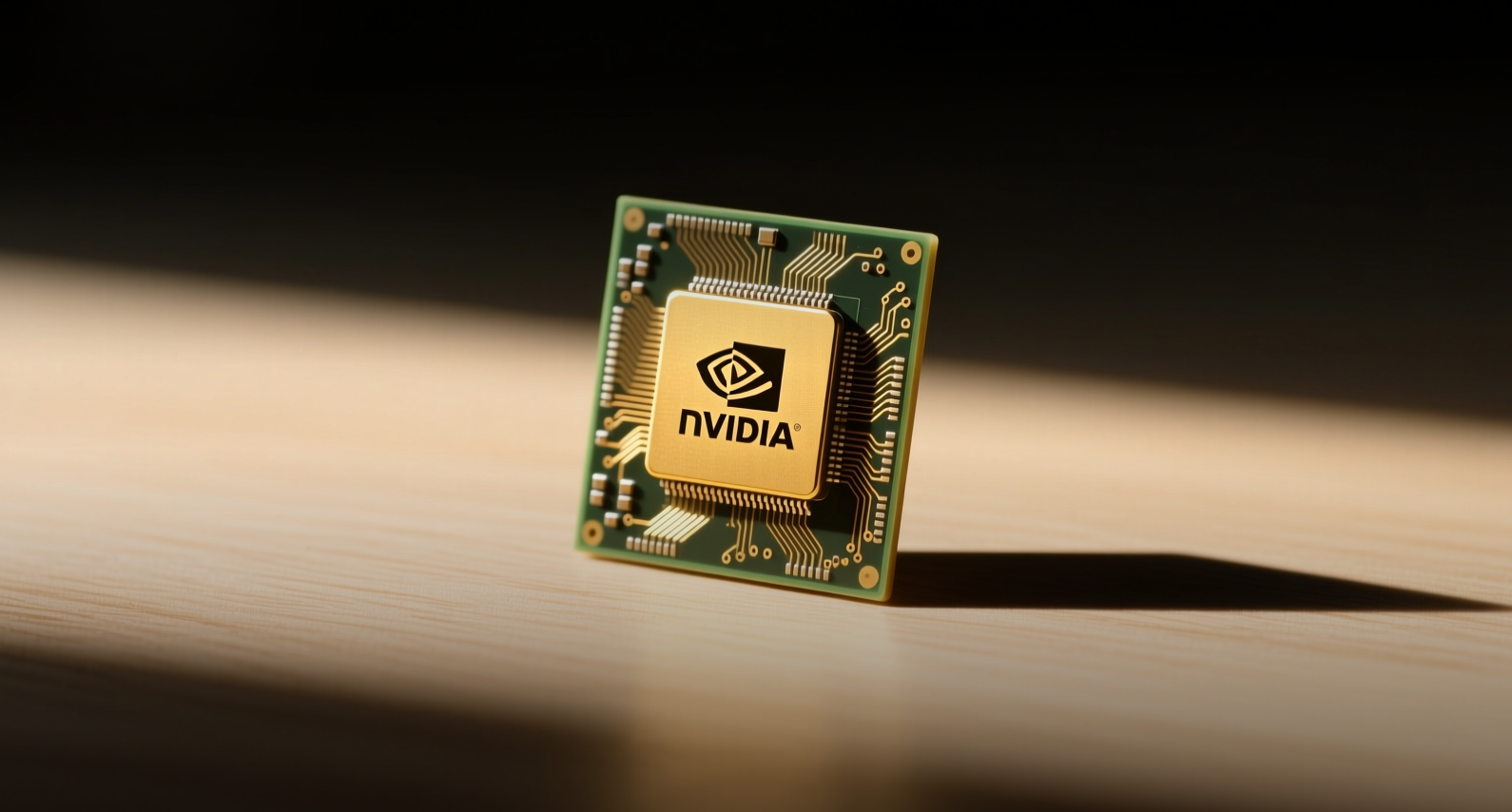
Nvidia will prepay $1.5 billion to Amkor Technology to expand US advanced semiconductor packaging capacity, as chip assembly — not just fabrication — becomes a critical constraint in AI supply chains.
"Amkor's global capabilities, combined with their committed investment in the United States, are critical components of building resilient AI infrastructure and accelerating next-generation technologies," Debora Shoquist, executive vice president of operations at Nvidia, said.
The multi-year agreement covers joint development of high-density interconnects and heterogeneous integration — techniques that combine multiple silicon dies into a single package. Amkor already supplies packaging for Nvidia's data center processors, networking chipsets and accelerated computing systems. The expanded deal follows a 10-year packaging partnership Amkor signed with Taiwan Semiconductor Manufacturing Co. in June and its existing work with Advanced Micro Devices.
Amkor shares surged 17% in after-hours trading on the July 23 announcement but have since fallen 53% from a June peak of $96.68, closing at $45.69. The stock trades at 31.18 times forward earnings, a premium to the sector median, as investors weigh the long-term revenue opportunity against near-term valuation concerns.
Advanced packaging has become a major chokepoint in AI chip production. While companies like Nvidia rely on leading-edge fabrication at TSMC, they also need sufficient capacity to assemble multiple chips into high-performance AI systems. The $1.5 billion prepayment will help Amkor expand its planned advanced packaging and testing facility in Arizona, building domestic capacity for what has historically been an Asia-centric industry.
Amkor reported record second-quarter revenue of $1.9 billion on July 27, up 26% from a year earlier, driven by demand for advanced packaging used in AI and high-performance computing. Net income surged 222% to $174 million, or $0.70 per share, ahead of expectations. The company guided third-quarter revenue of $1.95 billion to $2.05 billion, with gross margin expected to improve to 18.5% to 19.5% from 16.8% in the second quarter. Management reaffirmed its 2026 capital expenditure plan of $2.5 billion to $3 billion, reflecting continued investment in advanced packaging capacity.
The deal also strengthens Amkor's competitive position against other outsourced semiconductor assembly and test providers. The company, which has a market capitalization of about $15 billion, is one of the world's largest OSAT providers and operates manufacturing facilities across Asia, Europe and the US. Its partnerships with Nvidia, TSMC and AMD give it a diversified customer base in the AI supply chain. CEO Kevin Engel said the agreement "accelerates our long-term roadmap" and supports turnkey packaging and test capability in the US alongside Amkor's Asian footprint.
Analysts are split on Amkor's valuation after the stock's 187% rally over the past 12 months. UBS upgraded the stock to Buy from Neutral on July 24 with a $90 price target, citing the Nvidia partnership as a driver for long-term growth. B. Riley Securities maintained a Neutral rating with a $75 target, pointing to valuation concerns after the stock's earlier run.
Of the 10 analysts covering Amkor, four rate it a Strong Buy, one a Moderate Buy and five a Hold, according to consensus data. The average price target of $75.75 implies 64% upside from current levels, while the Street-high target of $90 suggests potential gains of 94%.
For investors, the question is whether Amkor's expanded role in Nvidia's supply chain justifies its premium valuation. The company's forward P/E of 31x reflects expectations that AI-driven demand for advanced packaging will remain strong for years. But with the stock down more than 50% from its peak and five of 10 analysts on the sidelines, the market appears to be pricing in execution risk around the Arizona expansion and the pace of Nvidia's next-generation product cycles.
This article is for informational purposes only and does not constitute investment advice.
