
コンテンツ
要約
Moonbirdsとは
I. 基礎および戦略分析
1. ビジョンと投資家の連携
2. 卓越したチームと実行力
3. 資本力と承認
4. 市場機会と適合性
5. 競争環境と差別化要因
II. プレローンチエコシステムと市場投入戦略
1. コミュニティと物語の勢い
2. オンチェーンフットプリント
3. ユーティリティを追加するパートナーシップ
4. トークノミクスと価値の蓄積(現在)
III. 将来分析(触媒と機会)
短期(1ヶ月以内)
中期(1〜3ヶ月)
長期(6ヶ月以上)
IV. 評価シナリオ分析(TGE FDV)
競合状況(TGE時またはTGE近傍のトークン視点)
最終的な見解

市場が複雑すぎますか?Edgen Searchに聞いてみてください。

答えはすぐに表示され、情報は正確で、あなたが未来を決めるトレーディング判断を下せるようにします。

今すぐ Search を体験

Moonbirds:実用性のあるIP復活

· Mar 31 2026
Moonbirds:実用性のあるIP復活

Orange Cap Games傘下のMoonbirdsの戦略、実行、パートナーシップ、評価シナリオに焦点を当てた評価。Moonbirdsガイドはこちらでご覧いただけます:

要約

  • OCGは、コミュニティからブランド、製品へと移行する実績あるIP復活戦略を適用しており、すでに注目を活動と需要に転換しています。
  • エリート投資家の連携、Kaito AI social-to-earnのような具体的なユーティリティ、Othersideアバター、パートナーエアドロップがMoonbirdsに強力な勢いを与え、持続的な価値への明確な道筋を示しています。

Moonbirdsとは

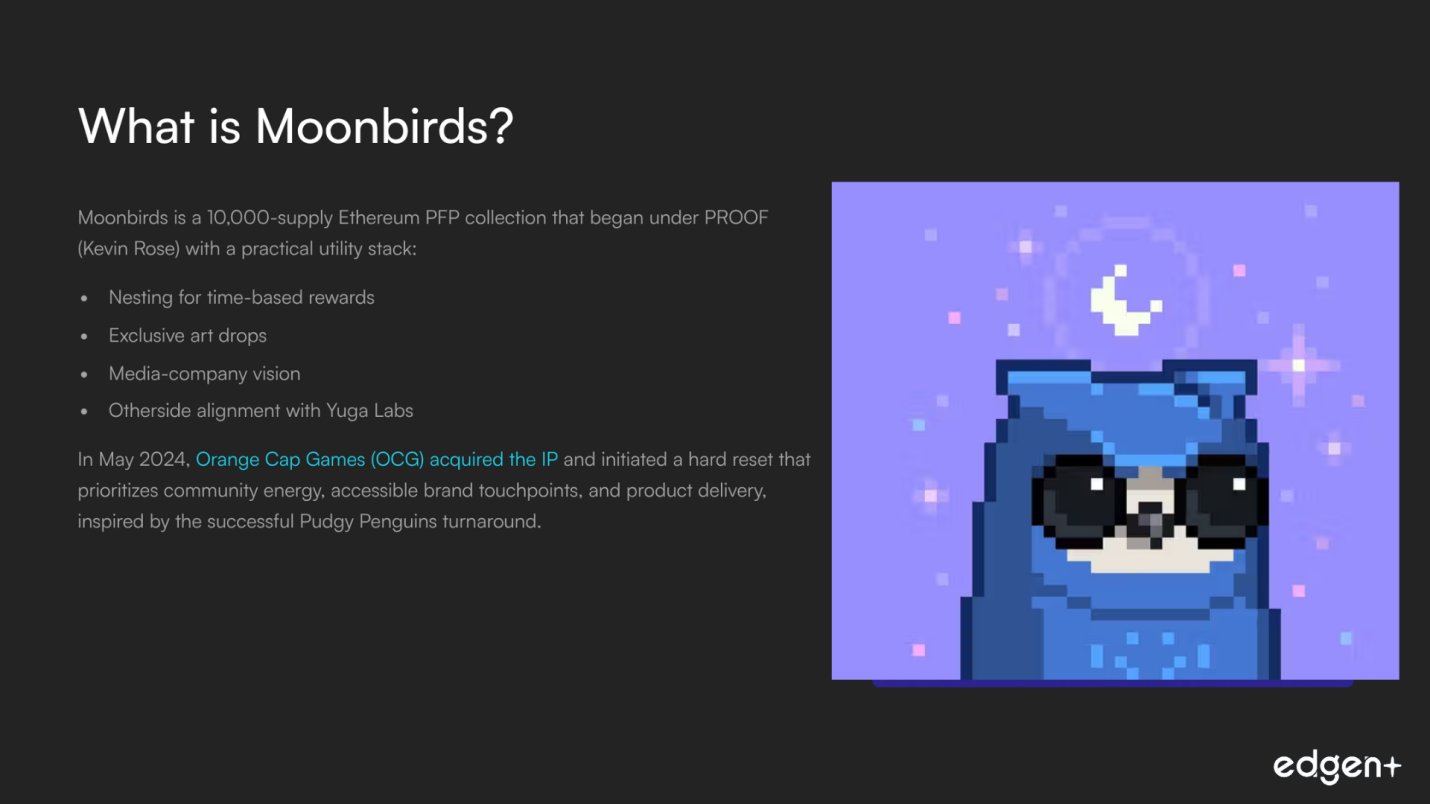
Moonbirdsは10,000個供給のEthereum PFPコレクションであり、PROOF(Kevin Rose)のもとで開始され、時間ベースの報酬を得るためのNesting、独占的なアートドロップ、メディア企業としてのビジョンといった実用的なユーティリティスタックを備えていました。その後、Yuga Labsと提携してOtherside向けに展開されました。2025年5月、Orange Cap Games(OCG)がこのIPを買収し、成功したPudgy Penguinsの好転に触発され、コミュニティのエネルギー、アクセスしやすいブランドタッチポイント、製品提供を優先するハードリセットを開始しました。

Spencer Gordon-Sandが率いるOCGは、Vibesトレーディングカードゲームを含む、クリプトネイティブな信頼性と製品実行経験をもたらしています。計画は、Moonbirdsをデジタルおよび物理チャネル全体に拡大し、主流プラットフォームでの流通を構築し、コミュニティの勢いを収益と持続可能な経済に転換することです。Kaito AI(social-to-earn)などのパートナーシップや、MonadやTownsのようなプロジェクトとのエアドロップアクセスは、チームがより広範なIPおよびゲームプラットフォームを構築する間、保有者に即座の価値を追加します。

刷新されたリーダーシップ、高いシグナルを持つ支援者、そして明確な運用モデルにより、Moonbirdsは伝説的なNFTコレクションから、持続可能でユーティリティに anchoredされたブランドへと進化する態勢を整えています。
I. 基礎および戦略分析

1. ビジョンと投資家の連携

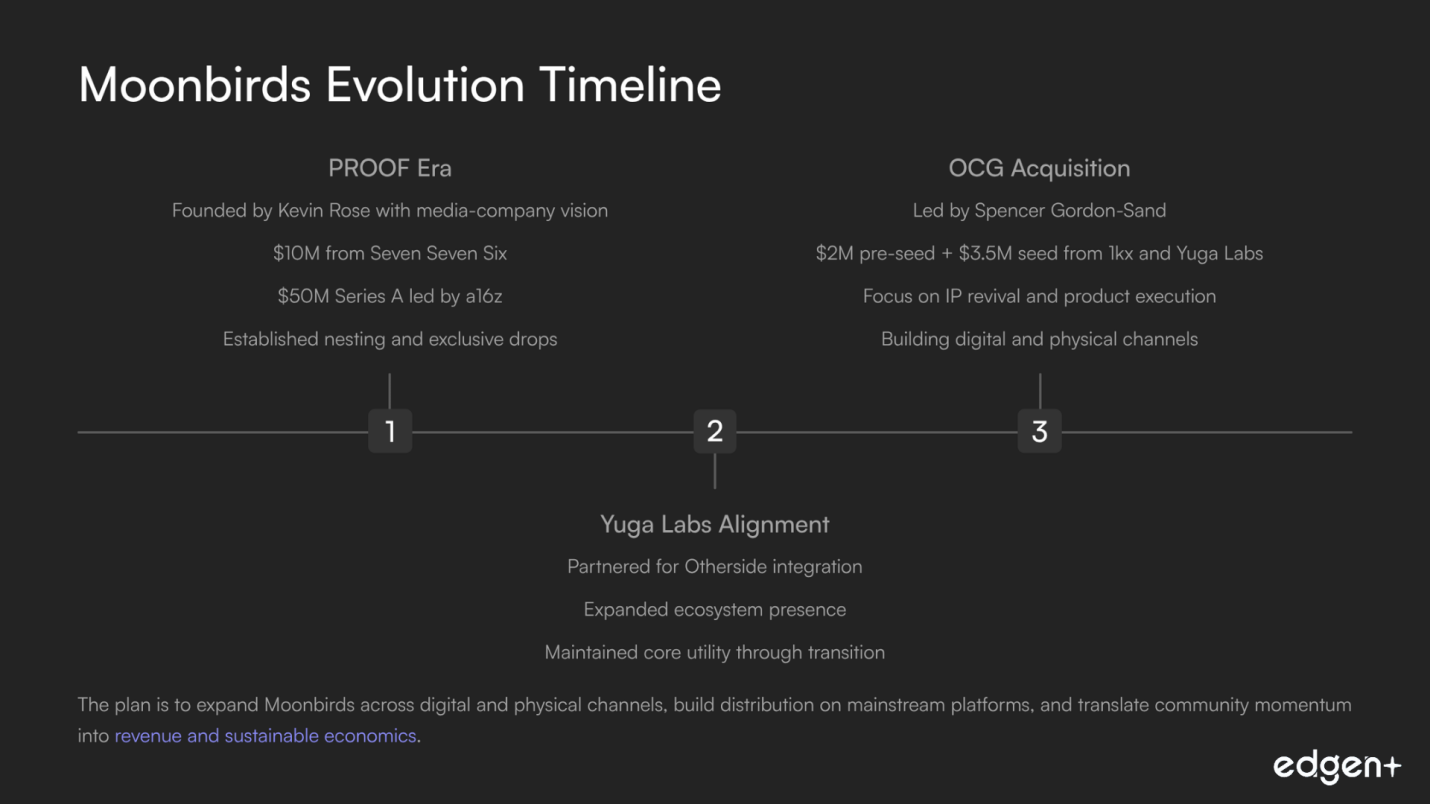
戦略はPROOFからYuga、OCGへと3つの時代を経て進化し、IPの復活、コミュニティの活性化、製品の出荷という集中したミッションに向かっています。

投資家のサポートもこの流れを反映しており、a16zがPROOFのメディア論文を支援したことから、1kxとYuga LabsがOCGのシードラウンドを共同で主導し、資本を好転計画と一致させています。
2. 卓越したチームと実行力

  • CEO Spencer Gordon-Sand(初期のNFT投資家であり、著名なコミュニティリーダー)によるオペレーター主導の実行力と、実用的な製品経験の組み合わせ。
  • Vibes TCGは、物理的およびデジタルな実行力に加え、アジアを拠点とする能力を通じて製造および規模拡大への運用経路を示しています。

3. 資本力と承認

過去の資金調達には、Seven Seven Sixからの1,000万ドル、a16zが主導しトップティアの参加者が加わった5,000万ドルのシリーズAが含まれます。

現在、OCGは1kxとYuga Labsから350万ドルのシード資金(200万ドルのプレシードに続く)の支援を受けており、Vibesからの収益によって補強されています。これにより、健全で実行に焦点を当てた資金繰りが生まれています。

4. 市場機会と適合性

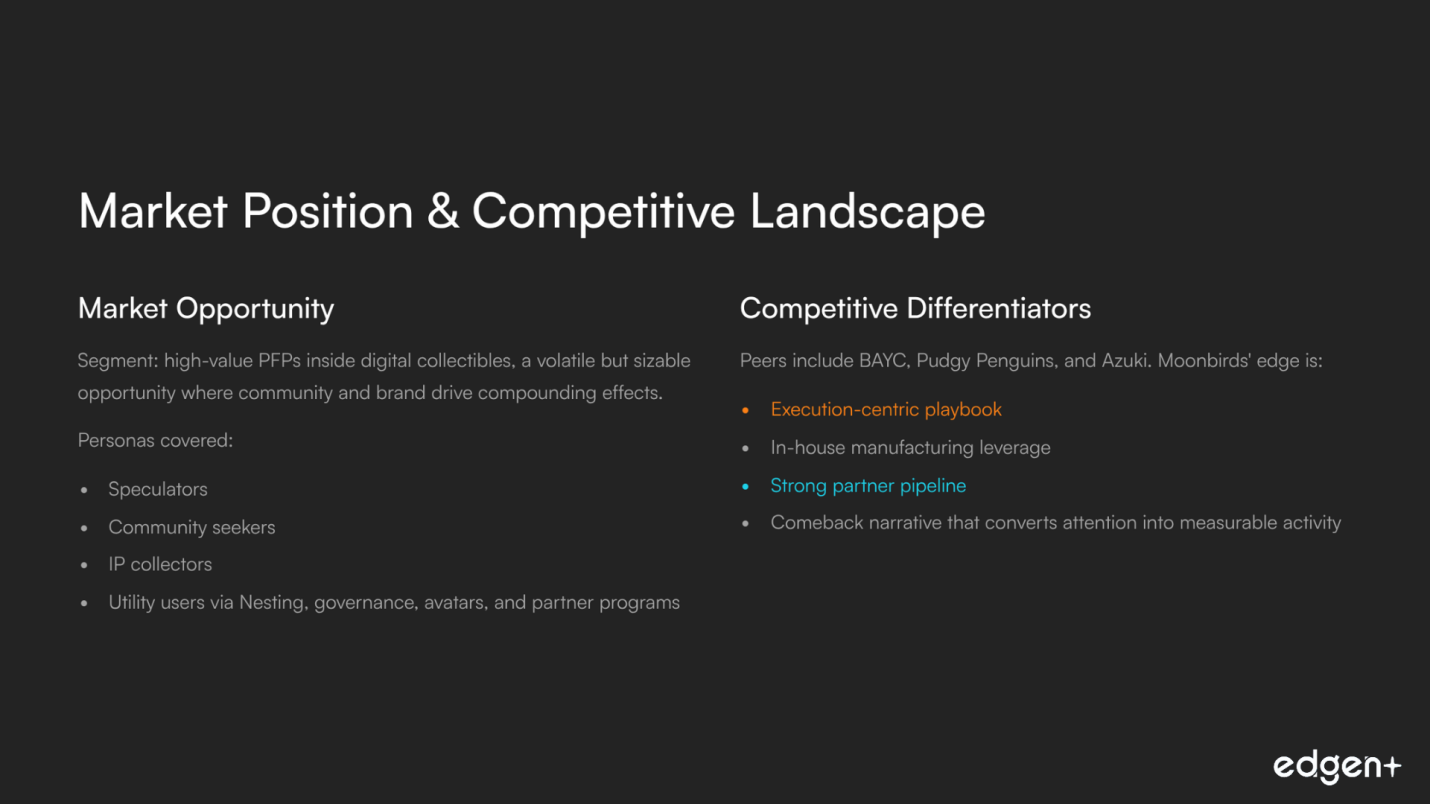
  • セグメント:デジタルコレクティブル内の高価値PFP。コミュニティとブランドが複合的な効果を推進する、変動はあるものの規模の大きい機会です。
  • カバーされるペルソナ:投機家、コミュニティを求める人々、IPコレクター、そしてNesting、ガバナンス、アバター、パートナープログラムを介したユーティリティユーザー。


5. 競争環境と差別化要因

競合にはBAYC、Pudgy Penguins、Azukiが含まれます。Moonbirdsの強みは、実行中心のプレイブック、自社製造の強み、強力なパートナーパイプライン、そして注目を測定可能な活動に転換するカムバック物語です。

根本的な見解: 連携した投資家、実用的な運営者、製品主導のロードマップを持つ、目覚ましい基礎的強さ。
II. プレローンチエコシステムと市場投入戦略

1. コミュニティと物語の勢い

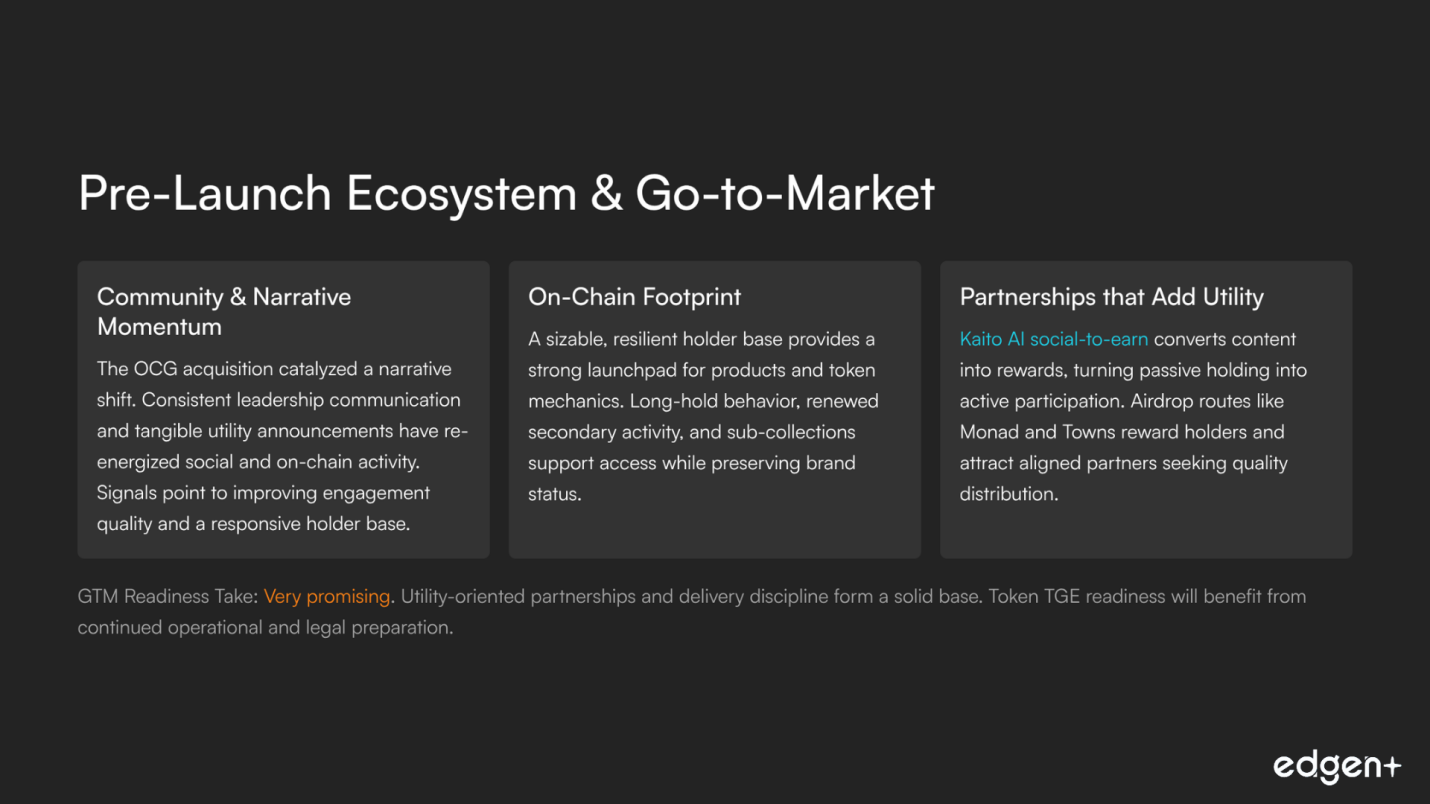
OCGの買収は物語の転換を触発しました。一貫したリーダーシップのコミュニケーションと、Kaito AIのような具体的なユーティリティ発表は、ソーシャルおよびオンチェーン活動を再活性化しました。シグナルは、エンゲージメントの質の向上と、反応の良いホルダーベースを示しています。

2. オンチェーンフットプリント

大規模で回復力のあるホルダーベースは、製品とトークンメカニズムのための強力な発射台を提供します。長期保有行動、再活性化された二次活動、およびサブコレクションは、ブランドステータスを維持しながらアクセスをサポートします。

3. ユーティリティを追加するパートナーシップ

  • Kaito AIソーシャル・トゥ・アーンはコンテンツを報酬に変換し、受動的な保有を積極的な参加と発見に変えます。
  • MonadやTownsのようなエアドロップルートは、ホルダーに報酬を与え、質の高い流通を求める連携パートナーを引きつけます。Otherside対応の3Dアバターは、エコシステムを横断するユーティリティを拡張します。

4. トークノミクスと価値の蓄積(現在)

  • Nestingは、保有行動をサポートし、将来の$TALONSトークンに向けてシステムを準備する時間ベースの報酬を作成します。
  • Lunar Societyを通じたガバナンスは、影響力をコアNFTと財源に結びつけ、参加者とブランド間の長期的な連携を強化します。

GTM準備度評価:非常に有望です。ユーティリティ指向のパートナーシップと提供規律が強固な基盤を形成しています。トークンTGEの準備は、継続的な運用と法的準備から恩恵を受けるでしょう。
III. 将来分析(触媒と機会)

短期(1ヶ月以内)

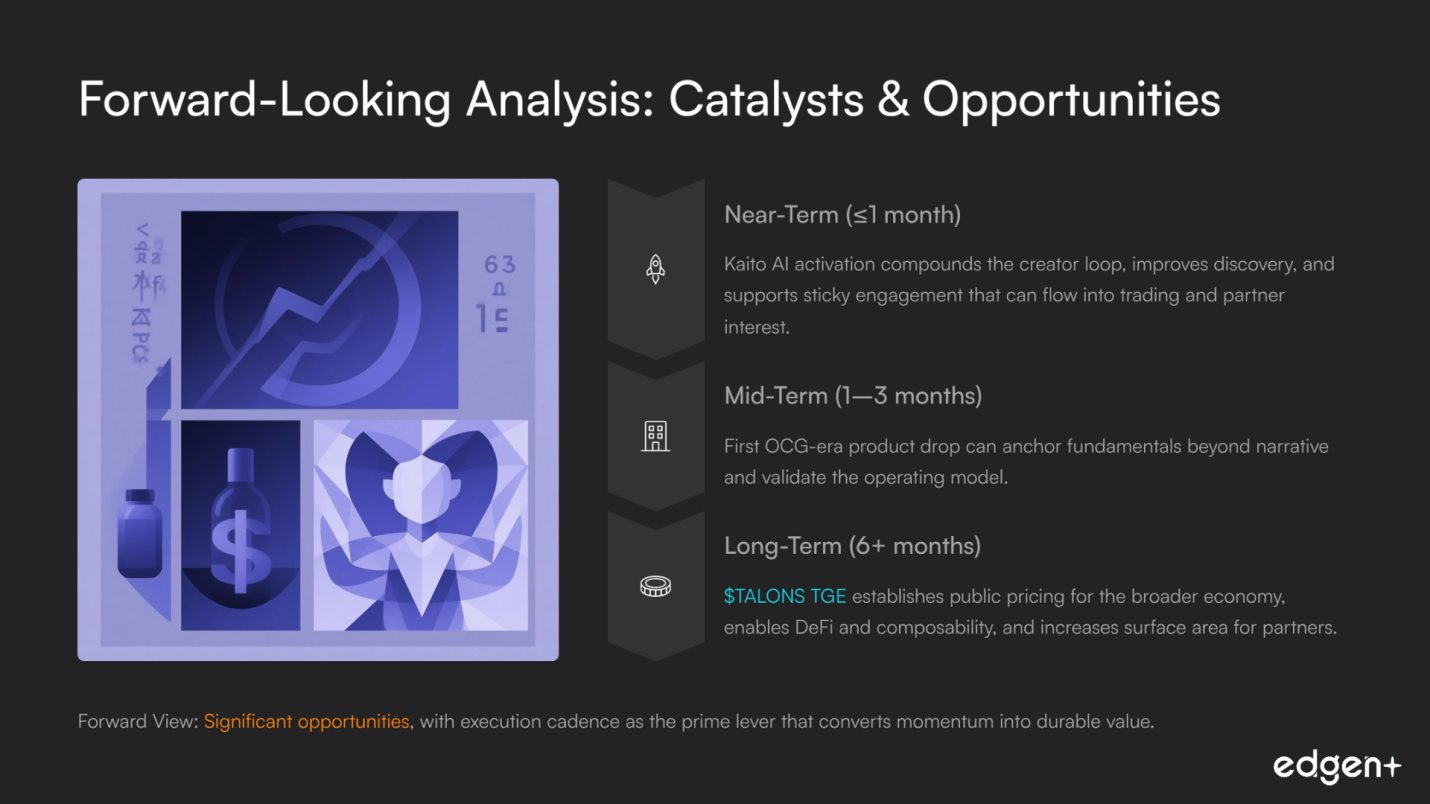
Kaito AIの活性化は、クリエーターループを複合化し、発見を改善し、取引やパートナーの関心につながる持続的なエンゲージメントをサポートします。

中期(1〜3ヶ月)

OCG時代の最初の製品リリースは、物語を超えたファンダメンタルズを確立し、運用モデルを検証することができます。

長期(6ヶ月以上)

$TALONS TGEは、より広範な経済における公開価格を設定し、DeFiと構成可能性を可能にし、パートナーの対象領域を増やします。

将来展望:大きな機会があり、実行のペースが勢いを永続的な価値に変換する主要なレバーとなります。
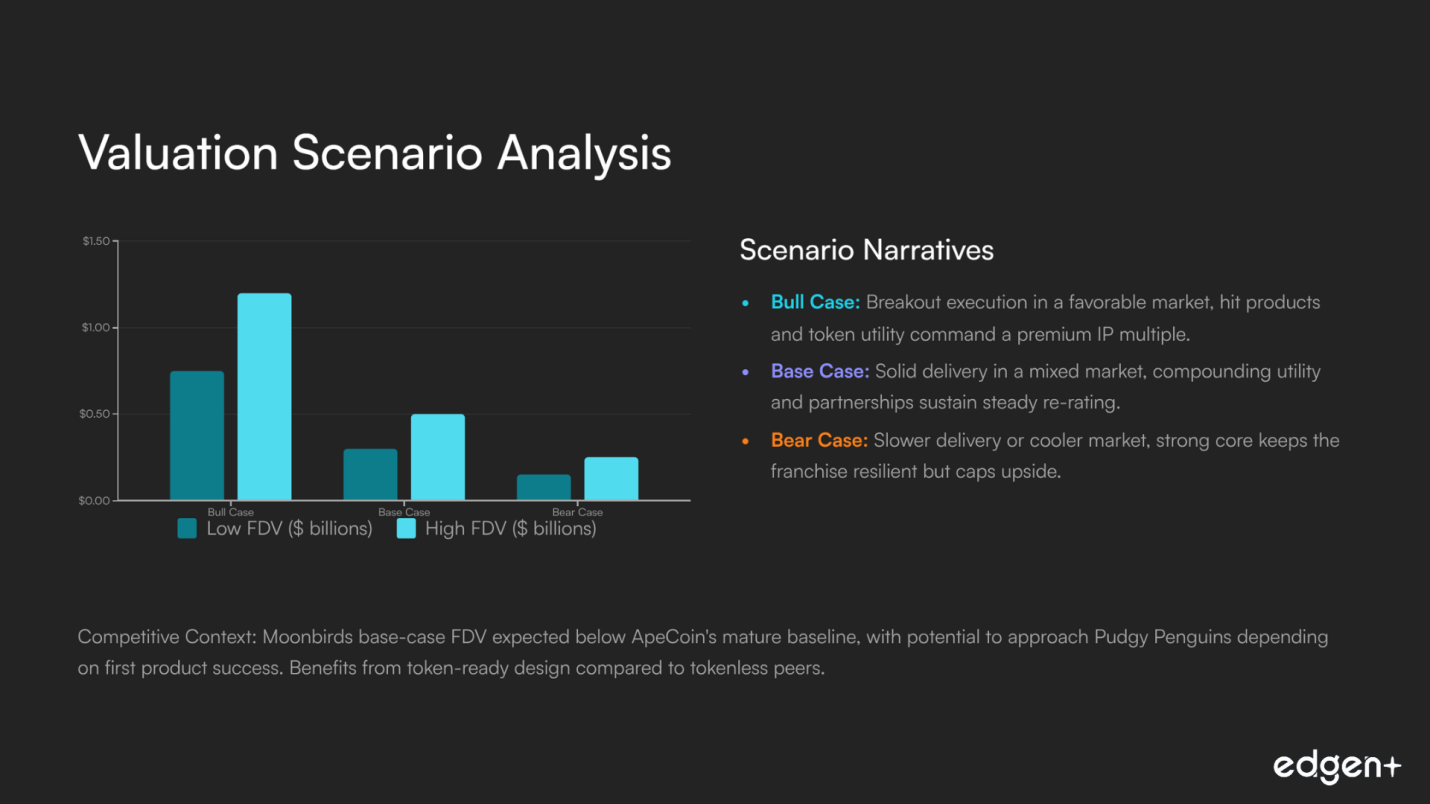
IV. 評価シナリオ分析(TGE FDV)

シナリオ

FDV(10億ドル)

簡単な説明

強気シナリオ

0.75 – 1.20

有利な市場での画期的な実行、ヒット製品とトークンユーティリティがプレミアムなIPマルチプルをもたらす。

基本シナリオ

0.30 – 0.50

混合市場での堅実な提供、複合ユーティリティとパートナーシップが着実な再評価を維持。

弱気シナリオ

0.15 – 0.25

提供の遅れまたは市場の冷え込み、強力なコアがフランチャイズを回復力のある状態に保つが、上昇余地を制限。

競合状況(TGE時またはTGE近傍のトークン視点)

プロジェクト

トークン

TGE/トークンの視点

保有者との連携

配布スタイル

Moonbirdsとの位置付け(ベースケース)

ApeCoin / Otherside

$APE

エコシステムユーティリティとガバナンス

BAYC連携

エアドロップと上場

MoonbirdsのベースケースFDVは$APEの成熟したベースラインを下回ると予想されるが、Yugaとの戦略的結びつきは付加価値となる。

Pudgy Penguins

$PENGU

IP、おもちゃ、ゲームのフライホイール

Penguin保有者

コミュニティ指向

MoonbirdsのベースケースFDVは$PENGUに近いか下回る可能性があり、最初の製品成功に依存する。

Azuki

(なし)

ブランドとアニメ指向のIP

コレクション主導

該当なし

トークンを持たないピアベンチマークであり、Moonbirdsは追加の蓄積のためのトークン対応デザインから恩恵を受ける。

最終的な見解

Moonbirdsは、プロフェッショナルに運営されるIP復活プロジェクトとして、真のコミュニティ基盤と実用的な製品パスを備え、強力な潜在力を示しています。エリート投資家の連携と初期のユーティリティの牽引力により、プロジェクトは非常に有望に見えます。評価レンジの上限を解除するための鍵は、実行の速度と品質にかかっています。

教育コンテンツであり、金融アドバイスではありません。

紹介
Redeem miles for gift cards and each is worth ~1 cent; redeem for long-haul business and they're worth 2.5-4+. With programs now dynamically priced, the one check that decides every redemption.

How to redeem airline miles without wasting them

The single biggest mistake with miles is redeeming them for the easy stuff: gift cards, merchandise, seat upgrades at the gate. Do that and each mile is worth about one cent. Redeem the *same* miles for flights, especially long-haul or premium-cabin flights, and they're often worth two to five cents each, sometimes more. So the real skill isn't earning miles; it's not throwing away their value at the finish line. Here's how to actually use them. A mile has no fixed price; its value depends entirely on what you redeem it for. The way to judge any redemption is simple math: (cash price of the flight) ÷ (miles it costs) = cents per mile. If a flight costs $400 or 20,000 miles, that's 2 cents a mile, a solid deal. If a $90 flight costs 18,000 miles, that's half a cent, which is terrible; pay cash and keep the miles. Run this check before every redemption. It instantly separates a great use from a waste, and it's the one habit that makes miles worth having. As a rule of thumb, most major ai
Edgen
·
Jun 30 2026
Short-term goals (under ~3 years) belong in safe cash; long-term goals (5+ years) can take market risk. The best HYSAs now pay ~4-5% APY. How to sort yours and run both.

Long-term vs short-term financial goals (and how to plan both)

The difference comes down to one thing: time. A short-term goal is money you'll need within roughly three years (an emergency fund, a trip, a wedding, next year's tax bill), so it has to be *safe and reachable*. A long-term goal is five-plus years out (retirement, a house down the road, a kid's education), so it can take market risk, because time smooths the bumps out. Get that match right and you've done most of the work. It's not the size, it's the deadline. A $2,000 goal you need in six months is short-term; a $2,000 goal you won't touch for fifteen years is long-term, and they belong in completely different places. This is the part that actually matters, and where people lose money without realizing it. Short-term money should not be in the stock market. If your emergency fund is in stocks and the market drops 20% the same month your car dies, you're selling at the worst possible time. Short-term goals go somewhere stable and accessible, and a high-yield savings account is the clas
Edgen
·
Jun 30 2026
Mortgages near 6.5%, home prices flat, and the Fed split on rate cuts vs hikes. With timing a coin flip, the 3 questions that actually decide whether to buy now or wait.

Should you buy a house now or wait? How to actually decide

The honest answer: buy when you'll stay put for at least five years and you'll still have an emergency fund left after the down payment. Otherwise, waiting (and renting) is often the smarter money move, not the weaker one. "Rent vs buy" isn't a math problem with one right answer, and it's almost never really about timing the market. It's about your *life*, in three questions. Before the three questions, here's the mid-2026 backdrop — because "now or wait" usually hides a bet on rates and prices, and the data says that bet is a coin flip. The picture: mortgages are still pricey, prices have gone flat (more than half of the 20 big metros saw year-over-year declines in March), and the cheap-money era hasn't returned. So "buy before it runs away" and "wait for the crash" are *both* weak arguments right now. The whole "wait for rates to drop" plan rests on the Fed, and the Fed is split down the middle. In its June 2026 projections, policymakers were divided: 8 expected no change this year,
Edgen
·
Jun 30 2026
Most financial goals fail because they're wishes, not systems. Here's the 3-part anatomy of a goal that sticks (a number, a date, one automatic move), plus why 37% of adults can't cover a $400 surprise.

How to set financial goals you'll actually hit

A financial goal you'll actually hit has three things a vague wish doesn't: a number, a date, and one automatic move that happens whether or not you remember it. "Save more" is a wish. "$6,000 in a separate account by next December, $500 auto-transferred on payday" is a goal. The gap between those two sentences is the reason most goals quietly die, and it has almost nothing to do with willpower. Key Takeaways A real financial goal answers three questions: how much, by when, and what for. Drop any one and it stops working. "Pay off debt" has no number and no date, so there's nothing to aim at or measure, while "$8,000 of card debt cleared in 18 months" tells you exactly whether you're on track and the day you're done. The "what for" matters more than people expect. A goal tied to something real (a buffer so a bad month isn't a crisis, a deposit on a first place) survives the months when motivation dips. In our experience reading how people actually use a money tool, the goals that get
Edgen
·
Jun 30 2026
A big RSU grant just vested — now what? Here's what a modern money tool actually surfaces first, using Ed as a worked example: a reality check, the 22% tax gap most high earners miss, and the concentration risk nobody flags.

Your RSUs Just Vested. Here's What a Money Tool Surfaces First.

You just had a big RSU grant vest. Congratulations — and now the awkward part: a six-figure pile of your own company's stock, a vague sense you should "do something," and no one actually telling you what. An advisor, a spreadsheet, and a piece of software each handle this moment differently. Here's what a modern money tool surfaces in a moment like this — using Ed as a worked example — so you can decide what kind of help actually fits. Key takeaways You connect your brokerage and bank through read-only aggregation, so the tool can read balances but can't move a dollar. Ed's framing is simple: precise about your money, blind to your identity. Instead of sorting your lattes into categories, Ed opens on a single Financial Reality Check — a read on whether your money could survive a bad month. For a lot of high earners, that one number lands harder than any budget, because it answers a question the other apps never ask. (If the Reality Check is the numbers side, your money type is the beha
Edgen
·
Jun 26 2026
A money personality test is more than a quiz if it measures behavior, not just vibes. Here's the science behind money types, how Ed's test works, and how to use your result.

What Is a Money Personality Test? The Science Behind Your Money Type

The short version: a good money personality test should feel like a roast and work like a mirror — fun on the surface, behavioral underneath. The useful ones don't tell you what you know; they show you how you act with money, and the one blind spot worth watching. Key takeaways Here's the uncomfortable backdrop. U.S. financial literacy has been stuck for a decade — adults answer only about 49% of the standard knowledge questions correctly, essentially flat since 2017 (TIAA Institute–GFLEC, 2025) — even as free financial information became infinite. If facts fixed money, they'd have fixed it by now. They don't, because the thing that actually drives your outcomes lives one level below the facts: how you're wired to behave when money is on the line. That's the whole premise of financial fitness — and it's what a money personality test is built to surface. Not what you know. What you do. The idea has real research behind it — money behavior is patterned and measurable, and a few tradition
Edgen
·
Jun 23 2026
A financial reality check scores where you actually stand across safety, control, progress, upside, and Mental Load. Here's why a money score matters, how Ed's checkup works, and what to do with your weakest area.

What Is a Financial Reality Check? Why Your Credit Score Isn't Enough

The short version: your credit score measures how safe you are to lend to. Almost nobody has ever seen the number that measures whether you are actually secure. A financial reality check is that second number. Key takeaways Ask people for their credit score and many can recite it. Ask whether they could survive three months without income, or where their money quietly leaks each month, and you get a shrug. That's the gap. A credit score answers a lender's question — how risky is it to extend this person debt? It can be high while your life is fragile, or low while you're genuinely fine, because it was never built to measure you. A financial reality check answers the question the credit score ignores: are you safe, clear, progressing, building, and at ease? Here's the simple version, with the research behind each axis.
Edgen
·
Jun 23 2026
SpaceX opens Thursday at a $1.77 trillion valuation — the largest IPO ever. Only 4.2% of stock actually trades. Musk is locked up for 366 days. The next 366 days run on an unusually clean calendar of supply releases. Here are the 13 dates worth watching.

SpaceX goes public Thursday with a possible $5 trillion hit. Here's the calendar that actually matters.

SpaceX prices Wednesday night and opens Thursday on Nasdaq at $135 per share — a $1.77 trillion valuation, the largest IPO ever. Most coverage will frame what comes next as a sentiment trade, an Elon story, or a race to Goldman's $5 trillion bull case. The reality is more grounded and more useful: the next 366 days are governed by an unusually clean calendar of supply releases — when 95.8% of the company can or cannot trade, when index funds add weight, when the lock-up cliff arrives, when Musk himself becomes a potential seller for the first time. Read the calendar and you've already understood the structure most market commentary will spend the next quarter trying to explain. Here are the 13 dates worth watching. Two things keep showing up in headlines that don't survive a careful read. The first is the idea that index funds are about to be forced into a massive single-event SpaceX buy. They aren't. Nasdaq did create a fast-track inclusion rule that lets SpaceX join the Nasdaq 100 wi
Edgen
·
Jun 10 2026

投資、もうひとりじゃない

Ed を無料で試そう。クレカ不要、縛りなし