

XPENG wants to be the Apple of robotics — and it is betting a factory in Guangzhou can prove it.
XPENG wants to be the Apple of robotics — and it is betting a factory in Guangzhou can prove it.
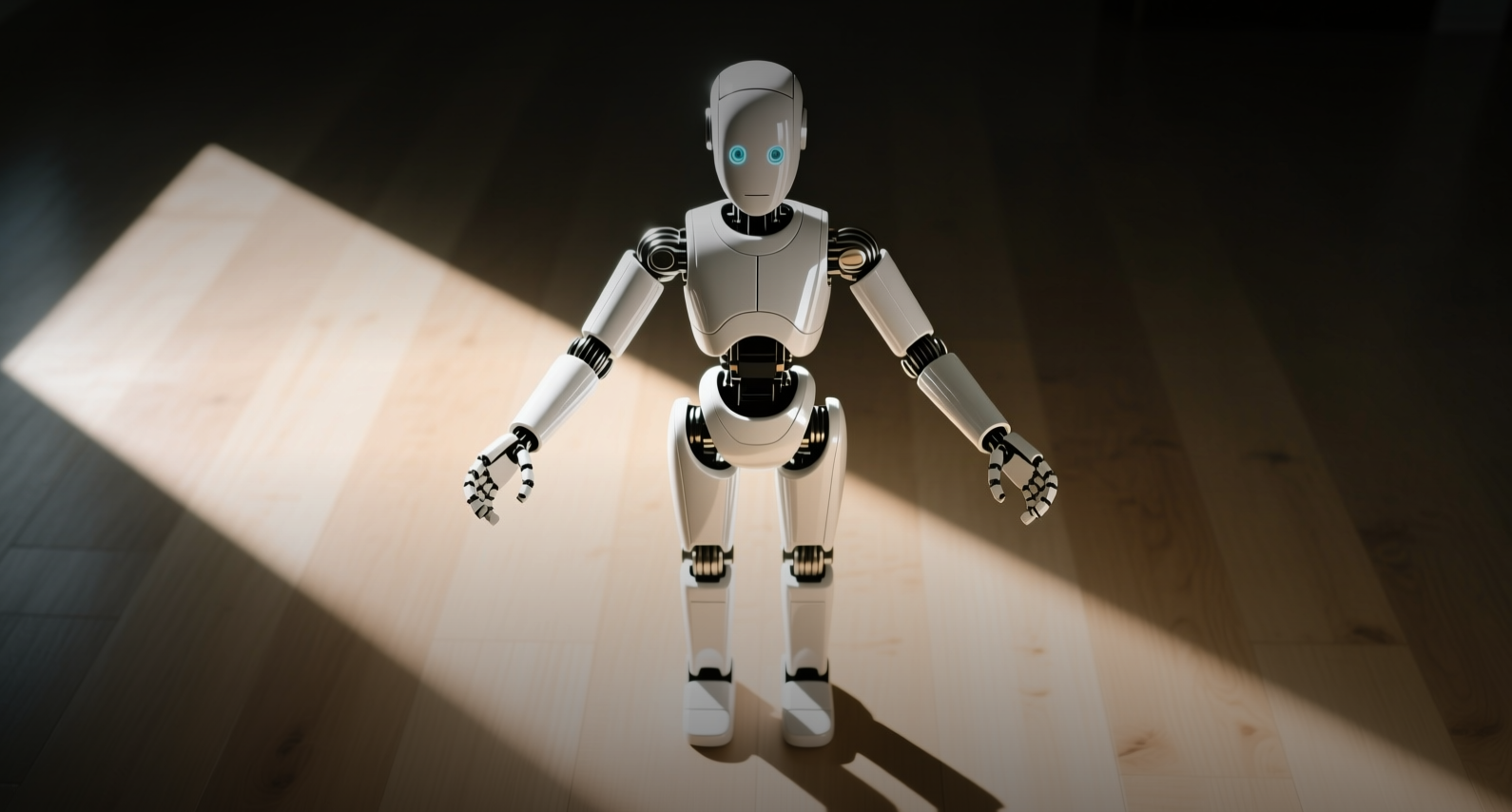
XPENG wants to be the Apple of robotics — and it is betting a factory in Guangzhou can prove it.
XPENG-W (09868.HK) surged as much as 8% on Wednesday, reaching HKD 56.7 with turnover of HKD 777 million, after the company said it plans to raise monthly production of its IRON humanoid robot to more than 1,000 units by the end of 2026. The target, disclosed during the L03 global launch event in Munich, positions the Chinese EV maker as one of the most aggressive manufacturers in the emerging humanoid robotics space.
"XPENG is the only fully self-developed, cross-disciplinary robotics platform coming out of China, controlling the stack from silicon to software to the physical hardware," the company said in its presentation. It is positioning IRON as a vertically integrated product built on its own Turing chips, actuators, operating system, and vision-language-action AI model — a strategy it likened to Apple's control over the iPhone ecosystem.
The IRON robot will debut commercially as an in-store sales guide at XPENG's own retail locations in China by the first quarter of 2027, with overseas expansion targeted for the second quarter of 2028. XPENG began construction on a dedicated humanoid mass-production facility in Guangzhou in the first quarter of 2026, and the 1,000-unit monthly target represents a significant ramp from the pilot production phase. The company has not disclosed current production volumes or the facility's ultimate capacity.
The robotics push comes at a critical juncture for XPENG. The company reported a weak first quarter in 2026, with net losses of $259 million and revenue down 17.6% year on year, as Chinese NEV subsidies were reduced and no new vehicle models launched in the period. But the second-half product cycle — including the flagship GX SUV, which garnered 50,000 pre-orders in its first two weeks, and the mass-market Mona L03 priced at $21,200 — is expected to drive a sharp recovery in vehicle sales. Deutsche Bank has forecast XPENG will sell 500,000 vehicles in 2026, with the L03 alone contributing 12,500 units per month once fully ramped.
XPENG's IRON humanoid stands 5 feet 6 inches tall and is designed for commercial, industrial, and eventually home use — a rollout order the company describes as more grounded than most competitors' promises of an instant household robot. The robot uses XPENG's in-house VLA 2.0 (vision-language-action) self-driving system, adapted from the same AI stack that powers its vehicles, giving it the ability to navigate dynamic environments without pre-mapped routes.
The company is betting that its EV manufacturing expertise — including the Magna Steyr assembly line in Graz, Austria, where it assembles the G6, G9, and P7+ for the European market — translates directly into robot manufacturing capability. XPENG has said every upcoming vehicle model will be a globally released product, and it expects monthly overseas vehicle deliveries to exceed 10,000 units in the fourth quarter of 2026. The same global supply chain and quality-control infrastructure could support IRON's international expansion.
The competitive landscape is crowded but early. Tesla has demonstrated its Optimus humanoid in videos but has not disclosed production timelines or volumes. Chinese rivals including UBTech and Fourier Intelligence have shown prototypes but lack the automotive-scale manufacturing capacity XPENG can leverage. BYD, the dominant Chinese EV maker by volume, has not announced a humanoid robot program. XPENG's vertical integration — designing its own Turing chips, actuators, and AI models — gives it a cost and control advantage that pure-play robotics startups lack, but it also means the company bears the full capital expenditure burden.
XPENG shares trade at a price-to-sales multiple of roughly 1.2, a compression that reflects both the weak first-quarter results and broader de-rating of Chinese EV stocks. The robotics business is not yet reflected in consensus revenue models, meaning any production success could drive multiple expansion. The company's technical partnership with Volkswagen — which took a 5% stake in 2023 and is now using XPENG's G9-derived platform and Turing chips for its ID. UNYX models in China — provides a high-margin services revenue stream that supports R&D spending on robotics and AI.
The risks are substantial. Scaling humanoid robot production to 1,000 units a month requires solving manufacturing challenges that no company has yet demonstrated at that volume. European regulatory restrictions on Chinese investment in advanced technology — including the European Commission's Industrial Accelerator Act, which limits Chinese ownership to 49% in certain ventures — could complicate IRON's overseas rollout. And XPENG's expanding model lineup risks showroom cannibalization as it adds vehicles and robots competing for retail floor space.
But if XPENG hits its 1,000-unit target, it will have achieved something no other company has: mass production of a general-purpose humanoid robot at automotive scale. For a stock trading at 1.2 times sales with a product cycle inflection point in the second half of 2026, the robotics optionality is a free call option that most of the market has not yet priced in.
This article is for informational purposes only and does not constitute investment advice.
