
Key Takeaways:
- World trade volumes rose 2% in June, aided by an AI-driven investment boom
- Germany's Q2 GDP was revised up to 0.3% on resilient export demand
- Trump's 50% auto tariff threat and new Section 301 duties cloud the H2 outlook
Key Takeaways:
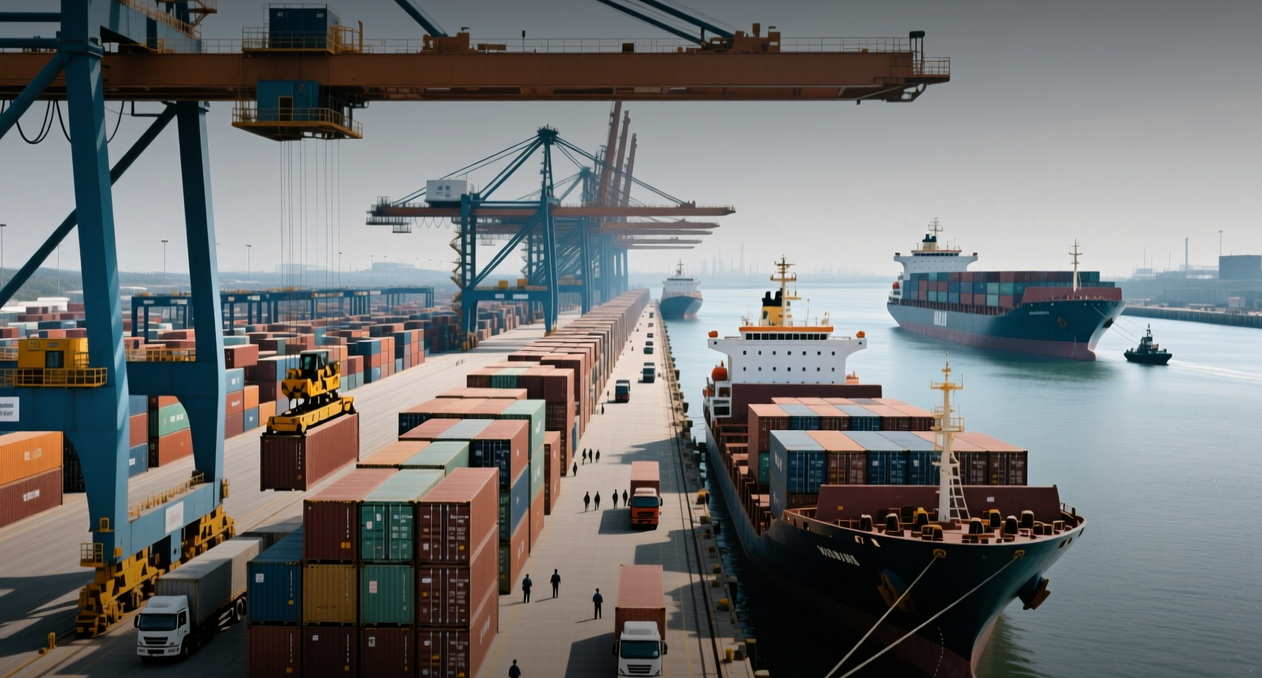
World trade flows rose 2% in June, aided by an AI-driven investment boom that has held up cross-border commerce despite the closure of the Strait of Hormuz to most shipping.
World trade volumes rose 2% in June, aided by a boom in artificial intelligence-related investment, even as the closure of the Strait of Hormuz to most shipping disrupted supply chains, according to data released Tuesday by the Netherlands Bureau for Economic Policy Analysis, or CPB.
"The investment boom is so strong that imports of capital goods increase despite their tariffs," economists at the Federal Reserve wrote in a paper published by the Federal Reserve Bank of Minneapolis. "And because capital goods are roughly a third of imports, the induced import demand from the investment boom is large enough to hold up aggregate imports."
The June gain followed a 0.5% rise in May, when trade volumes fell sharply in the first full month of the U.S.-Iran war before recovering to exceed their February levels. Across the second quarter as a whole, however, flows were little changed from the first three months of the year. Trade withstood the sharp increase in U.S. tariffs announced in 2025, with export and import volumes rising 4.2% during the year, an acceleration from 2.6% in 2024.
The expansion is a fresh sign the global economy has weathered the Strait of Hormuz closure, but new import taxes threaten to slow flows in the second half. President Donald Trump on Monday threatened to impose 50% tariffs on automobiles and auto parts from Canada, the latest escalation in a trade war between the two closely connected economies, while the administration is working on new duties on 16 countries alleged to have "structural excess capacity."
AI demand spreads beyond Asia
The boost to trade has spread beyond the Asian economies that dominate production of AI-related equipment. Germany's statistics agency on Tuesday raised its estimate of quarter-to-quarter economic growth in the three months through June to 0.3% from 0.2%, with the Federal Statistical Office's president, Ruth Brand, saying growth was "primarily driven by the positive development of exports."
Traditionally reliant on exports for much of its growth, the German economy flatlined between 2019 and the middle of last year as its manufacturing sector adjusted to higher energy costs after Russia's 2022 invasion of Ukraine and stiffer competition from China. The economy has picked up momentum since the final three months of last year, once again supported by exports, with a measure of manufacturing activity compiled by S&P Global pointing to the fastest expansion in four and a half years. Export orders rose at the fastest pace since February 2022, in part reflecting demand from data centers.
Germany's resilience was reflected in the performance of advanced economies in the second quarter. Despite the uncertainties created by the war and the jump in energy prices, the Organization for Economic Cooperation and Development reported Monday that growth in the 30 members for which data was available accelerated to 0.5% in the second quarter, from 0.4% in the first.
Tariff escalation clouds the outlook
U.S. tariff policy remains a key uncertainty for those attempting to forecast world trade flows and growth. In July, the administration announced a range of new taxes under Section 301 of the Trade Act of 1974 to replace an expiring across-the-board 10% duty that itself replaced a range of so-called "reciprocal" tariffs that were judged illegal.
The escalation with Canada carries particular weight given the two economies' integration. Canada accounts for 60% of total U.S. crude oil imports and close to 100% of U.S. natural gas exports, according to Canadian government data, while the countries sold each other $880 billion worth of goods and services last year. Economists at Oxford Economics warned that a dismantling of the USMCA trade pact could plunge Canada into recession and leave it on a permanently lower growth path.
This article is for informational purposes only and does not constitute investment advice.
