
A U.S.-led consortium secures century-long operating rights over 65 billion barrels of Venezuelan crude, reorienting Western Hemisphere supply as Middle East transit risk persists.
A U.S.-led consortium secures century-long operating rights over 65 billion barrels of Venezuelan crude, reorienting Western Hemisphere supply as Middle East transit risk persists.
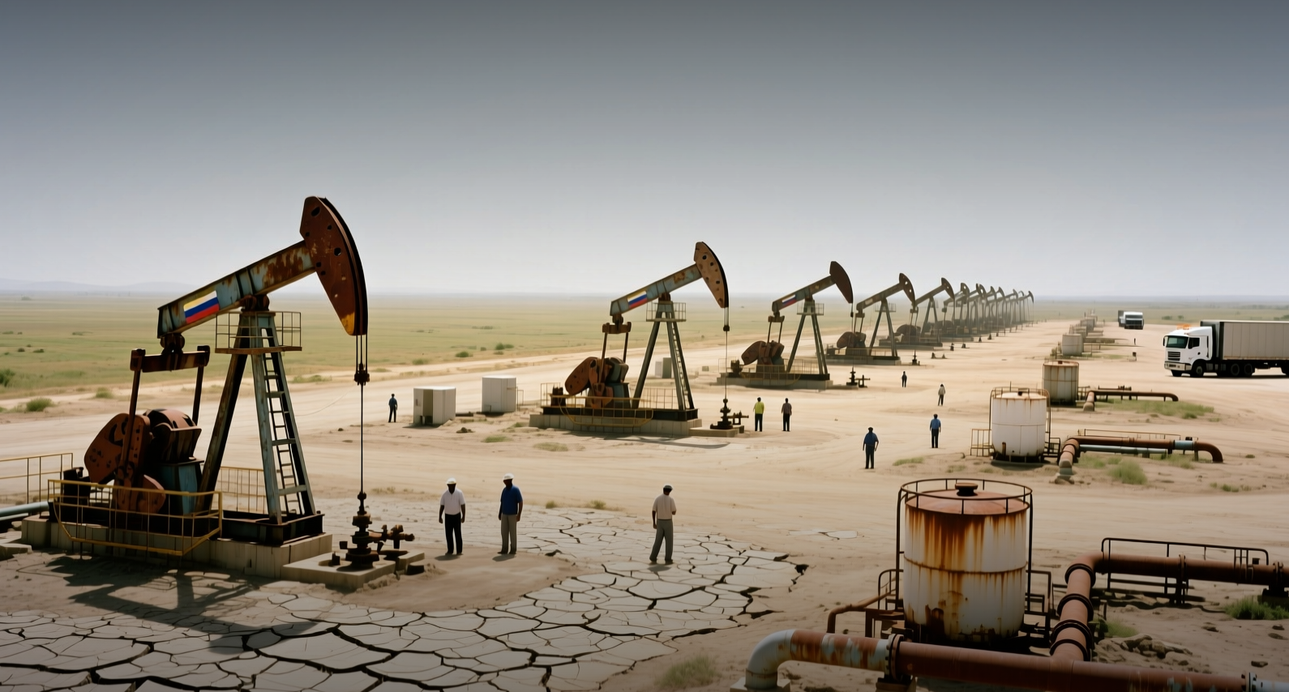
Washington and Caracas signed a landmark energy accord Wednesday that hands a U.S.-led consortium century-long operating rights across 17 Venezuelan oilfields, a move Interior Secretary Doug Burgum said reorients global crude supply away from Middle East chokepoints toward the Western Hemisphere.
"The U.S. government will not be the operator of those reserves," Energy Secretary Chris Wright told CNBC's Squawk Box, clarifying that Washington's role is limited to oversight rather than direct production management.
The agreement gives North American Blue Energy Partners (Nabep), the second-largest private oil producer in Venezuela after Chevron, operational control. The White House retains veto power over board appointments, and a majority of Nabep's board must be U.S. citizens, according to a fact sheet released Tuesday. Interim President Delcy Rodríguez projected $100 billion in investment and more than $200 billion in tax revenue over the concession's life.
The deal covers more than a fifth of Venezuela's proven oil reserves. Trump called it "the biggest oil deal in world history," while Rodríguez described it as "historic."
Trump has said the agreement will generate profit within two to three years, but energy experts warn the timeline is optimistic. Luis Pacheco of the Baker Institute at Rice University told BBC Mundo that Venezuela needs about $100 billion over eight years just to return to production levels of 30 years ago. The country's oil infrastructure has deteriorated for decades under mismanagement and sanctions, and rebuilding it requires capital and technical expertise that no concession agreement can shortcut.
Critics have been blunt about the deal's one-sided terms. Elliott Abrams, Trump's former special representative on Venezuela and Iran, called it "a terrible deal," saying Rodríguez "has given away 20% of the national patrimony for nothing." Venezuelan economist Ricardo Hausmann accused the administration of choosing "to ally yourself with our oppressors" rather than restoring constitutional order. Rafael Ramírez, who ran state oil company PDVSA under Hugo Chávez, described the agreement as opening "the doors to a new colonialism of the United States."
The White House has framed the pact as re-establishing the Monroe Doctrine, the 19th-century principle of U.S. dominance in the Western Hemisphere. But the speed of Washington's pivot from decrying Maduro's government as a corrupt drug cartel to working with his former vice-president has infuriated the Venezuelan opposition, which sees no clear path to elections.
For U.S. energy markets, the deal's most immediate effect may be on pricing expectations. As Venezuelan barrels return to export markets, American shale operators face a new supply competitor in a market already navigating OPEC+ output decisions and elevated Middle East supply risk. The Strait of Hormuz, a critical transit corridor for global crude, was a focal point of the CNBC discussion, with Wright and host Brian Sullivan examining the volume of oil flowing through the chokepoint during the ongoing U.S.-Iran conflict.
If Venezuelan production ramps meaningfully — even on a decade-long timeline — additional Western Hemisphere supply could pressure WTI crude and Brent benchmarks, squeezing U.S. producers accustomed to tight supply. The last time Venezuela exported at scale was before the 2019 U.S. sanctions, when the country pumped roughly 1 million barrels per day; today production sits far below that level, and restoring even half of that capacity would take years of sustained investment.
The next test comes as Washington and Caracas work through implementation details, including how existing Chevron operations integrate with Nabep's expanded mandate and what share of revenue flows to the interim government versus U.S. interests. For U.S. producers watching from the Permian Basin to the Bakken, the question is whether this deal accelerates a supply wave that erodes their pricing power — or whether Venezuela's structural decay proves too deep for any concession to overcome.
This article is for informational purposes only and does not constitute investment advice.
