


The five-month Iran war has exposed a critical gap in America's arsenal: the Army has used virtually all of its long-range precision missiles, and rebuilding could take three years or more.
The five-month Iran war has exposed a critical gap in America's arsenal: the Army has used virtually all of its long-range precision missiles, and rebuilding could take three years or more.
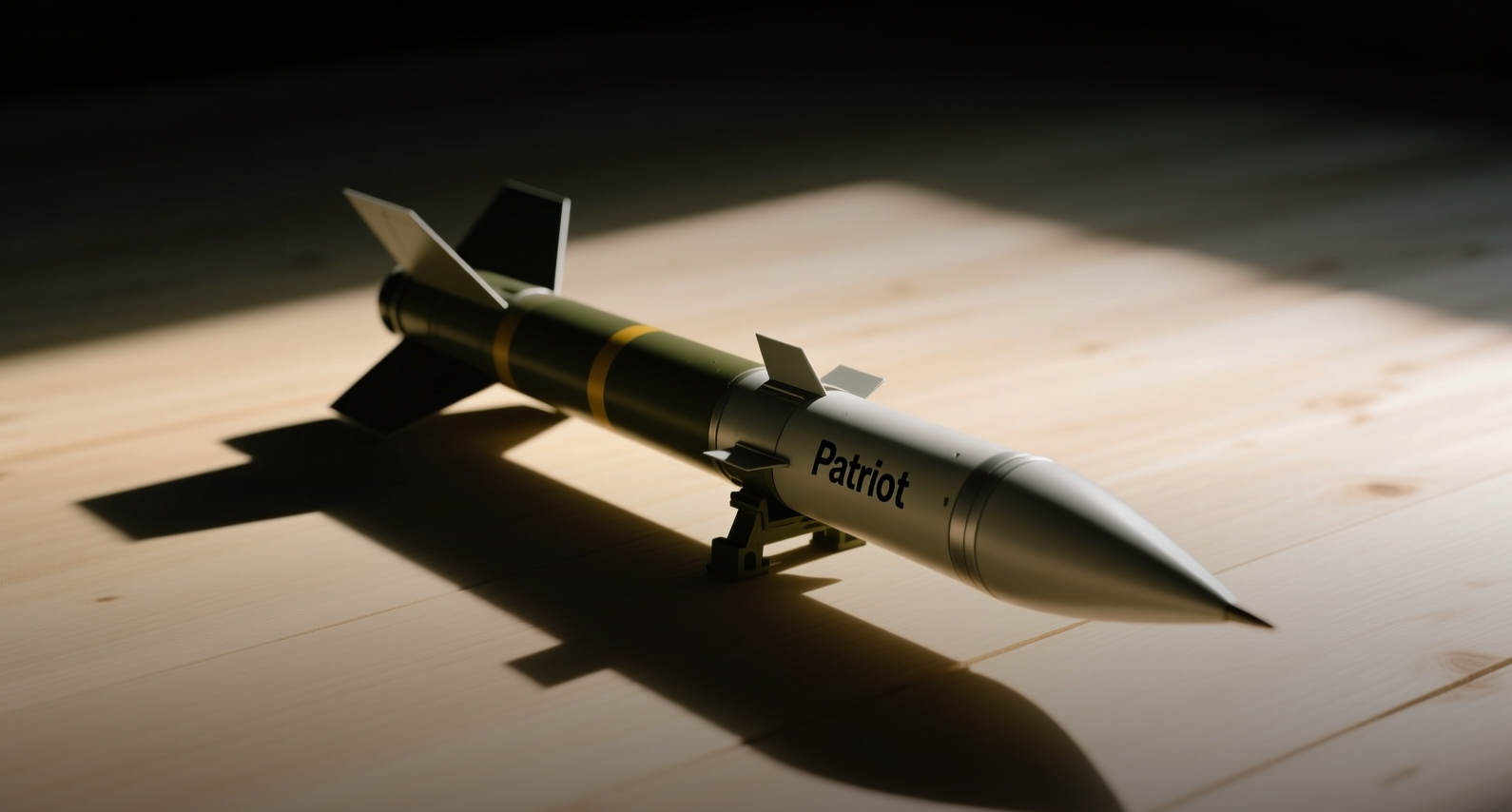
The U.S. Army has used virtually all of its ATACMS and Precision Strike Missiles during the five-month war with Iran, three people familiar with the data said, raising readiness concerns if a conflict with China erupts before production catches up.
"Diminished stockpiles may force the United States and its coalition partners to take more risks with interceptions," said Mark Cancian, senior advisor at the Center for Strategic and International Studies. "There are no good alternatives to Patriot and THAAD for ballistic missile defense."
CSIS estimates Patriot interceptor inventory fell from 2,330 to between 759 and 827 missiles between February and July, while THAAD interceptors dropped from 452 to between 234 and 278. The U.S. also burned through a little less than half of its global Tomahawk cruise missile supply, one source said. The Army's surface-to-surface weapons — ATACMS and the newer PrSM — were nearly exhausted, according to two sources.
Defense contractors may need at least three years to rebuild stockpiles to pre-war levels, and Trump's proposed $1.5 trillion defense budget for 2027 remains stalled in Congress. If a China conflict materializes before production ramps up, the U.S. could face critical shortages of the very weapons it would need most.
Trump is set to address a defense technology summit at the U.S. Army War College in Carlisle, Pennsylvania, on Wednesday, where he is expected to highlight military technology investments. The event, organized by Republican Senator David McCormick, brings together Defense Secretary Pete Hegseth, CIA Director John Ratcliffe, and executives from Lockheed Martin, Boeing, General Dynamics, and Palantir.
The summit comes as the Pentagon races to rebuild depleted inventories. Lockheed Martin received a nearly $54 billion contract modification as part of a seven-year agreement to build Patriot missiles, on top of a roughly $5 billion contract in April. The company also secured a nearly $35 billion contract in June to quadruple THAAD production over seven years. Lockheed expects to triple its Patriot production capacity by the end of 2030.
Virginia Burger, senior defense policy analyst at the Project on Government Oversight, said a conservative estimate for replenishment is three years, but it will likely take longer. Each interceptor requires immense computing power that cannot be mass-produced easily, she said. It typically takes the defense industry 42 months to complete a Patriot contract and 53 months for THAADs.
The last time the U.S. faced a comparable munitions crunch was during the early years of the Ukraine war, when artillery shell production lagged demand for months. That experience showed that even with emergency funding, industrial base expansion takes years, not quarters.
The stockpile drawdown carries particular weight given China's stated ambition to be capable of taking Taiwan by force by 2027. During Trump's recent visit to Beijing, Chinese President Xi Jinping warned that poor handling of U.S.-Taiwan relations could lead to direct conflict. ATACMS and PrSM would be critical in any Pacific conflict, where U.S. forces would face sophisticated air defenses, according to CSIS analysts.
Trump has also pledged to allow Ukraine to produce Patriot systems under license, though the CSIS report estimates it could take years before such production becomes operational. The White House, responding to questions about stockpile levels, said the U.S. has "far more munitions than anyone in the world" and "far more than we need."
The war with Iran, launched jointly with Israel in February, has already reshaped the defense procurement environment. The $1.5 trillion defense budget proposal for 2027 — a record — would fund expanded production capacity, but even if approved, scaling advanced weapons manufacturing takes considerable time.
Oil markets have also felt the strain. The conflict has kept crude prices elevated as the Strait of Hormuz — which handles roughly 21 percent of global oil trade — remains a flashpoint. Iranian missile barrages against U.S. bases in Saudi Arabia, Bahrain, and Kuwait have kept air defense as one of the most critical missions of the war.
Pennsylvania-based companies are positioning to benefit from the defense buildout. ZeroEyes, an AI company, announced plans to invest $10 million in AI and machine learning research, while Gecko Robotics said it will open a new 10,000-square-foot manufacturing facility to expand robotics use in defense production. "President Trump uniquely understands the importance of pragmatic impact today," said Jake Loosararian, co-founder and CEO of Gecko Robotics.
The depletion data has also injected fresh urgency into defense procurement debates in Washington. Republicans are increasingly concerned about the political impact of the Iran conflict, the continuing high cost of living, and Trump's low approval ratings as they seek to retain control of Congress in November's midterm elections. Defense stocks have outperformed the broader market since the war began, with Lockheed Martin and RTX — the parent of Raytheon, which makes Tomahawk missiles and Patriot interceptors — seeing sustained demand expectations.
This article is for informational purposes only and does not constitute investment advice.
