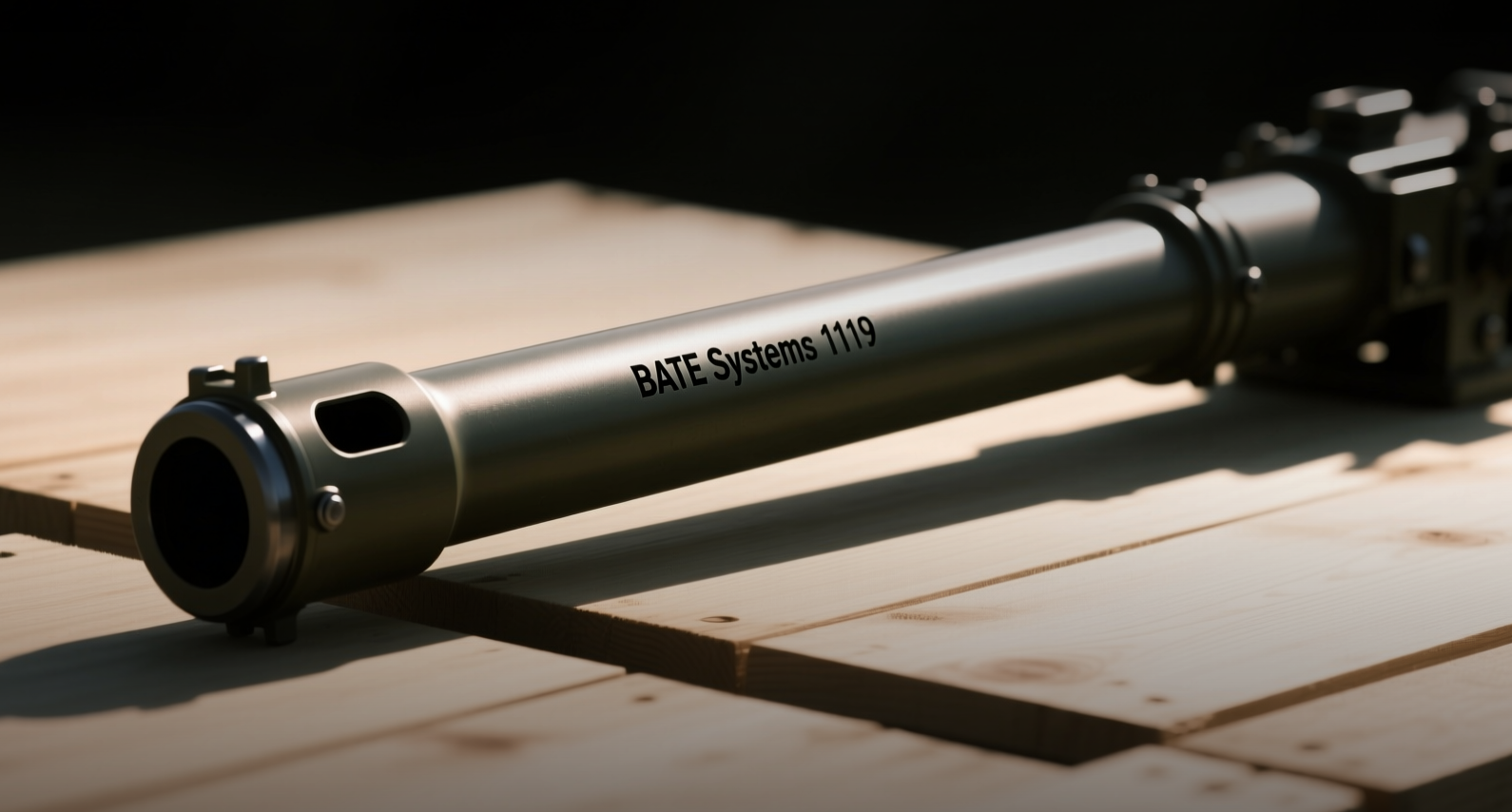
Ukraine signed a deal to manufacture BAE Systems' L119 howitzer, testing whether the war-torn country can become a production base for Western-designed weapons including Patriot missiles.
Ukraine struck an agreement with BAE Systems to domestically manufacture the L119 lightweight howitzer, a deal that provides a blueprint for Kyiv's ambition to produce sophisticated Western weapons including Patriot missiles capable of stopping Russian ballistic missiles.
"Ukraine wants the ability to manufacture and sustain their own capabilities, to build sovereign capability around that," said Giles Ambrose, engineering, technology and strategy director at BAE Systems, a U.K. defense company.
A Ukrainian engineering company will launch production under license from BAE, starting with a test model. The L119 is a towed howitzer that fires shells up to 10.5 miles and has been a stalwart of Ukraine's war effort. The U.S. Army uses a similar model, the M119. The deal follows President Donald Trump's announcement this month that he wants to give Ukraine a license to build missiles for the Patriot air-defense system, and French President Emmanuel Macron's statement last week that Ukraine could also build the Aster interceptor.
The howitzer deal tests whether Ukraine can overcome the safety fears, investment shortages and intellectual property concerns that have stymied previous Western defense manufacturing efforts in the country. Success could unlock a new revenue stream for defense primes including BAE Systems, RTX Corp. and Lockheed Martin, while failure would show the difficulty of building a defense industrial base in an active war zone.
Previous attempts fell short
Germany's Rheinmetall discussed building three factories in Ukraine, including one that Chief Executive Armin Papperger said could produce 400 tanks a year. Papperger later said Ukraine failed to bring the necessary investment and orders. Turkish drone maker Baykar announced a factory in 2022 that would be operating within two years — it has yet to open and has been hit several times in Russian attacks, according to Ukrainian media.
Drones now account for more deaths in the Ukraine war than artillery, but howitzers remain a potent weapon capable of saturating an area with high explosives and destroying buildings in ways drones cannot yet match. The success of the L119 and the larger BAE Systems M777 in Ukraine proved the continued utility of towed artillery, which is easier to hide from drones than self-propelled howitzers because it gives off less heat and can be camouflaged among trees.
Patriot production faces higher hurdles
Making a Patriot interceptor in Ukraine represents a far greater challenge than building howitzers. The U.S. tightly controls who can manufacture its high-end weapons, fearing technology will end up in adversaries' hands. Rheinmetall sought permission to build Pac-3 interceptors, the most advanced Patriot missile, but has yet to receive approval.
"Going from an announcement to actually having a working production line won't be easy...doing it in Ukraine doesn't make it easier," said Ralph Savelsberg, a missile expert at the Netherlands Defence Academy.
Howitzers are assembled from metal subsystems — barrel, breech mechanism and recoil hydraulics — that Ukraine will forge domestically. Missiles require radars, guidance systems and satellite technology that demand far more sophisticated manufacturing and supply chain security.
Zelensky has long sought a license to manufacture Patriot interceptors, Ukraine's only reliable defense against ballistic missiles. In recent weeks, a shortage of these interceptors has allowed Russian ballistic missiles to pierce Ukrainian defenses, showing the urgency of establishing domestic production.
This article is for informational purposes only and does not constitute investment advice.