


Semiconductor stocks have fallen 22% from their July peak as AI capex anxiety grips markets, yet production lines remain at full capacity.
Semiconductor stocks have fallen 22% from their July peak as AI capex anxiety grips markets, yet production lines remain at full capacity.
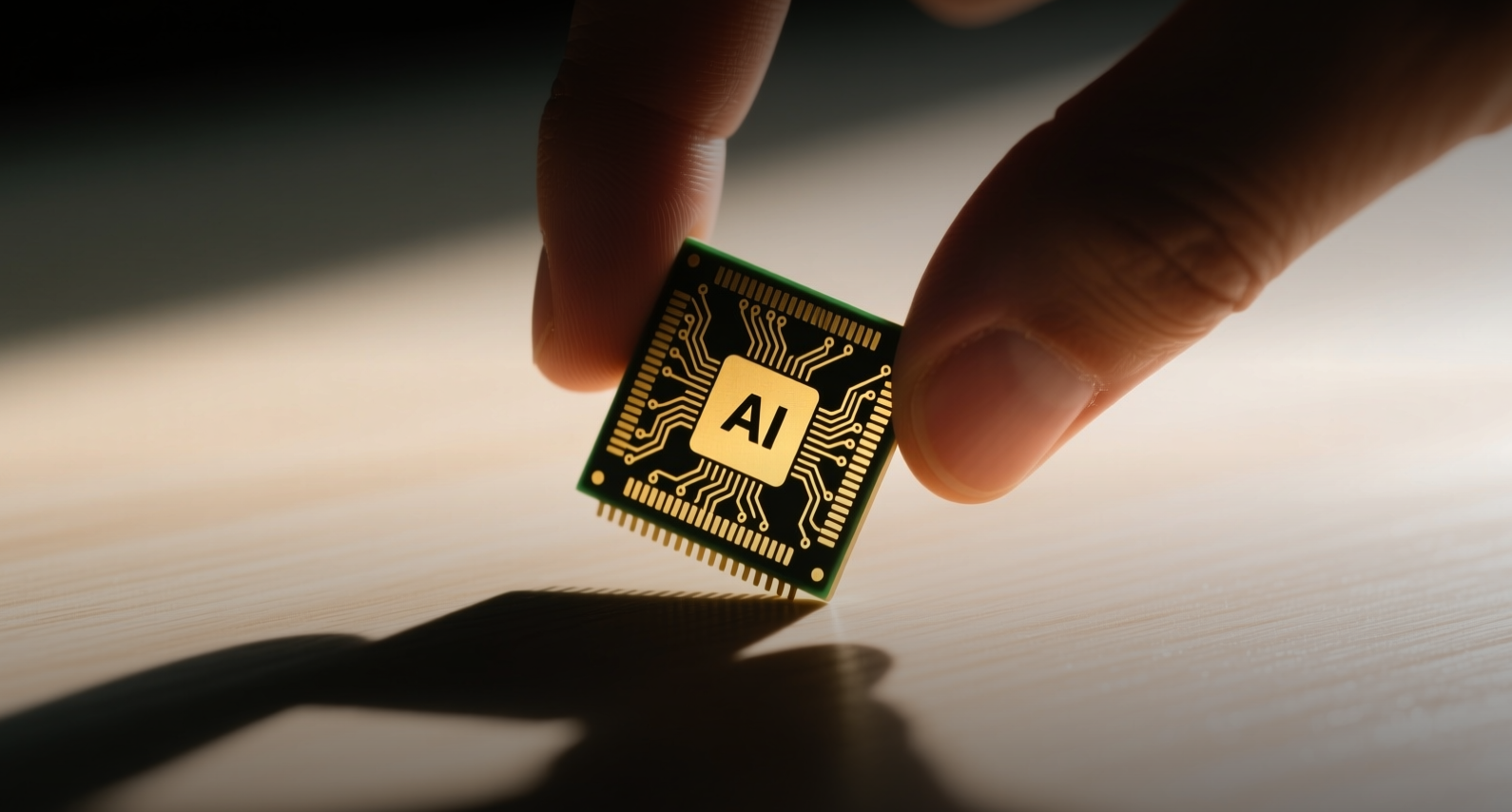
Semiconductor stocks have fallen 22% from their July peak as investors question whether hyperscalers' massive AI spending can hold up, even as chip production lines run at full capacity.
"We are not seeing any slowdown in production," Stephen Sopko said, calling the pullback a "penalty for good behavior" as news keeps raising expectations each cycle.
The PHLX Semiconductor Sector index has dropped more than 22% from its peak in just over a month. The four largest hyperscalers — Meta, Amazon, Google and Microsoft — have invested about $1.1 trillion since the start of 2023 and are expected to spend about $750 billion this year. Amazon, Microsoft and Google are accelerating cloud revenue growth, with much of that demand coming from AI players such as Anthropic.
The stakes are enormous. Taiwan Semiconductor Manufacturing, the world's largest contract chip fabricator with 73% market share, raised its full-year revenue outlook to slightly above 40% and said its previous long-term guidance of 25% compound annual growth through 2029 is too low. TSMC also increased its capital expenditure guidance by $8 billion to $62 billion for 2026.
Production Strength vs. Market Anxiety
The disconnect between factory output and stock prices has created what Cyrus Mewawalla, head of strategic intelligence at GlobalData, calls an "incredibly jittery" tech market. Investors are not yet seeing strong enough AI revenues to justify the spending, he said, pointing to the circular web of investments linking hyperscalers, AI companies and data-center operators. "Everybody's got a little investment in somebody else," Mewawalla said. "Just a small blip could send the whole pack of dominos down."
Apple and Meta saw their shares tumble as investors questioned their AI monetization, while Amazon, Microsoft and Google were rewarded for converting AI investment into cloud sales. This sharpening split between winners and losers has made the sector tense, Mewawalla said.
TSMC's Moat Widens as Competitors Struggle
TSMC's dominant position appears unassailable in the near term. The company holds a considerable technological lead over Samsung Foundry and Intel. Samsung has faced yield challenges and delays that have prevented it from competing for the most advanced chip designs, though it is making progress with its 2nm process. Intel is focused on developing its 1.4nm process, set to compete with TSMC's similar process starting in 2028.
TSMC's scale is the greater barrier. The company is spending $62 billion on capital expenditures this year, a level of manufacturing capacity Samsung and Intel cannot match. That scale allows TSMC to amortize research and development costs across a broader customer base, maintaining its technology lead. The company raised prices for its most advanced manufacturing processes at the start of the year and plans annual increases going forward.
CEO C.C. Wei said he doesn't want to squeeze customers out of the market. "We earn our value and we make sure that our profit, our gross margin, is enough for our long-term sustaining expansion," he said.
Deutsche Bank analysts said software may emerge as a relative winner and help offset volatility from chip holdings. "Semis have not only been the biggest single driver of index performance but also of volatility this year," the analysts said. Their research suggested a pure semiconductor portfolio outperformed a 50-50 software and semiconductor portfolio this year, but produced a weaker return once volatility was taken into account.
TSMC shares trade at about 28 times forward earnings, a discount that reflects the market's anxiety about AI spending sustainability. If the company's revenue growth holds at even 25 percent compound annual growth through 2029, the current valuation looks inexpensive. But the circular nature of AI investments — hyperscalers funding AI startups that buy from those same hyperscalers — means a single crack in the chain could trigger a broader repricing across the sector.
This article is for informational purposes only and does not constitute investment advice.
