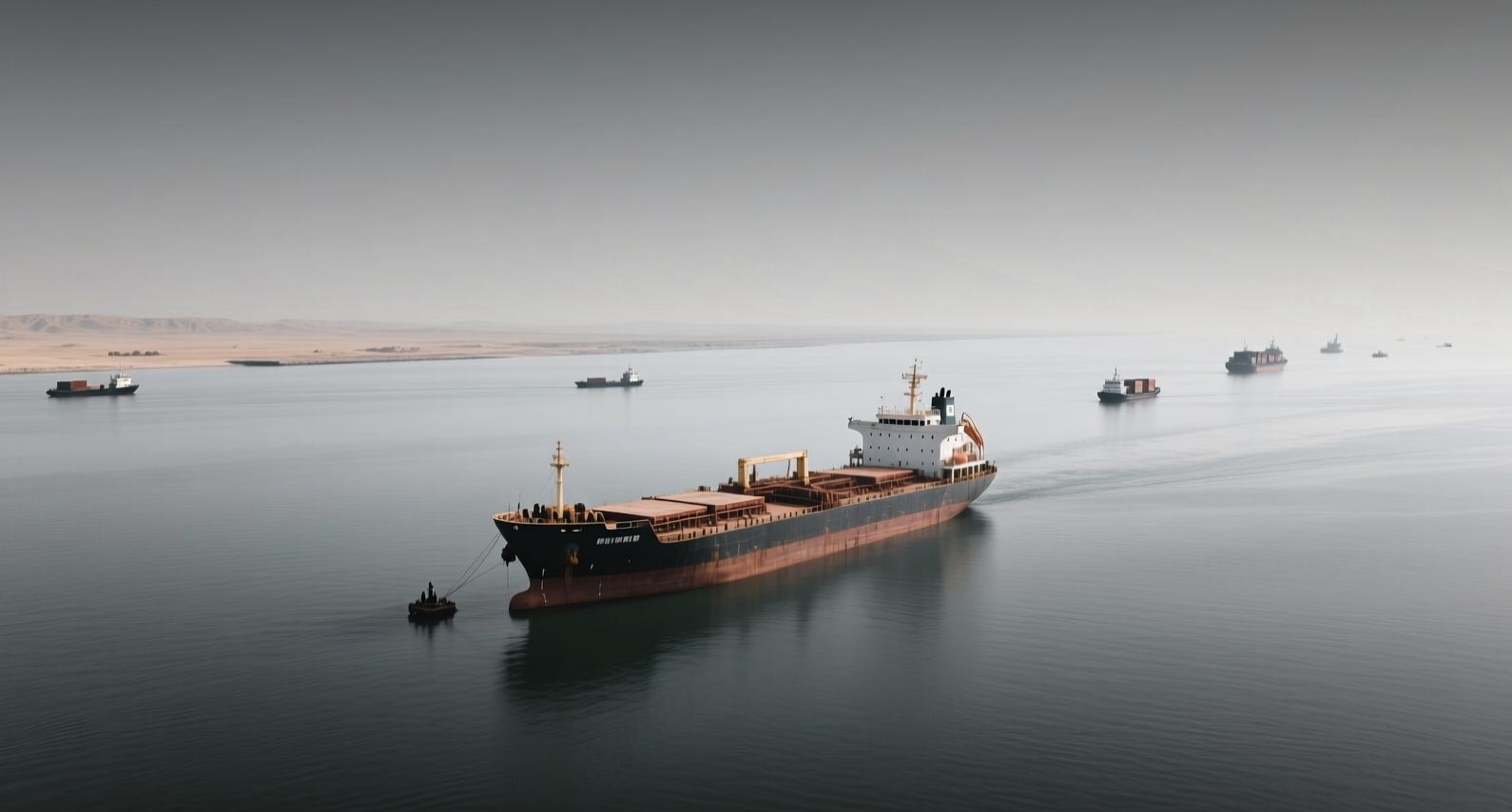
The Strait of Hormuz, through which roughly 20 percent of global oil supply transits daily, may soon see a temporary joint shipping lane as Oman and Iran move to restore safe navigation after recent hostilities.
Oman and Iran proposed a temporary joint shipping lane and coordinated mine-clearing through the Strait of Hormuz, a move that could ease supply fears for the 20 percent of global oil transiting the waterway.
"The two ministers discussed a phased framework that could provide a practical and implementable basis in light of the current situation in the Strait resulting from the recent war and its tragic consequences," the joint statement said, following talks between Omani Foreign Minister Sayyid Badr bin Hamad bin Hamood Al Busaidi and his Iranian counterpart Dr. Seyed Abbas Araghchi in Tehran.
The proposal includes a temporary joint maritime navigation corridor and a joint project to clear mines from the Strait. Technical negotiations will continue toward a permanent navigation corridor, a traffic management mechanism, and information-sharing arrangements. Both sides stressed the need for joint discussions with Gulf states bordering the waterway and adherence to international law.
The Strait of Hormuz is a critical chokepoint through which roughly 20 percent of global oil supply transits. The proposal comes as the U.S. Navy enforces a renewed blockade on Iranian ports in the Strait, and as Washington maintains sanctions on Iran's aviation, tech, and shipping sectors. If implemented, the temporary lane could reduce shipping insurance costs and stabilize crude prices; if talks stall, the risk premium on oil could widen further.
Mines, Sanctions, and the U.S. Blockade
The joint proposal arrives against a backdrop of heightened military activity. The U.S. Navy has been enforcing a renewed blockade on Iranian ports in the Strait of Hormuz, a posture Defense Secretary Pete Hegseth said the U.S. can maintain "indefinitely." President Donald Trump has claimed mines in the waterway are already clear, a statement that appears to front-run the Omani-Iranian announcement.
The USS Abraham Lincoln recently returned to San Diego after nearly 275 days at sea — a deployment Trump said was not "nearly long enough" — and has been replaced by the USS George Washington in the Middle East. The extended deployment drew scrutiny over reported food shortages, water contamination, and broken toilets on board, though acting Navy Secretary Hung Cao said the ship "crushed their deployment."
Qatar's Foreign Ministry said Tuesday that U.S. sanctions on Iran are unilateral, adding another layer of diplomatic friction. Washington's sanctions target Iran's aviation, tech, and shipping sectors, putting additional pressure on global energy markets. The sanctions regime has been a persistent point of contention among Gulf states, several of which maintain close economic ties with Tehran despite U.S. pressure.
What a Temporary Lane Would Mean for Oil
The Strait of Hormuz handles roughly 20 percent of global oil supply, making it the world's most strategically significant energy chokepoint. A temporary joint shipping lane, if operationalized, could reduce the war-risk premium embedded in crude prices and lower shipping insurance costs for tankers transiting the waterway.
The last major disruption to Hormuz traffic occurred during the Iran-Iraq War in the 1980s, when the "Tanker War" prompted U.S. naval escorts and drove oil prices sharply higher. More recently, the 2019 attacks on tankers near the Strait pushed Brent crude up more than 5 percent in a single session, demonstrating how quickly the market prices in Hormuz risk.
If the phased framework advances, the next steps would involve technical negotiations on a permanent corridor and coordination with Gulf states including Saudi Arabia, the UAE, and Qatar. The joint statement explicitly called for "joint discussions with the countries of the region bordering the waters of the Gulf," suggesting the framework is designed to be inclusive of all littoral states.
If talks stall, the risk premium on crude could persist, keeping shipping insurance rates elevated and energy prices volatile. The oil market has been sold heavily for two days on speculation that progress on a deal exceeds what has been announced, according to market commentary, suggesting traders are already pricing in a partial resolution.
This article is for informational purposes only and does not constitute investment advice.