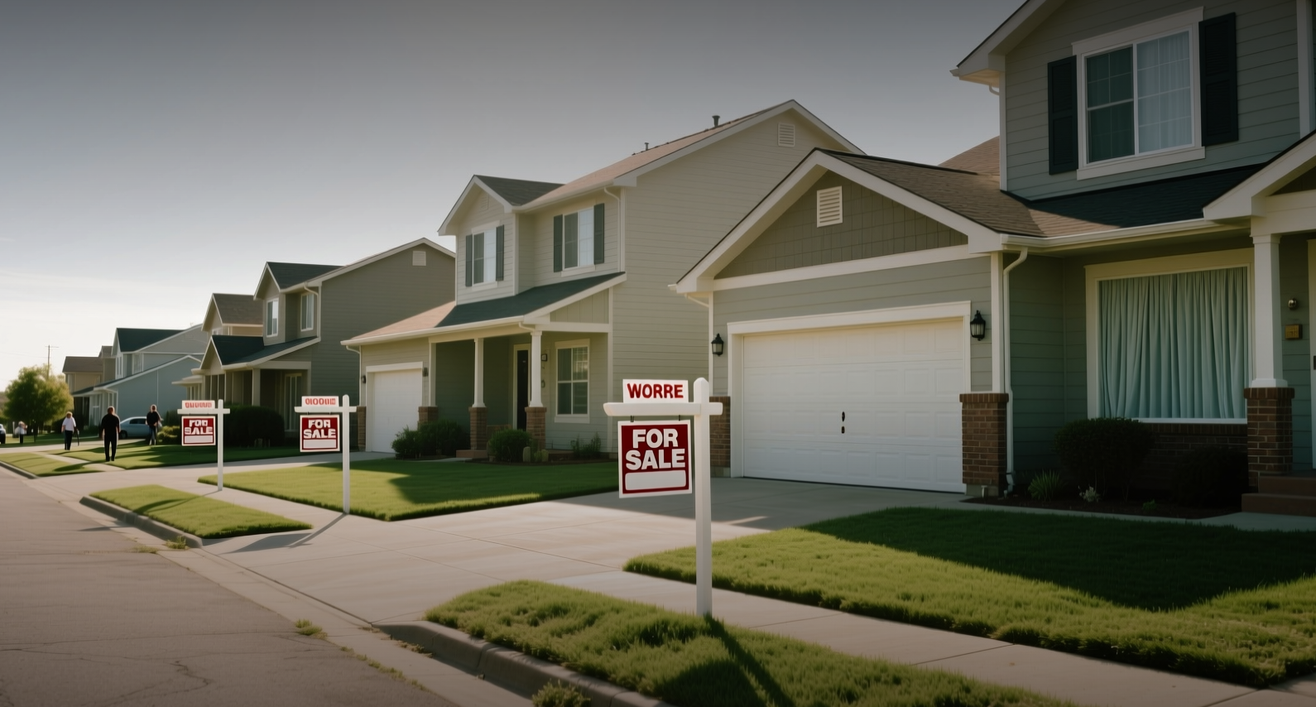
The average U.S. 30-year fixed mortgage rate rose to 7.07%, crossing above 7% for the first time in more than a year, as the 10-year Treasury yield pushed toward 4.9% and traders added to bets the Federal Reserve will raise interest rates as soon as next week.
"Mortgage rates are doing nothing more than following the bond market, and the bond market is repricing the entire path of Fed policy," said James Okafor, rates strategist at Edgen. "Until the long end settles, every basis point of Treasury yield lands directly on a homebuyer's monthly payment."
The 10-year note yield has climbed to its highest level since 2023, with the 30-year bond reaching levels last seen in 2007 and the two-year note exceeding 4.5% for the first time since 2024, according to Bloomberg. Yields rose five to 10 basis points across maturities on Sept. 10 as oil prices extended a surge that pushed traders to price roughly a 70% probability of a Fed hike at the Sept. 16 meeting, with a move fully priced by October rather than December.
The transmission into housing is arithmetic. At 7.07%, principal and interest on a $400,000 loan runs about $2,684 a month, roughly $190 more than at 6.75% and about $430 more than at 6.07% a year ago. A buyer whose budget caps the payment at $2,500 can now support a loan of about $372,600 — $27,400 less house for the same monthly outlay, before taxes and insurance.
That squeeze lands on a market already short of supply. The average 30-year fixed rate sat near 6.07% in September 2025, meaning the move above 7% has erased roughly a full percentage point of purchasing power in 12 months. Existing homeowners holding sub-5% mortgages have little incentive to list, keeping resale inventory tight and pushing more demand toward new construction — where builders have leaned on rate buydowns and price cuts to keep contracts moving.
Higher discount rates hit the equity side through the same channel. Homebuilders, residential REITs and utilities — sectors whose cash flows sit furthest out on the curve — carry the most sensitivity, and the move in the long end raises the rate used to value those streams. The iShares U.S. Home Construction ETF and the utilities-heavy XLU have both lagged the S&P 500 over the past month as the 10-year yield advanced, while rate-sensitive growth names face the same multiple compression.
The next test of the spine arrives Sept. 16, when the Fed announces its decision. A hike would validate the repricing in the front end and likely push the 10-year toward 5%, a level last touched in October 2023, when the 30-year fixed mortgage rate peaked near 7.79%. A hold, paired with language that downplays the oil-driven inflation impulse, would let the long end retrace and pull mortgage rates back toward the high-6% range within weeks.
For buyers, the practical question is timing rather than direction. Locking at 7.07% costs about $2,684 a month on a $400,000 loan; waiting for a 25-basis-point decline saves roughly $65 a month, or $780 a year — less than the cost of a single week's delay if the Fed hikes and the 10-year pushes through 5%.
This article is for informational purposes only and does not constitute investment advice.