


Key Takeaways: The semiconductor crash has split the sector into two camps — memory makers that soared 222% this year and AI chip leaders that gained just 11%.
Key Takeaways: The semiconductor crash has split the sector into two camps — memory makers that soared 222% this year and AI chip leaders that gained just 11%.
The semiconductor crash has split the sector into two camps — memory makers that soared 222% this year and AI chip leaders that gained just 11%.
The semiconductor crash has split the sector into two camps, with Micron up 222% this year versus Nvidia's 11% gain, as a 33% KOSPI collapse forces investors to reassess which chip trade holds up.
"Memory stocks exhibit high convexity: small demand shifts cause outsized earnings and valuation swings due to their fixed cost structure and lack of inventory buffers," Dustin Quasney, a Seeking Alpha contributor, wrote.
The KOSPI index fell 10.84% on July 30, triggering its eighth circuit breaker this year, and is now down more than 33% from its highs in less than a month. The index's decline reflects its heavy concentration in memory giants like SK hynix and Samsung, making it a leveraged proxy for global memory demand. Micron has risen nearly 222% this year to around $933.86, while Nvidia has gained about 11% to roughly $210.28.
The divergence matters because memory and AI compute face different demand drivers. Nvidia and Broadcom recently signed billion-dollar AI memory deals at a South Korea summit, and Bernstein reiterated buy ratings on Micron, Samsung, and SK hynix. But Michael Burry has doubled down on bearish bets against both Micron and Nvidia, adding short positions in the iShares Semiconductor ETF (SOXX) using both short stock and put options.
The crash's root cause is shifting investor perceptions of hyperscaler capex sustainability, not just China's CXMT IPO or domestic lithography advances, according to the Seeking Alpha analysis. Memory stocks are particularly vulnerable because their fixed cost structure means small demand shifts produce outsized earnings swings. The KOSPI's decline, which has accelerated through July, has been amplified by retail leverage in South Korea, where individual investors have piled into memory names through margin accounts.
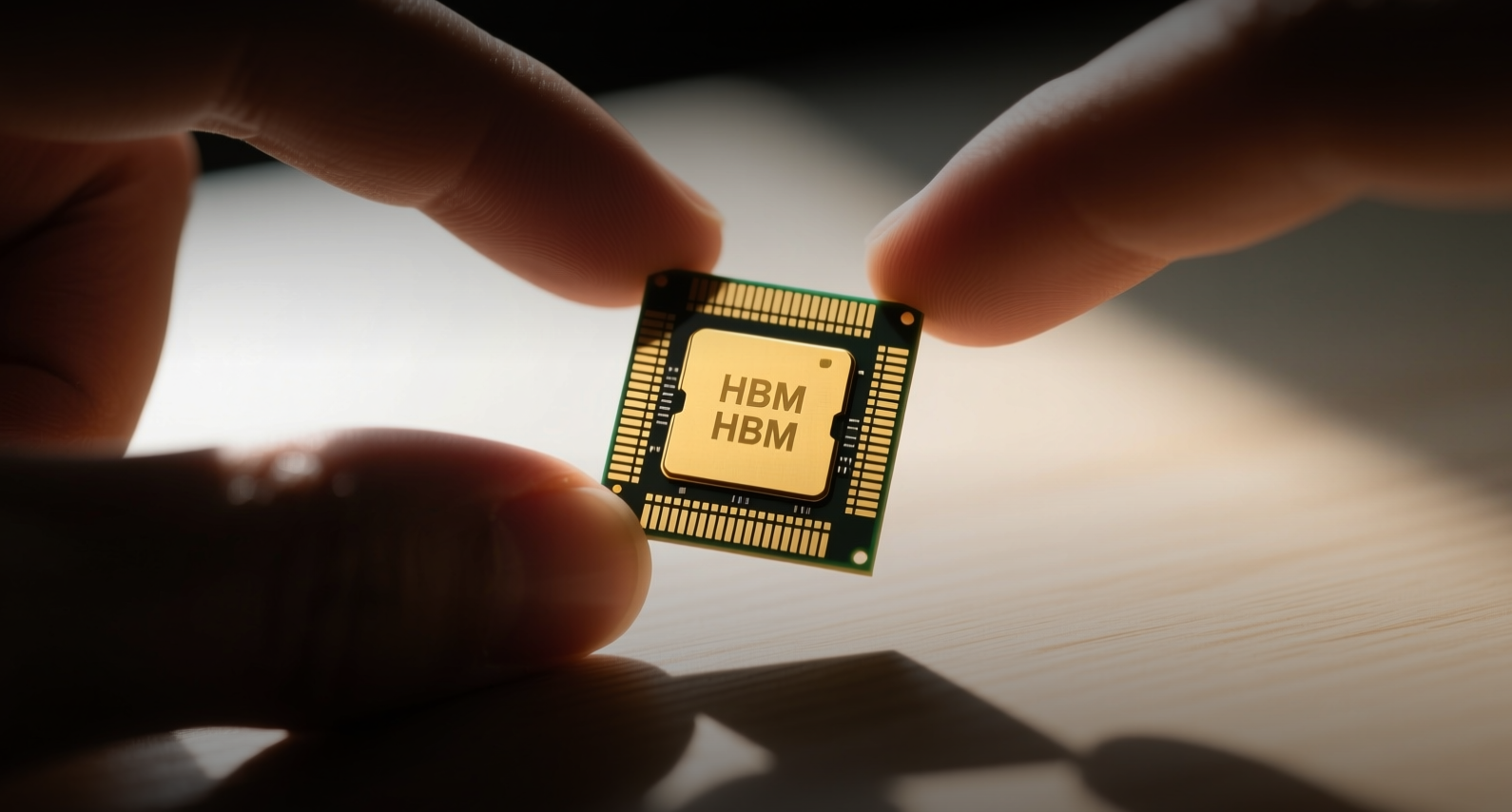
Micron has been the biggest beneficiary of the AI memory boom, with HBM (high-bandwidth memory) demand from Nvidia and other AI chipmakers driving prices higher. HBM is a specialized type of memory stacked vertically to deliver higher bandwidth for AI accelerators, and it has become one of the tightest segments in the semiconductor supply chain. But the stock's 222% gain this year has made it a target for bears. Burry sold short additional shares of Micron at $933.86, betting the rally has stretched too far.
Bernstein disagrees, reiterating buy ratings on Micron, Samsung, and SK hynix after Nvidia and Broadcom signed billion-dollar AI memory deals at a South Korea summit. The firm sees continued HBM demand growth as AI training and inference workloads expand. The deals suggest hyperscalers remain committed to memory procurement even as broader semiconductor sentiment sours.
Nvidia, up just 11% this year, has been a relative laggard in the semiconductor rally. The stock's more modest appreciation reflects concerns about hyperscaler capex sustainability and competition from custom AI chips developed by cloud providers. Burry added to his Nvidia short at $210.28, while maintaining a large bearish position in SOXX.
The iShares Semiconductor ETF, which tracks the broader semiconductor sector, has been caught in the crossfire. SOXX traded at $504.89 on July 31, recovering from earlier losses as AMD and Micron surged and Lam Research climbed 17% in a sharp rebound. The volatility has been extreme, with AMD, Intel, and Micron extending losses one day before reversing sharply the next.
For investors weighing Micron versus Nvidia, the choice comes down to risk tolerance and time horizon. Micron offers higher upside if memory prices hold, but its convexity cuts both ways — a demand slowdown could produce outsized losses. Nvidia's more modest valuation and diversified AI platform position may offer relative stability, though its growth is increasingly tied to the same hyperscaler capex cycle driving the current volatility.
The next test comes with Palantir's earnings on August 3, which could set the tone for AI sentiment broadly. If AI demand shows signs of slowing, both Micron and Nvidia face further downside. If it holds, the current crash may represent a buying opportunity for the memory trade.
This article is for informational purposes only and does not constitute investment advice.
