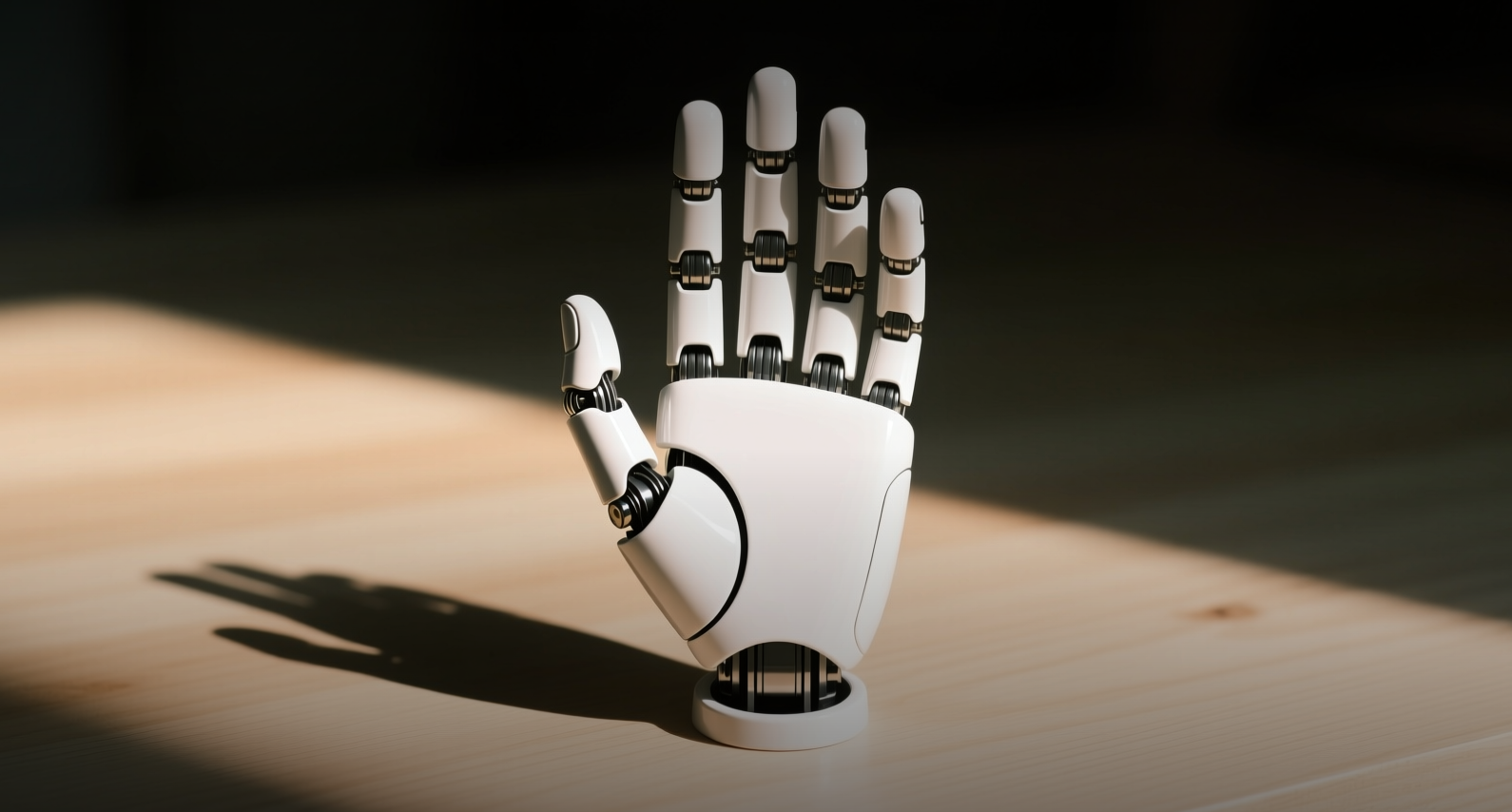
Chinese automakers are pivoting from electric vehicles to humanoid robots, driving a structural re-rating of Hong Kong-listed auto stocks as investors reassess the sector's addressable market.
Hong Kong-listed Chinese auto stocks surged on July 29, with Li Auto Inc. (02015.HK) jumping 8.09 percent, after at least three major automakers accelerated humanoid robot development plans. GAC Group (02238.HK) rose 5 percent and XPeng Inc. (09868.HK) gained 3.51 percent in afternoon trading.
"The goal is to place two to three robots in every dealership store," said Li Ke, executive vice president at BYD Co., which confirmed plans to publicly showcase a physical humanoid robot prototype at its "Di Space" venue in August. Li said the robots will handle standardized tasks including multilingual vehicle explanations, in-car system demonstrations, and interactive customer engagement, with commercial deployment expected within one to two years.
The rally followed a cascade of announcements. XPeng's humanoid robot IRON has begun small-batch trial production at its Guangzhou factory, with mass production targeted by end-2026 and monthly capacity exceeding 1,000 units. Chairman He Xiaopeng has taken personal charge as chief executive officer of the robotics business, elevating the unit to the group's highest strategic level. Li Auto disclosed plans for both a two-wheeled and a bipedal robot under a project codenamed "Nexus," with the two-wheeled model aimed at factory scenarios and expected for public release within the year. The company's 2026 research and development budget is CNY 12 billion ($1.8 billion), with AI-related investment accounting for roughly half.
The Technology Bridge
The logic behind the cross-sector push is rooted in engineering overlap. Core hardware for humanoid robots — joint actuation, energy supply, and perception control — is highly interchangeable with key electric-vehicle components. Perception sensors such as LiDAR, cameras, and millimeter-wave radar can be almost seamlessly transplanted, while environmental perception, path planning, and real-time decision-making algorithms are similarly shared. He Xiaopeng has stated that 70 percent of an automaker's technology reserves can be directly replicated onto robots.
At the supply chain level, motors, gear systems, lead screws, bearings, batteries, and sensors are all shared components between electric vehicles and robots, differing only in precision requirements. Automotive factories themselves serve as natural initial deployment environments — production lines designed for human workers allow robots to adapt without large-scale modifications, with transport, assembly, quality inspection, and patrol inspection among the first applications.
From Showrooms to Mass Production
Nearly 20 major automakers globally have entered the humanoid robot race through self-development, investment, or incubation. Tesla's third-generation Optimus began mass production in the second quarter of 2026 at its Fremont factory, with a dedicated facility at the Texas Gigafactory targeting annual capacity of 1 million units. Hyundai Motor is deploying through its Boston Dynamics subsidiary, with the Atlas humanoid robot planned for Hyundai factories starting in 2028. BMW plans to deploy Hexagon Robotics' Aeon humanoid robot at its Leipzig plant in Germany this summer.
In China, GAC released its fourth-generation humanoid robot GoMate Mini in February 2026. Changan Automobile invested CNY 450 million ($66.5 million) to establish a dedicated robotics subsidiary. Chery launched its "Mojia" robot brand, while SAIC Motor's embodied intelligent robot "Nengzai No. 1" has already been deployed on mass production lines.
The commercial urgency is clear. China's automotive industry profit margin fell to 4.1 percent in 2025, the lowest since 2015, as price wars and overcapacity squeezed margins. Morgan Stanley estimates the humanoid robot market could reach $5 trillion by 2050, while global shipments are expected to surpass 50,000 units in 2026 and exceed 100,000 units in 2027. China's Ministry of Industry and Information Technology has issued a special action notice calling for key humanoid robot products to complete application validation and achieve normalized deployment in representative scenarios by end-2026, forming the capability for ten-thousand-unit-scale deployment.
Challenges remain. Robots demand far higher actuator precision and dexterous hand tactile sensor performance than automotive-grade standards, keeping per-unit costs high and mass-market household penetration distant. Industry participants acknowledge that the transition from pre-programmed technical showcases to general-purpose capability requires sustained capital investment, breakthroughs in solid-state batteries and flexible sensors, and the next leap in physical artificial intelligence. Yet for automakers, the advantage is that robots do not need to be perfect before deployment — in highly structured factory environments, machines capable of completing specific tasks already possess practical value.
This article is for informational purposes only and does not constitute investment advice.