
A six-month Hormuz closure has cut Gulf LNG exports by more than 85 percent, driving European benchmark gas to €75 and leaving storage at a 15-year seasonal low as winter approaches.
A six-month Hormuz closure has cut Gulf LNG exports by more than 85 percent, driving European benchmark gas to €75 and leaving storage at a 15-year seasonal low as winter approaches.
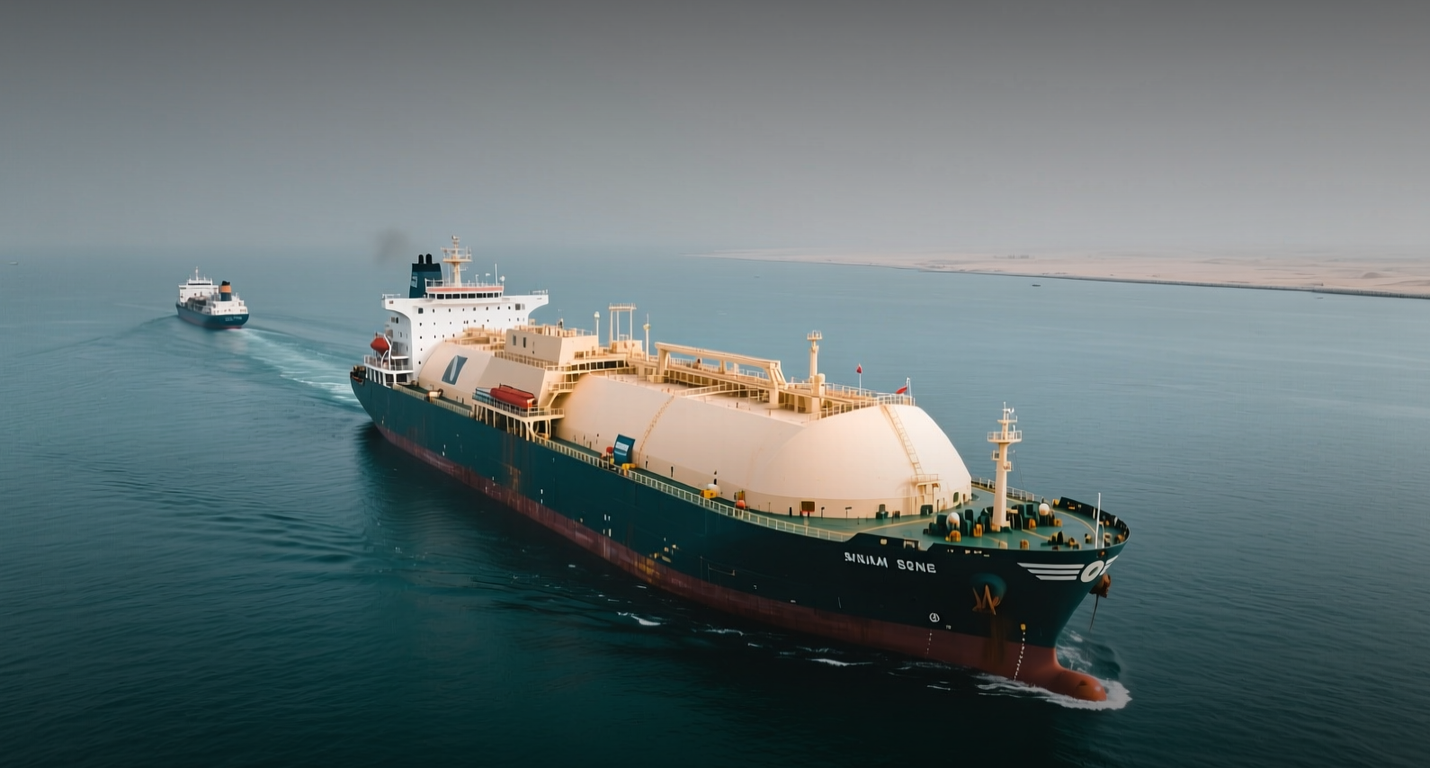
Benchmark European gas climbed to €75 a megawatt hour last week, more than double its year-ago level and the highest since late 2022, as the six-month closure of the Strait of Hormuz chokes off roughly a fifth of global liquefied natural gas supplies and leaves the continent's storage at a 15-year seasonal low.
"The real issue is not whether Europe can secure enough gas to get through the winter. It is how much it will have to pay," said Ron Bousso, energy columnist at Reuters. "For now, it looks like a cost the region cannot afford."
The supply crunch has forced Europe and Asia into fierce competition for a shrinking pool of spot cargoes. A scorching summer across much of Asia lifted power and cooling demand, diverting eastward large volumes of gas that would typically have reached Europe during the critical refill months. Gulf LNG exports, led by Qatar and the United Arab Emirates, fell more than 85 percent between March and August from a year earlier, according to Kpler data, with QatarEnergy extending its force majeure suspension on deliveries to key customers until early November.
The result is visible in the storage data. European gas inventories sit at about 66 percent of capacity, the lowest for this time of year in 15 years and roughly 12 percentage points below last year's level, according to Gas Infrastructure Europe. Germany's network, the largest in Europe, is only 54 percent full, while facilities in the Netherlands stand at 48 percent. Inventories typically peak in early November; after topping out at 83 percent, or about 85 billion cubic metres, in 2025, storage is likely to peak at only 70 to 75 percent this year, according to Reuters Open Interest estimates.
The market has not collapsed entirely because production elsewhere has stepped up. LNG output outside the Gulf grew 18 percent, or around 27 billion cubic metres, in the year to the end of June, offsetting roughly 75 percent of the Middle East losses, according to the International Energy Agency. That helps explain why prices, though painful, remain far below the extraordinary peaks of the 2022 energy crisis, when benchmark European gas briefly exceeded €300 a megawatt hour.
Yet the upside risk at current levels is enormous, and the timing is bad. Europe's gas bill reached €117 billion in 2025 even with consumption running about 17 percent below pre-crisis levels, according to Bruegel estimates, and the import bill is set to rise sharply again this year. Governments are in no position to repeat the massive subsidy programmes deployed after the 2022 shock, and earlier attempts to intervene in gas markets, including Germany's, have often backfired by distorting incentives and delaying refilling.
The cost lands on an economy already stretched thin. Tensions with Moscow are spiking after an attempted Russian drone attack on Germany last week, while the Trump administration presses Europe to spend more on its own defence. The continent is racing to expand ammunition and military-equipment production, to catch up in the AI arms race with power-hungry data centres, and to defend its manufacturing base against lower-cost Chinese rivals — Volkswagen recently announced the biggest restructuring in its 89-year history. Another prolonged surge in gas and power prices would worsen Europe's cost disadvantage, forcing manufacturers either to absorb higher energy costs and squeeze profits or pass them on and lose competitiveness.
The European Commission said on Friday that, despite low storage, the bloc faces no immediate risk to security of supply this winter. That may prove correct. But with the Hormuz disruption likely to persist through year-end and winter demand approaching, the question is not whether Europe can get through the season — it is what the continent will have to sacrifice to pay for it.
This article is for informational purposes only and does not constitute investment advice.
