

Rising European carbon costs are quietly shifting Bitcoin mining to Russia, where polluting carries no price.
Rising European carbon costs are quietly shifting Bitcoin mining to Russia, where polluting carries no price.
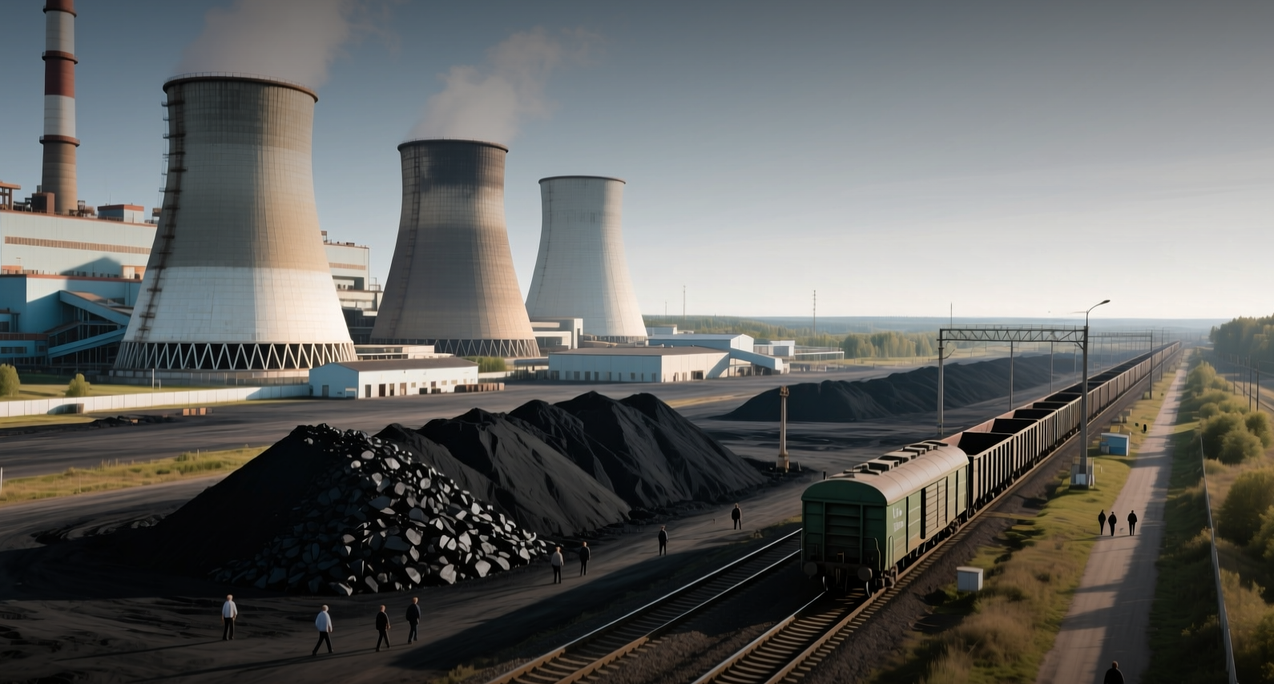
Rising European carbon prices are shifting Bitcoin mining to Russia, where emissions carry no cost, according to a study of power-grid data from 2019 to 2025.
The finding comes from "Does Carbon Pricing Displace Crypto-Mining Emissions? Quantile Evidence on Carbon Leakage from EU27, Russian and Rest-of-World Power Grids," a paper by Pham Ngoc Toan, Le Tran Trung Hieu and Nguyen Vu Trung Nguyen, three Vietnamese researchers.
The authors linked daily power-sector emissions across the EU, Russia and the rest of the world to Bitcoin's daily closing price, finding a statistical correlation between European carbon-allowance prices and Russian emissions that did not appear for other regions. Russia has no carbon-pricing structure, making mining structurally cheaper there.
The shift appears operational rather than physical: companies with hardware in both jurisdictions shut down equipment in the EU and switch it on in Russia when carbon costs and Bitcoin prices rise together. Russia is also building financial rails around crypto — the Moscow Exchange plans perpetual futures on Bitcoin and Ethereum as early as September — even as it restricts mining in some regions.
The study's authors caution that the link carries limits. The May 2021 Chinese Bitcoin mining ban weakened the statistical relationship, and the analysis excludes other factors that could drive emissions. Since 2025, Russia has banned crypto mining in certain regions, with an expansion to Moscow approved this year, which could complicate the operational relocation and narrow the window for miners seeking to arbitrage carbon costs.
Russia's parallel push into crypto infrastructure is not incidental. The Moscow Exchange plans to launch perpetual futures on Bitcoin and Ethereum as early as September 2026, coinciding with a new law regulating digital currency that takes effect Sept. 1. The exchange has said it may extend the offering to futures on 10 digital assets. Moscow is not legalizing free Bitcoin purchases for citizens; it is building a framework where crypto exposure flows through state-supervised financial channels.
For miners, the calculus is straightforward. European carbon allowances have made operating in the EU more expensive, while Russia's absence of carbon pricing keeps marginal costs lower. The study suggests the migration is a profit-maximizing response rather than a relocation of physical hardware — a distinction that matters for how regulators measure emissions leakage.
The implications extend beyond mining economics. If carbon pricing in the EU displaces rather than reduces emissions, the bloc's climate policy could be shifting pollution eastward while Bitcoin's energy mix becomes more concentrated in a handful of low-cost geographies. That concentration carries risks for network decentralization and for how ESG-focused institutions assess Bitcoin's carbon footprint.
This article is for informational purposes only and does not constitute investment advice.
