Chinese AI models have overtaken US platforms in global usage for the first time, upending assumptions about American dominance in the technology.
Chinese AI models have overtaken US platforms in global usage for the first time, upending assumptions about American dominance in the technology.
Chinese AI models have overtaken US platforms in global usage for the first time, upending assumptions about American dominance in the technology.
Chinese AI models overtook US platforms in global token usage on OpenRouter in June, capturing more than 60 percent of market share last month, as open-weight releases from Moonshot, DeepSeek and Alibaba narrowed the performance gap with American rivals.
"China is also by far the strongest competitor in AI," Elon Musk wrote on X, responding to a resurfaced 2011 prediction that Beijing would ultimately become the most important rival in rocket technology.
Stanford University's 2026 AI Index said the US-China model-performance gap has "effectively closed," with Anthropic's top model leading China's best by only 2.7 percent as of March. Moonshot's Kimi K3 nearly matched Anthropic's most advanced model at a fraction of the cost — $15 per million output tokens versus $50 for Anthropic's Fable 5. DeepSeek's V4-Pro costs $3.96 per million tokens at peak hours.
The shift threatens the trillion-dollar valuations US AI labs are chasing. Anthropic raised funds at a $965 billion valuation in May, while OpenAI was worth $852 billion in its March round — compared with Moonshot's $35 billion. Chinese models now account for 41.4 percent of generative model downloads on Hugging Face, 5 percentage points above US models.
Open-Weight Strategy Drives Adoption
Chinese labs have embraced open-weight software, allowing users to download, customize and host models locally. Alibaba's Qwen family surpassed 3 billion downloads in six months, eclipsing Meta and Google to become the world's most-downloaded open-weight model line. US companies including Airbnb, DoorDash and Coinbase have adopted Chinese models hosted on local servers.
The pricing advantage is reshaping enterprise spending. Ben Cera, founder of startup Polsia, shifted to MiniMax's M2.7 model after his AI costs threatened bankruptcy, cutting spending to $100,000 from $1 million in a single month. "At one point I was like, I don't have a choice," Cera said from San Francisco.
Washington Weighs Response
The White House is considering restrictions on Chinese AI models, with Treasury Secretary Scott Bessent floating sanctions if model developers are found to have stolen intellectual property. Nearly 200 US companies have spoken out against a ban, arguing it would raise costs and hurt competitiveness. Trump acknowledged the tension: "We have to be careful in both ways. We don't want to restrict them where all of a sudden, we come in second to China."
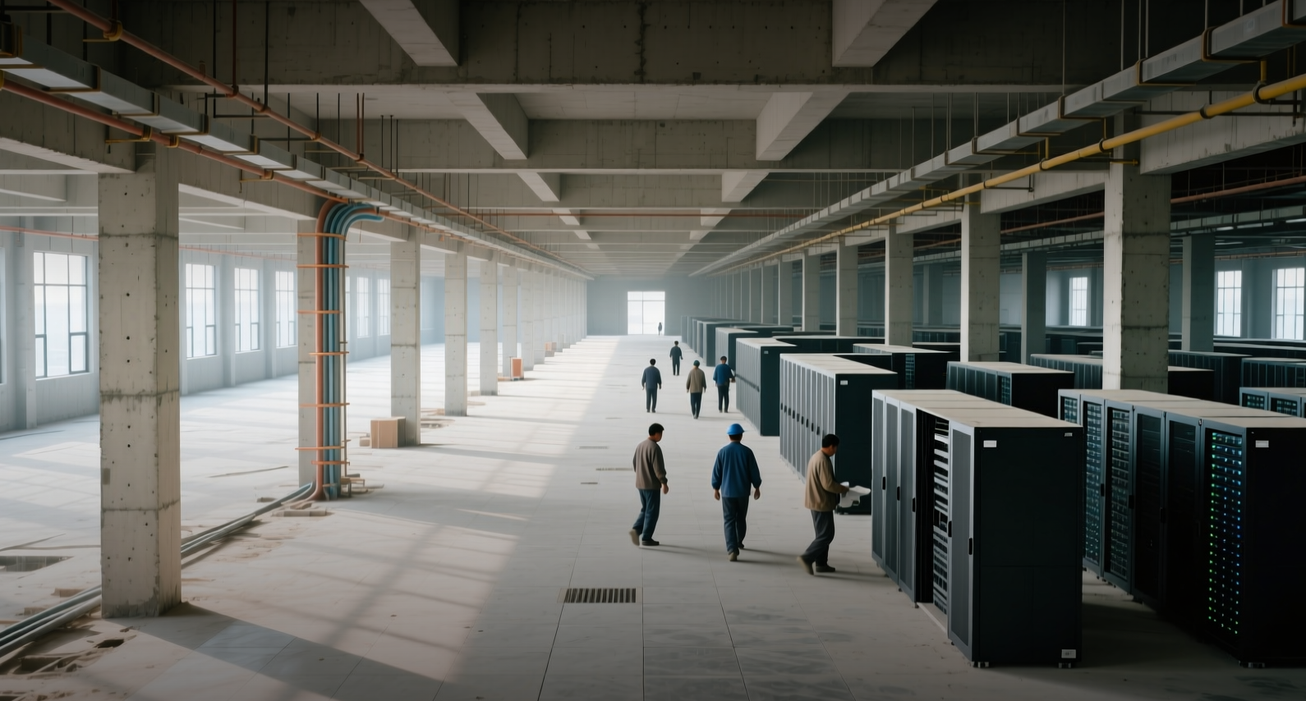
China is also investing heavily in infrastructure. Beijing plans to spend roughly 2 trillion yuan ($295 billion) over five years building data centers, while US hyperscalers face an energy bottleneck from surging power demand. US computing power remains about 10 times China's, according to Saif Khan at the Institute for Progress, but export controls have not prevented Chinese labs from closing the capability gap.
For investors, the competitive pressure on US AI pricing power is mounting. Anthropic is considering an IPO as soon as October, while OpenAI is looking at going public next year — both at valuations that assume sustained pricing power. Chinese labs' willingness to undercut on price, combined with near-parity performance, could compress margins across the industry. DeepSeek is preparing its own IPO as soon as this year, and Moonshot's $35 billion valuation suggests the market is already pricing in a multi-player landscape.
This article is for informational purposes only and does not constitute investment advice.
