
China opened its first foreign trade national security investigation Aug. 5, targeting imported printing and copying equipment with foreign system software.
China opened its first foreign trade national security investigation Aug. 5, targeting imported printing and copying equipment with foreign system software.
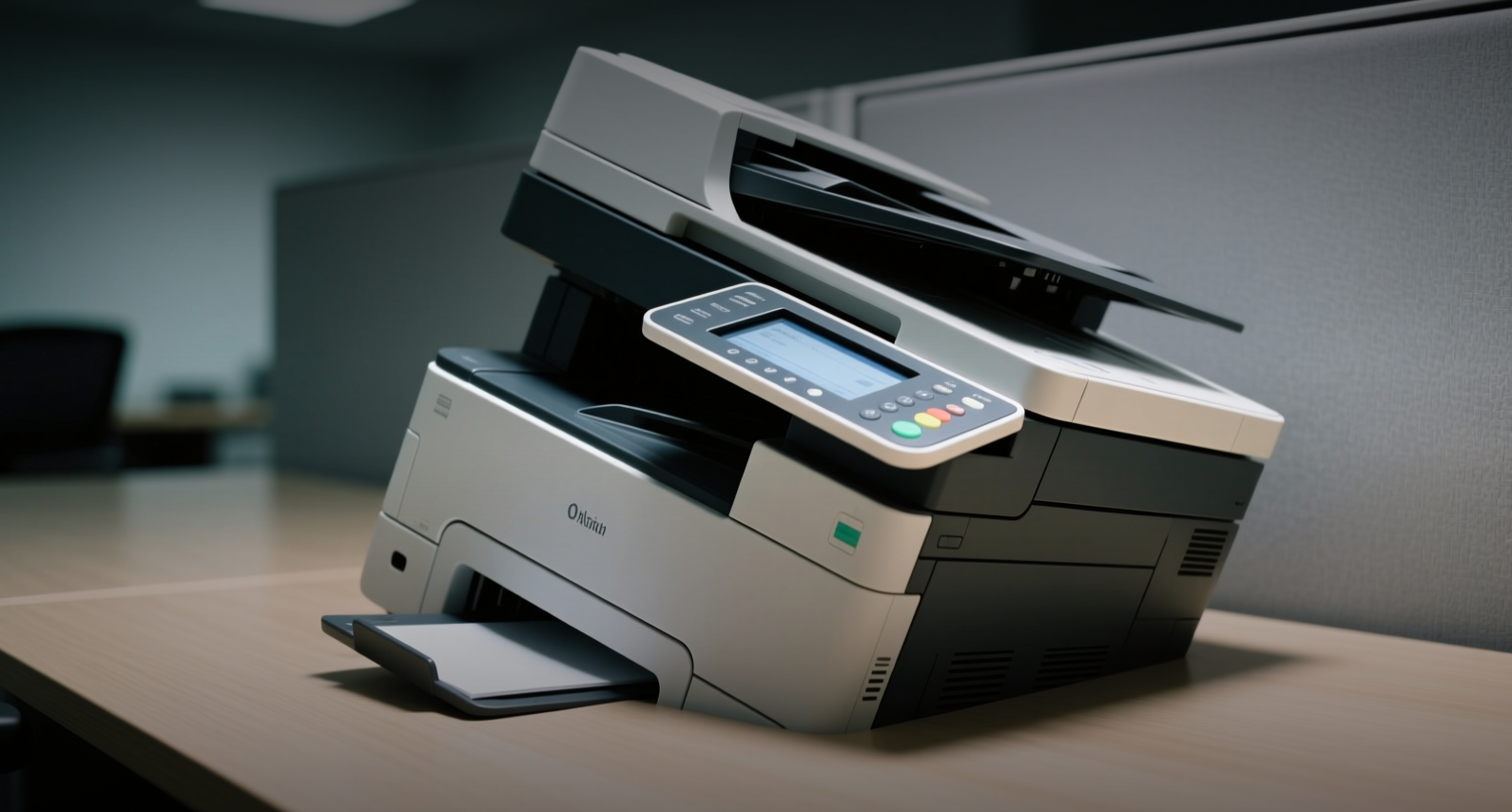
China opened its first foreign trade national security investigation Aug. 5, targeting imported printing and copying equipment with foreign system software, where imports hold roughly half of the domestic market.
"This is not only a necessary response to unfair trade practices, but also an institutional arrangement to safeguard national security, strengthen the resilience of industrial and supply chains, and support high-quality foreign trade development," Zhang Monan, a researcher at the China Center for International Economic Exchanges, said.
The probe, authorized under Article 41, Paragraph 5 of China's Foreign Trade Law, examines seven areas including import volumes, the impact of imported products on national security interests, domestic industry conditions, and the effect of foreign government policies. Imported printing and copying equipment accounts for roughly half of China's domestic market by both sales volume and value, while domestic producers with fully independent intellectual property hold less than one-quarter of the market. The investigation must conclude within 12 months, with possible extensions.
The investigation follows two trade barrier probes against the U.S. announced March 27 and the Supply Chain Security Investigation Work Measures published June 22, forming a systematic trade security framework. If the probe concludes imports have harmed national security interests, Chinese government departments are authorized to take necessary measures, potentially reshaping a market where foreign manufacturers currently dominate.
The investigation is part of a series of countermeasures announced by the Ministry of Commerce against U.S. restrictive actions targeting China. Foreign system software refers to driver and embedded software developed, tested, or maintained by foreign individuals or entities, according to the ministry.
National security investigations in foreign trade are a common institutional arrangement adopted by major economies, Zhang said, noting that the United States and the European Union have both established mature trade security investigation mechanisms. China's move aligns with international practice and represents routine institutional development for an open economy.
A Market Where Imports Hold Half the Share
Data shows imported printing and copying office equipment accounts for roughly half of China's domestic market in terms of both sales volume and value, exerting significant influence on domestic industries. Domestic producers with fully independent intellectual property rights hold less than one-quarter of the market.
Shi Xiaoli, director of the WTO law research center at the China University of Political Science and Law, said the investigation will provide an accurate and objective assessment of import conditions and the influence on domestic industries and markets, especially the impact of imported products and relevant foreign government policies on China's national security interests in foreign trade.
"If the investigation concludes that imports have harmed those interests, related Chinese government departments are justified to take necessary measures according to law to safeguard national security and development interests," Shi said.
Why the Scope Is Deliberately Narrow
Experts stressed that prudence is a defining feature of the investigation. National security investigations in the field of foreign trade are conducted within a clearly defined legal framework and focus on statutory national security interests, Zhang said.
China always opposes the instrumentalization, politicization and overexpansion of national security investigations and will conduct the investigation in a prudent and objective manner, experts said.
Shi noted that the scope of the current investigation is limited to products with a close connection to national security, distinguishing it from broader investigations launched by some countries covering entire industrial chains or products with little substantive relevance to national security.
"China's launch of the national security investigation is reasonable, lawful and proportionate," Shi said.
According to Zhang, the investigation will safeguard fair and stable international trade, rather than using national security as a pretext for protectionism. The probe follows the March 27 announcement of two trade barrier investigations against the U.S. and the June 22 issuance of the Supply Chain Security Investigation Work Measures, reflecting China's systematic construction of a trade security investigation framework.
The investigation's outcome will determine whether additional measures — potentially including tariffs, quotas, or import restrictions — are imposed on foreign office equipment manufacturers. For multinational companies with significant China market exposure in the printing and copying sector, the 12-month investigation window creates regulatory uncertainty that could affect supply chain planning and market positioning.
This article is for informational purposes only and does not constitute investment advice.
