

China's role as the world's factory extends to artificial intelligence, yet most investors are missing the opportunity in the country's AI supply chain, according to KraneShares CIO Brendan Ahern.
China's role as the world's factory extends to artificial intelligence, yet most investors are missing the opportunity in the country's AI supply chain, according to KraneShares CIO Brendan Ahern.
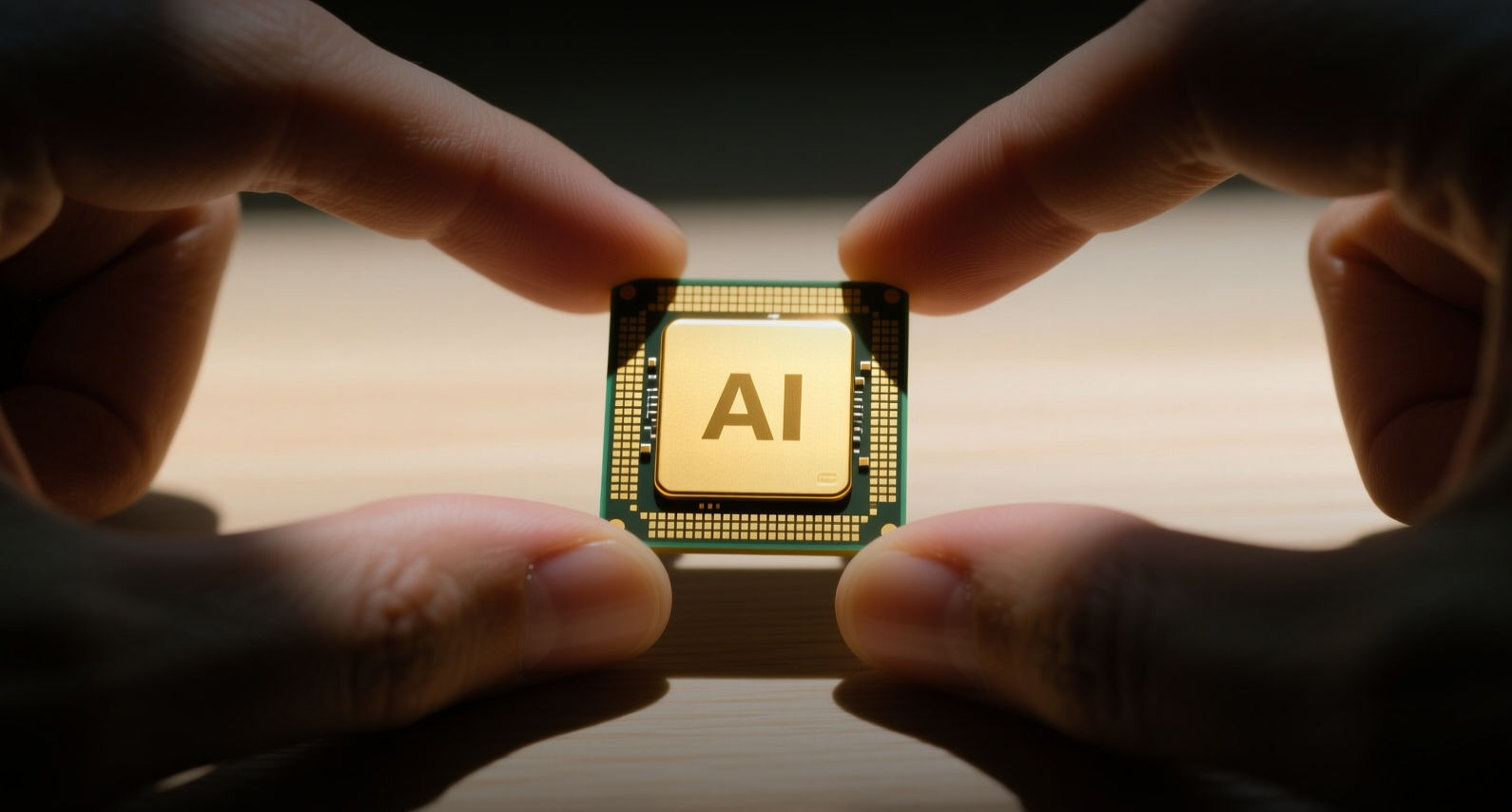
China's AI supply-chain companies offer investors overlooked exposure to the $1.25 trillion data center buildout expected next year, as the market shifts focus from US chip leaders to infrastructure enablers.
"Investors are not really thinking about China's role as the world's factory or its position in the AI supply chain," Brendan Ahern, chief investment officer at KraneShares, said.
Chinese semiconductor manufacturers, data center equipment suppliers and cooling-system producers stand to benefit as hyperscalers accelerate capital spending. The AI infrastructure investment cycle is projected to reach $1.25 trillion in 2027, according to industry estimates. Nvidia's talks to provide roughly $250 billion in financing guarantees for an OpenAI data center project in Ohio underscore the scale of the buildout, Bloomberg Intelligence analyst Anurag Rana said.
The shift challenges the prevailing US-centric AI investment narrative and could redirect capital toward Chinese tech stocks trading at a fraction of their US peers' valuations. The KraneShares CSI China Internet ETF offers one proxy for exposure, while individual names in semiconductor manufacturing, networking and thermal management present more targeted plays.
Three Segments Poised for Growth
Chinese companies supplying AI infrastructure fall into three categories. Semiconductor fabricators and memory makers serve as the foundation, with firms such as Semiconductor Manufacturing International Corp. producing chips for domestic AI workloads. Networking equipment providers supply the high-speed switches and optical interconnects that eliminate bandwidth bottlenecks in dense computing clusters. Cooling-system manufacturers address the thermal demands of next-generation data centers, where liquid cooling is becoming a standard requirement.
The opportunity mirrors the "picks and shovels" thesis that drove gains for US suppliers such as Amphenol and Broadcom, which controls about 70 percent of the market for application-specific integrated circuits. Chinese counterparts trade at lower valuations while serving a domestic AI market that is expanding rapidly, aided by government support for semiconductor self-sufficiency.
Capital Rotation Underway
Institutional investors are already rotating from high-momentum US chip stocks into infrastructure plays with more compelling risk-reward profiles, according to InvestingHaven research. Semiconductor equities experienced sharp sell-offs across Asian trading hubs in recent weeks, with Nvidia pulling back significantly as the broader AI supply chain came under pressure.
The rotation favors businesses with durable earnings and realistic valuations over high-momentum plays, a dynamic that benefits Chinese suppliers trading at lower multiples than US peers. Ahern's comments suggest the market is underestimating the revenue potential for Chinese companies embedded in the global AI supply chain.
For investors, the question is whether the China AI supply chain thesis can deliver returns comparable to the US infrastructure trade. Nvidia shares trade at about 35 times forward earnings, while Chinese semiconductor stocks command lower multiples, reflecting a geopolitical risk premium. If the AI infrastructure buildout reaches the projected $1.25 trillion, even a fraction of that spending flowing through Chinese suppliers would represent a material revenue opportunity. The KraneShares CSI China Internet ETF and individual positions in Chinese semiconductor and infrastructure names offer two paths to play the theme.
This article is for informational purposes only and does not constitute investment advice.
