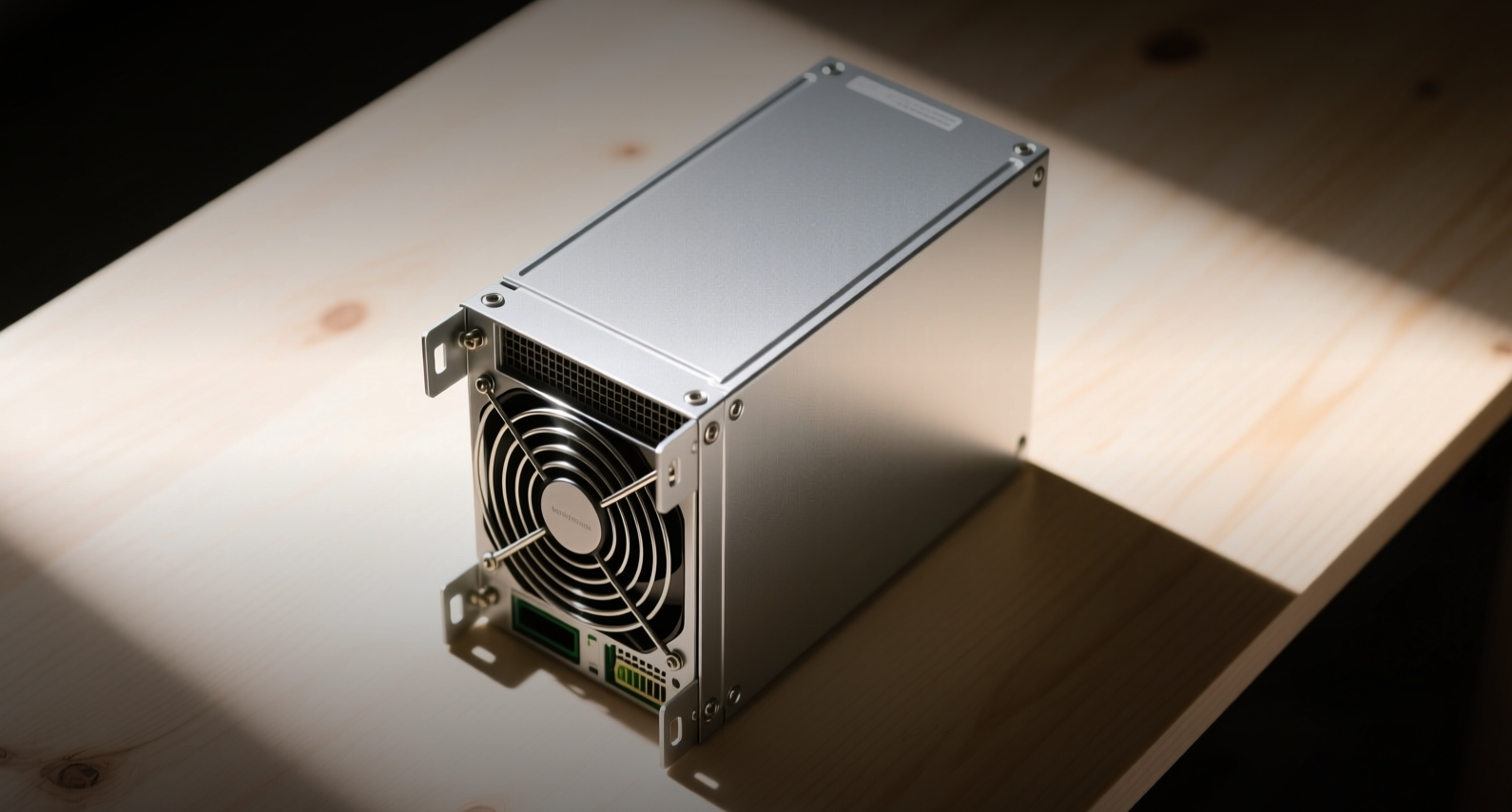
Nvidia Confronts AI's Growing Power Crisis
## Executive Summary
**Nvidia** is convening a closed-door summit with energy and engineering executives to address a critical bottleneck threatening the artificial intelligence sector: a looming power shortage. As AI workloads become more computationally intensive, their energy consumption is creating an infrastructure challenge that could hinder future growth. The International Energy Agency (IEA) projects that energy demand from data centers will grow at a 15% compound annual growth rate (CAGR) through 2030, highlighting the urgency of finding sustainable power solutions.
## The Event in Detail
The summit signals a proactive move by **Nvidia** to safeguard its growth trajectory by confronting the energy constraints head-on. By gathering startups and established firms in the power and electrical engineering sectors, some of which are already backed by **Nvidia**'s venture arm, the company is orchestrating a strategic response. The goal is to explore and accelerate the development of innovative solutions that can power the next generation of data centers, ensuring that the hardware revolution is not throttled by an outdated electrical grid.
## Deconstructing the Financial Mechanics
The AI power crisis is creating a new class of investment opportunities centered on energy infrastructure. A prime example is **IREN**, a publicly traded Bitcoin miner that has successfully pivoted to become an AI cloud infrastructure provider. The company's primary competitive advantage is its vertical integration, with full ownership of approximately 3 GW of secured, low-cost power capacity. This industrial asset has enabled **IREN** to secure a $9.7 billion, multi-year partnership with **Microsoft** to provide dedicated access to **Nvidia** GB300 GPUs.
To fund this expansion, **IREN** recently completed a $2.3 billion convertible note and equity offering. This strategy is mirrored by hyperscalers like **Amazon** and **Microsoft**, which are aggressively signing Power Purchase Agreements (PPAs) for renewable energy and investing in nuclear power. **Microsoft**, for instance, is funding the restart of the Three Mile Island nuclear plant, while **Amazon** is investing in small modular reactors (SMRs).
## Broader Market Implications
The race for AI dominance is now inextricably linked to a race for electrons. According to internal forecasts from **Schneider Electric**, the U.S. alone could face a 175 GW power capacity shortfall by 2033, an amount equivalent to the power used by 130 million homes. This structural deficit is fueling a sub-sector dedicated to powering AI. Companies that can provide "speed to power" are becoming critical partners for big tech.
This trend benefits not only companies with secured power assets like **IREN** but also those focused on modernizing the grid. **Palantir** recently launched its "Chain Reaction" operating system with founding partners **Nvidia** and **CenterPoint Energy** to manage and accelerate the buildout of AI-ready energy infrastructure. The initiative aims to transform aging power generation and stabilize the grid to meet surging demand.
## Expert Commentary and Analysis
Industry leaders are framing the power issue as the central challenge for the AI era. Jeannie Salo, Chief Public Policy Officer at **Schneider Electric**, stated that the U.S. needs a "grid built for speed" and called for urgent reforms to utility incentives and federal permitting to close the supply-demand gap. This sentiment is echoed by the **Palantir** initiative, which **Nvidia**'s Vice President of AI Infrastructure, Vladimir Troy, described as essential for building the "extraordinarily complex supply chain of AI infrastructure."
Meanwhile, a recent analysis from the Thomson Reuters Foundation reveals a significant governance gap, with 97% of companies failing to measure the environmental impact of their AI systems. This underscores the need for greater transparency and data-driven management of AI's energy footprint.
## The Dual Role of AI
While AI is a primary driver of increased energy demand, it is also a critical tool for mitigating it. The technology's capacity for optimization is being deployed to enhance energy efficiency across various industries. For example, **Johnson Controls** utilizes its AI-powered OpenBlue platform to deliver an estimated 30% reduction in energy spending for smart buildings. Similarly, **Schneider Electric** has used its own AI and IoT capabilities to achieve a 59% reduction in electricity consumption at its Hyderabad, India site.
The IEA estimates that rapid AI adoption could achieve energy savings of 8% in light industry and up to 20% in electric vehicles by 2035. This dual function—as both a significant consumer and a powerful optimizer—positions AI at the center of the future energy equation, capable of offsetting its own consumption if deployed strategically.