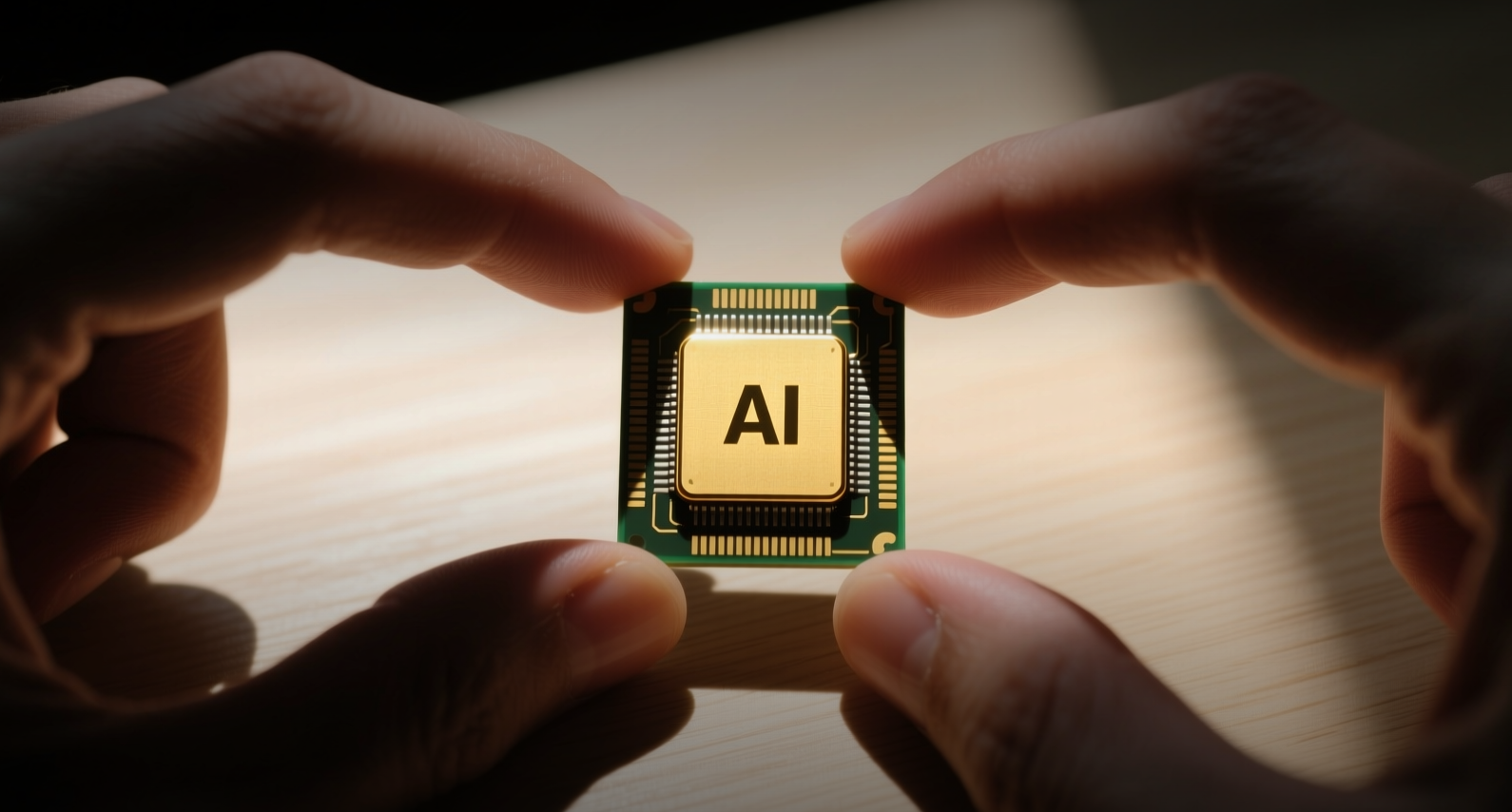
Besi's quarterly orders more than doubled as AI demand for advanced chip-packaging technology accelerates across the semiconductor supply chain.
BE Semiconductor Industries posted a 128.8% surge in second-quarter orders to 292.9 million euros, driven by demand for AI, hybrid bonding and data centre applications that shows no sign of slowing.
"We see order momentum continuing in the third quarter due to ongoing demand strength for current and future AI applications as well as improvement in Besi's traditional mainstream end-user markets," Chief Executive Richard W. Blickman said in a statement.
Orders jumped from 128 million euros a year earlier. Besi expects third-quarter revenue to increase 10% to 15% from the 249.9 million euros reported in the April-to-June period, signaling sustained demand for its hybrid bonding solutions — a chip-packaging technology that directly bonds two chips together, enabling faster data transfer and better power efficiency than traditional methods.
The results add to mounting evidence that AI infrastructure spending is accelerating across the semiconductor equipment chain. ASML Holding raised its full-year sales outlook after reporting $10.8 billion in quarterly revenue, up 25% from a year earlier, while Taiwan Semiconductor Manufacturing Co. boosted its 2026 revenue growth forecast to roughly 40% and raised its capital expenditure budget to as much as $64 billion.
Besi's first-mover advantage in hybrid bonding positions it to capture a growing share of the advanced packaging market as chipmakers shift toward heterogeneous architectures. Gate-all-around transistor designs require roughly 30% more process steps than previous generations, driving demand for the precision assembly tools where Besi competes. The company's technology is used to stack high-bandwidth memory directly onto logic chips — a critical requirement for AI accelerators from Nvidia and Advanced Micro Devices.
The Dutch company operates at the intersection of two powerful trends: the shift from monolithic chip designs to chiplets, and the rising complexity of AI workloads that demand more memory bandwidth per processor. Ichor Holdings, a supplier of fluid delivery subsystems to equipment makers including Lam Research and Applied Materials, has also flagged improving demand as wafer fabrication equipment spending picks up. Besi's hybrid bonding tools are manufactured at its facilities in the Netherlands and Malaysia, with assembly and test operations distributed across Asia.
AI Demand Reshapes the Packaging Landscape
The semiconductor packaging market is projected to grow faster than the broader chip industry as advanced techniques like hybrid bonding become standard for AI processors. Besi's order book, which more than doubled year over year, suggests the company is capturing disproportionate share of this expansion. At current exchange rates, the 292.9 million euros in quarterly orders translates to roughly $334.8 million, giving Besi a revenue run rate that could approach $1.4 billion annually if order momentum persists. The company's gross margins benefit from increasing proprietary content in the systems it builds — a strategy that mirrors Ichor's push to raise its branded component share to 35% by the end of 2026 from 15% in 2024.
Besi's results reinforce the thesis that AI infrastructure spending is broadening beyond GPU procurement into the equipment and materials needed to manufacture and package advanced chips. ASML trades at roughly 35 times forward earnings, reflecting the market's willingness to pay a premium for semiconductor equipment companies with AI exposure. Besi, with its dominant position in a niche but fast-growing segment of the packaging market, offers a more targeted bet on the same trend — provided it can scale production to meet the demand its order book now signals.
This article is for informational purposes only and does not constitute investment advice.