Apple's in-house M2 Ultra server chip cannot run Google's Gemini model, forcing the company to rely on Nvidia hardware and sparking a hunt for chip startup acquisitions.
Apple's push into AI is hitting a hardware wall. The company's M2 Ultra server chip cannot run Google's Gemini model, forcing it to rent Nvidia GPUs on Google Cloud for the revamped Siri.
"These chips simply cannot handle models of this scale," a person familiar with Apple's internal testing told The Information, describing the company's failed attempt to deploy Gemini on its own infrastructure.
Apple's chip team, long focused on mobile power efficiency, faces a fundamentally different set of demands in AI servers — high power consumption, high concurrency, and large memory bandwidth. The company had hoped its next-generation server chip, code-named Baltra, would close the gap, but the project has been delayed, according to people familiar with the matter.
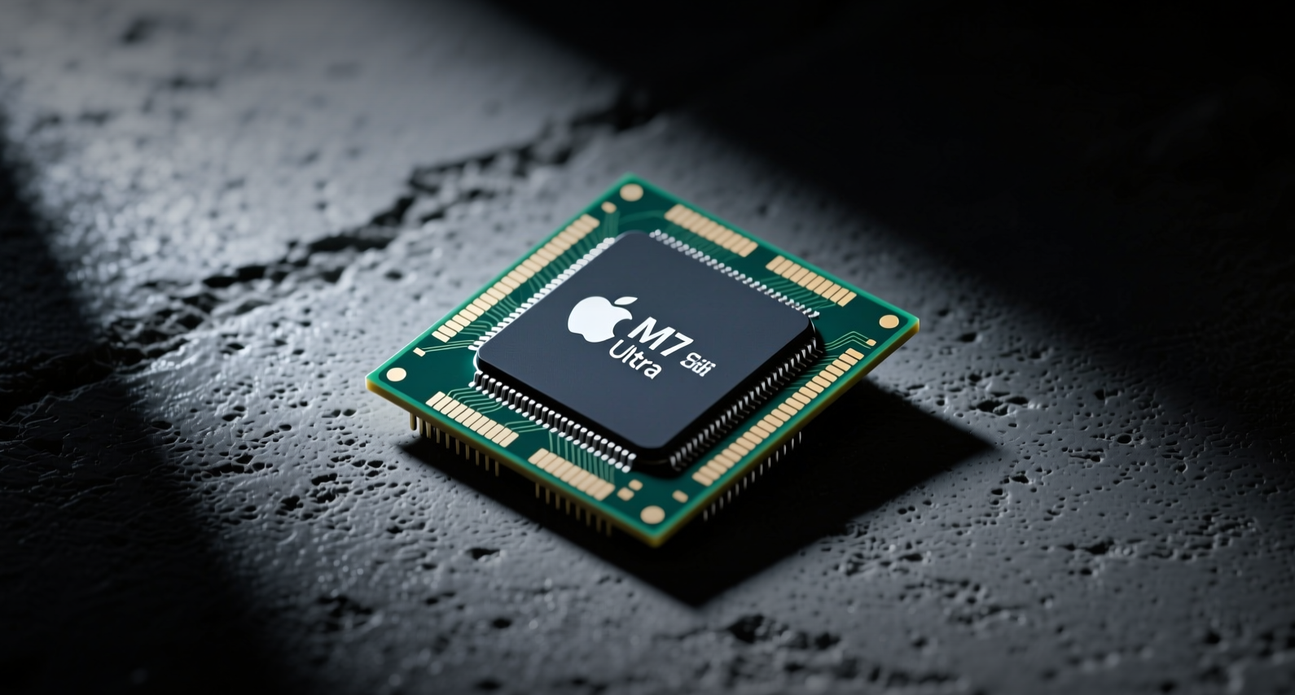
The gap leaves Apple dependent on Nvidia, a company some Apple executives have described as "difficult to work with," for at least three more years. Its M7 Ultra server chip — with up to 1.5TB of memory, roughly double the M5 Ultra — is not expected until 2029, leaving a multiyear window in which rivals could widen their lead.
Acquisition Strategy Takes Shape
Apple has held discussions with bankers about potential chip acquisitions in recent months and has approached semiconductor startups to gauge their interest in a sale, according to The Information. The move marks a shift for a company that has historically favored small, bolt-on deals over large transactions.
Apple's largest acquisition remains the $3 billion purchase of Beats Electronics in 2014. But the company signaled a bigger appetite for deals this year, agreeing to acquire Israeli startup Q.ai for about $2 billion — its second-largest acquisition ever. Q.ai's technology interprets speech content through facial micro-expressions.
Financial policy changes also point to a more aggressive posture. Chief Financial Officer Kevan Parekh told investors on the second-quarter earnings call that Apple would abandon its long-standing "net cash neutral" policy, which had kept cash reserves balanced against total debt. The Information noted the change could free up cash for larger acquisitions.
Apple's in-house chip effort itself began with an acquisition: the $278 million purchase of PA Semi in 2008, which laid the foundation for more than a decade of custom silicon development.
Broadcom Partnership and the Road to 2029
Apple is pursuing multiple paths to bridge the gap. The company has been working with Broadcom on AI server chip development since 2024, and Broadcom disclosed in a securities filing last week that the two companies have extended their long-term technology partnership through 2031, though it did not specify the scope of the collaboration.
In the near term, Apple is planning a server upgrade based on the M5 Ultra as an interim solution. The more ambitious M7 Ultra, which could rival Nvidia's Blackwell architecture in performance, is not expected to reach servers until 2029, according to Bloomberg.
The timeline means Apple faces at least three years of relying on external partners for the most demanding AI workloads — a strategic setback for a company built on vertical integration. Nvidia shares have gained more than 4% in Wednesday trading as the market digests the implications of Apple's dependency.
Leadership Transition Adds Uncertainty
Apple is approaching a CEO transition, with hardware chief John Ternus set to replace Tim Cook in September 2026. Chip head Johny Srouji will be promoted to oversee all hardware engineering while retaining responsibility for semiconductor development. The new leadership team may bring a more aggressive acquisition approach, according to people familiar with Apple's internal dynamics.
For investors, the key question is whether Apple can close its AI infrastructure gap before competitors widen their advantage. Nvidia, which trades at about 35 times forward earnings, continues to dominate the AI chip market, while Google's custom TPU and Microsoft's partnership with OpenAI keep both companies ahead in AI deployment. Apple's M7 Ultra, if it delivers on its promised performance, could shift the balance — but not for three years.
This article is for informational purposes only and does not constitute investment advice.