
Former Treasury Secretary Janet Yellen sharply rebukes Donald Trump’s pressure on the Federal Reserve, warning of risks to the central bank's independence.
Former Treasury Secretary Janet Yellen sharply rebukes Donald Trump’s pressure on the Federal Reserve, warning of risks to the central bank's independence.
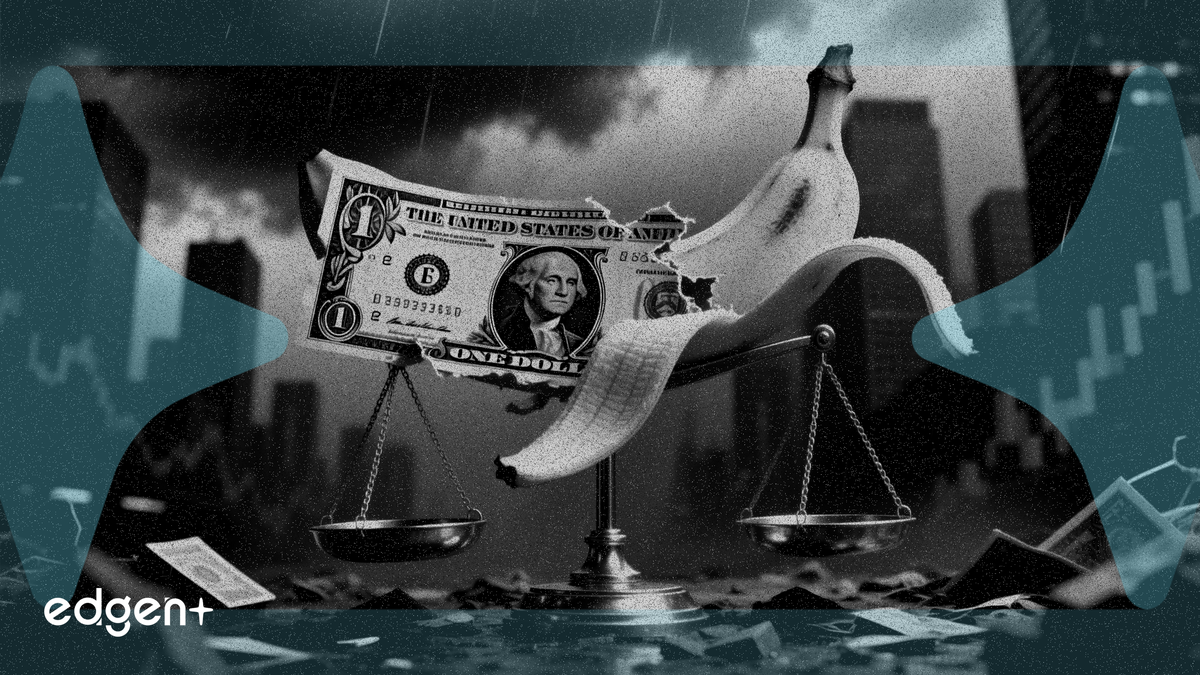
(P1) Former Federal Reserve Chair Janet Yellen issued a stark warning against political pressure on U.S. monetary policy, characterizing President Trump’s demand for interest rate cuts to lower government borrowing costs as logic suited for a "banana republic." The comments, made at the HSBC Global Investment Summit, directly challenge the former president's campaign to influence the central bank, where the federal funds rate is currently 3.5% to 3.75%.
(P2) "How often does a president of a developed country come out and say the interest rate should be at a level that will produce a lower cost of interest on the debt?" Yellen said. "You hear that kind of talk in banana republics."
(P3) The dispute centers on the wide gap between the Fed's current policy stance and Trump's desired 1% target. The former president has publicly criticized the central bank's refusal to cut rates more aggressively, claiming the current level imposes an extra $360 billion in annual refinancing costs on the U.S. government.
(P4) Yellen’s remarks highlight rising concern over the erosion of Federal Reserve independence, a cornerstone of U.S. economic stability. She warned that countries that historically managed interest rates to serve government budgets ultimately suffered from "malignant inflation." The criticism extends to personnel, with Yellen questioning the credibility of Kevin Warsh, Trump's potential nominee for Fed Chair.
Yellen cast doubt on the ability of Kevin Warsh to command the respect necessary to lead the Federal Reserve, drawing a sharp contrast with former chair Alan Greenspan. Warsh and other Trump allies have argued that, similar to the 1990s tech boom, productivity gains from artificial intelligence could justify holding rates low without stoking inflation.
Yellen, who served as a Fed governor from 1994 to 1997, dismissed the analogy. "Greenspan had enormous intellectual authority in the FOMC, and the committee listened to him with enormous respect and took him very seriously," she said. "I don't think Warsh comes in with that kind of credibility."
While critical of Trump's demands, Yellen also expressed a cautious view on the immediate path for monetary policy, citing persistent inflation pressures. She argued that the productivity benefits of AI are unlikely to provide a significant disinflationary impulse in the short term, while a surge in investment and consumption is already visible.
"We're seeing a lot of investment spending and consumption spending, and rising stock prices are boosting portfolio values, and we're not really seeing much of a disinflationary effect," Yellen stated, noting that inflation has already moved higher due to rising energy prices.
Given this backdrop, Yellen projects the Federal Reserve will likely only deliver a single interest rate cut this year. "My own guess is that maybe there's one rate cut, that's entirely possible, and maybe that's the base case," she concluded.
This article is for informational purposes only and does not constitute investment advice.