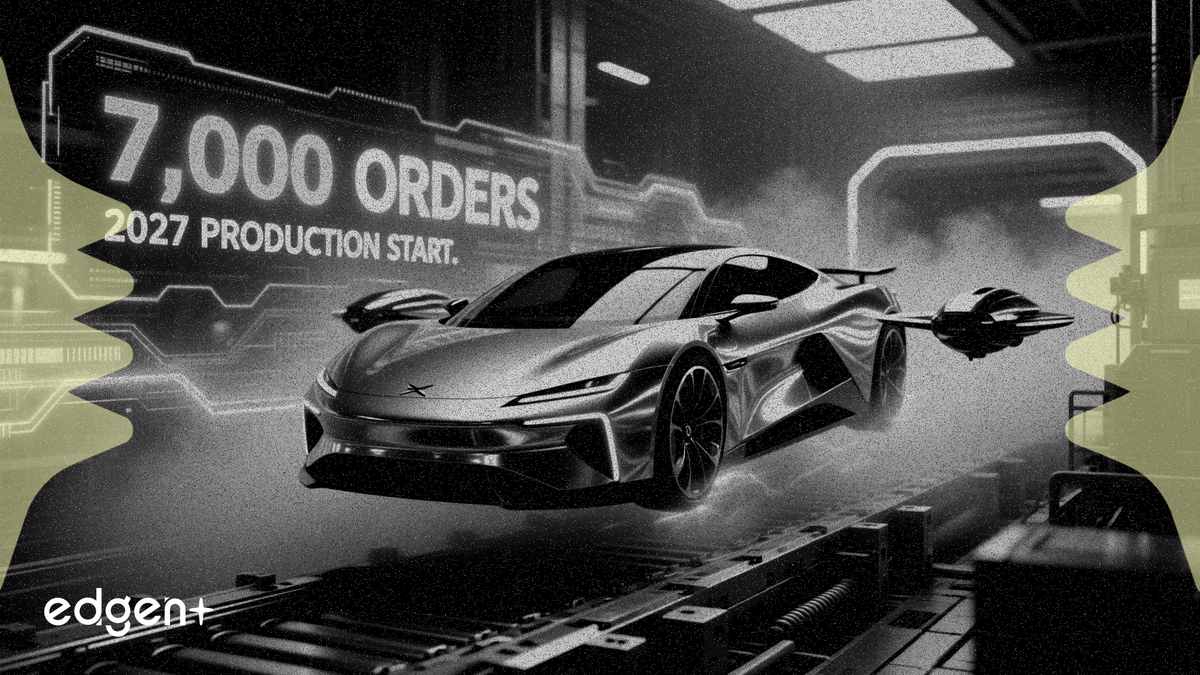
Chinese electric vehicle maker Xpeng is expanding aggressively beyond cars into flying vehicles and robotics, aiming to start mass production of its "flying car" in 2027 as it pushes to lead in future mobility.
"There are a lot of areas that we can partner and really provide value to each other," Xpeng President Brian Gu told Reuters, also highlighting the company's openness to partnerships beyond its current collaboration with Volkswagen.
The company has received more than 7,000 orders for its "Land Aircraft Carrier" flying car, a six-wheel van that carries a detachable two-seat electric aircraft. Separately, Xpeng plans to begin mass production of its humanoid robots in the fourth quarter of 2026.
The move is part of a broader strategy to generate more than 50 percent of its revenue from overseas markets within the next 10 years, diversifying its income streams as China's domestic EV market faces intense price competition.
The flying vehicle, officially the Xpeng AeroHT, is awaiting certification from China's aviation authorities, a critical step before deliveries can begin. While Gu expressed hope for deliveries to start next year, 2027 is the target for large-scale production. The majority of the 7,000 pre-orders are from within China.
Robotics and Autonomous Driving
Beyond personal aerial vehicles, Xpeng is making a significant push into robotics and autonomous driving. The company's humanoid robots will initially be deployed in customer-facing roles like receptionists. Gu stated that he expects the robot business to become larger than the automotive division within 10 to 20 years due to the vast potential use cases.
On the autonomous front, Xpeng will start robotaxi tests in Guangzhou this year, with plans to produce hundreds or even thousands of robotaxis over the next 12 to 18 months. The company is planning for "tests around the world with partners" in 2027, signaling a global ambition for its self-driving technology and competing with players like Waymo and Cruise.
This diversification strategy comes as Chinese automakers look to export their technology to achieve higher margins and growth. Despite facing tariffs in some regions like Europe, Chinese EVs remain price-competitive. Xpeng's partnership with German automaker Volkswagen, which recently started mass production of a jointly developed EV, serves as a key pillar of its international strategy.
This article is for informational purposes only and does not constitute investment advice.