


Storage stocks are leading a tech rebound as Western Digital and Seagate surge on renewed AI demand optimism.
Storage stocks are leading a tech rebound as Western Digital and Seagate surge on renewed AI demand optimism.
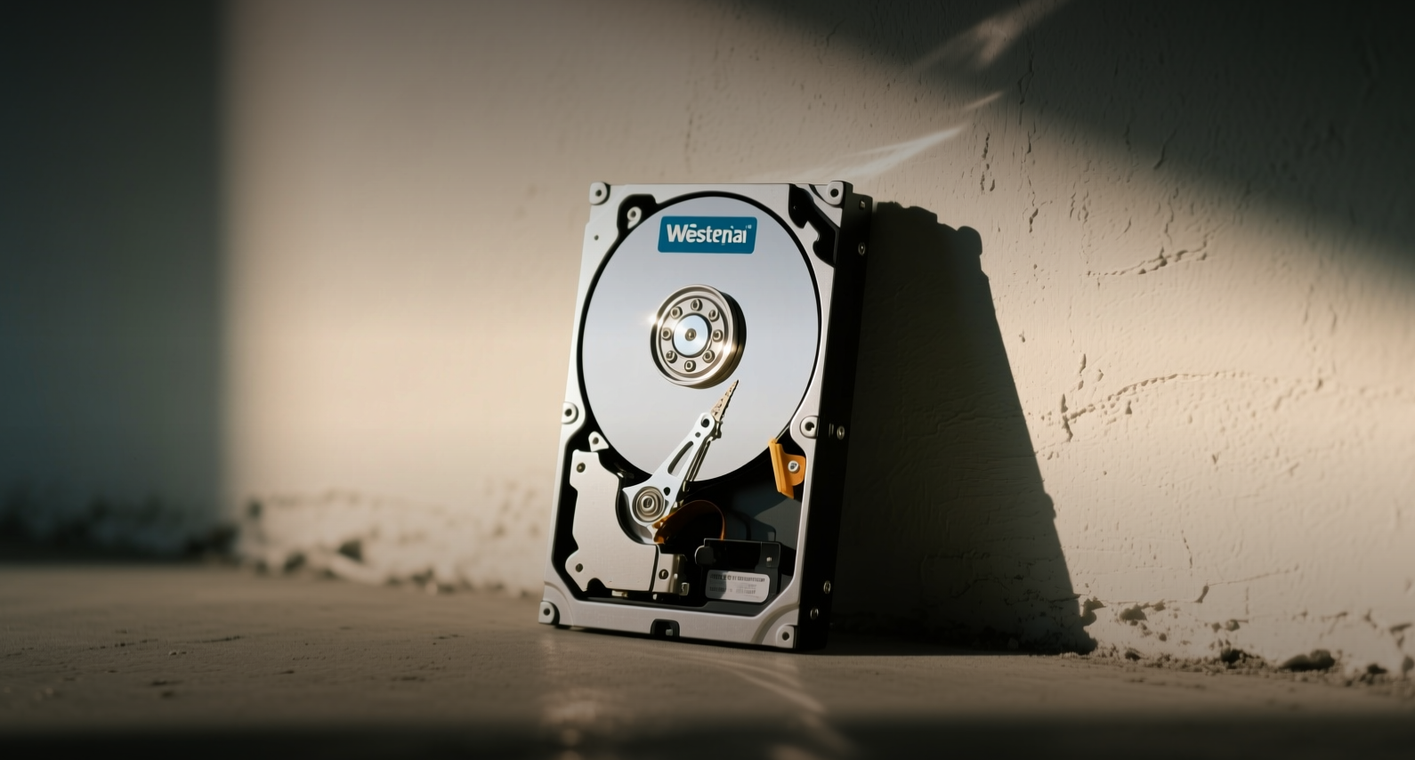
Storage stocks are leading a tech rebound as Western Digital and Seagate surge on renewed AI demand optimism.
Western Digital Corp. and Seagate Technology Holdings Plc jumped 8.3% and 6.4% respectively Monday, leading a broad storage-sector rally as investors rotated back into hardware stocks before earnings season.
"Annual AI infrastructure spending from Western hyperscalers could exceed $1 trillion before peaking in 2028," Barclays Plc analysts wrote in a research note, citing the scale of data center buildout required to support AI workloads.
The rally extended across the storage and semiconductor ecosystem. Micron Technology Inc. gained 2.7%, Sandisk Corp. rose 2.9%, and the Roundhill Memory ETF jumped 8% in premarket trading. The iShares Semiconductor ETF added 4%, recovering from last week's selloff that saw the Nasdaq tumble while the Dow Jones Industrial Average hit a record close. Chipmakers Intel Corp., Broadcom Inc., and Advanced Micro Devices Inc. also rose in premarket trading.
The move comes as investors position for second-quarter earnings season, with Delta Air Lines Inc. and PepsiCo Inc. reporting this week. For storage makers, the key question is whether AI-driven data center demand can sustain the elevated shipment volumes that have driven revenue growth over the past four quarters. Western Digital and Seagate have both benefited from rising demand for high-capacity hard disk drives used in cloud data centers, where the total cost of ownership favors HDDs over solid-state drives for cold storage of AI training datasets.
Nvidia Corp.'s dominance in AI chips has drawn most of the investor attention this year, but the infrastructure buildout requires massive storage capacity. Each AI training cluster generates petabytes of data that must be stored cost-effectively, creating a tailwind for HDD manufacturers. Barclays' projection that AI infrastructure spending could top $1 trillion annually by 2028 highlights the scale of the storage opportunity.
Sandisk's earnings estimates have soared during the second quarter, Barron's reported, as analysts raised forecasts on expectations of sustained data center demand. The trend mirrors broader optimism in the memory and storage space, where AI workloads are driving demand for both high-bandwidth memory and high-capacity storage.
The storage rally also reflects a broader reassessment of the AI trade after last week's volatility. The tech-heavy Nasdaq fell sharply on Thursday and Friday as investors rotated out of high-flying AI names, while the Dow hit a record close — a rotation pattern that some market participants viewed as healthy consolidation rather than a structural shift.
For Western Digital and Seagate, the AI opportunity is specific: large language model training requires storing massive volumes of checkpoint data, training datasets, and inference logs. Unlike the high-speed memory needed for GPU compute, this data is predominantly cold storage — accessed infrequently but requiring high capacity at low cost. Hard disk drives remain the most cost-effective solution for this use case, with a total cost of ownership roughly one-fifth that of solid-state drives at scale.
Western Digital shares, which have gained roughly 35% year to date, trade at about 12 times forward earnings. Seagate trades at approximately 14 times forward earnings. Both valuations sit below the broader semiconductor sector's average, reflecting the market's historical view of HDDs as a declining technology. The current rally suggests investors are reassessing that thesis as AI data center demand extends the lifecycle of traditional storage.
This article is for informational purposes only and does not constitute investment advice.
