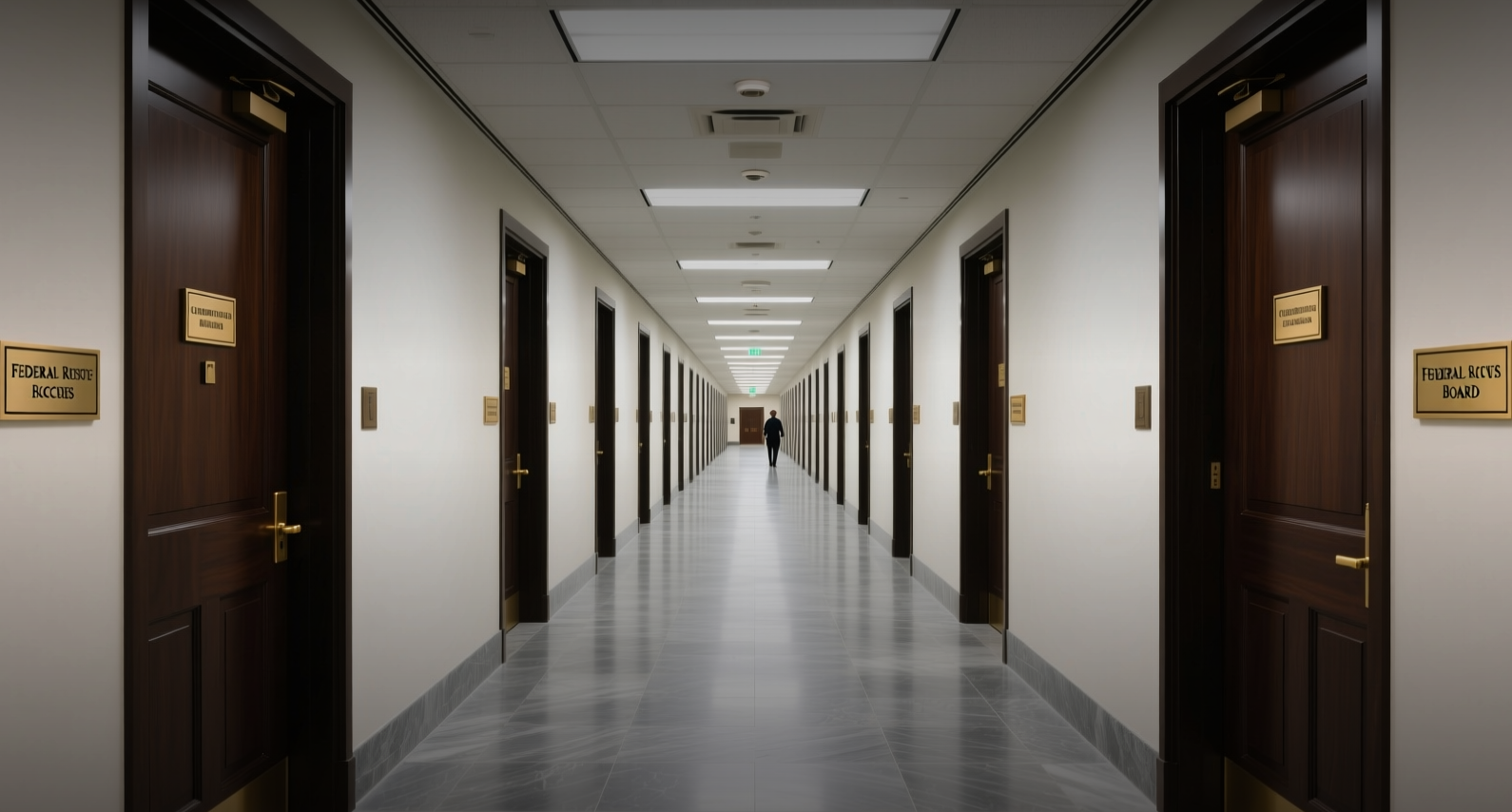
A proposal to trim Federal Reserve policy meetings from eight to six a year has drawn opposition from seven Democratic senators who warn it would weaken the central bank's ability to respond to fast-moving economic conditions.
Fed Chair Kevin Warsh's proposal to cut the Federal Open Market Committee's annual meetings from eight to six has drawn a letter from seven Democratic senators demanding he justify a change they say would blunt the central bank's crisis response.
"We are concerned that reducing the number of meetings would weaken the committee's ability to respond to rapidly changing economic conditions and would unilaterally change the way the Fed communicates with markets and the American public," the senators wrote. The letter was signed by Elizabeth Warren, Ruben Gallego, Andy Kim, Chris Van Hollen, Angela Alsobrooks, Catherine Cortez Masto and Tina Smith.
The July meeting minutes show Warsh floated the idea of six scheduled meetings. The FOMC held the fed funds rate at 3.50%-3.75% in July, with three officials favoring a hike and some arguing further tightening may be needed if inflation stays above the 2 percent target. The proposal comes as markets price one or two more hikes over the remainder of 2026, even as recent data shows incrementally cooling inflation and a slightly softer jobs market.
A Leaner Calendar
Since 1981, the FOMC has held eight scheduled meetings a year, with uneven gaps between them. Moving to six would allow more economic data to accumulate between decisions and produce more consistent timing. It would also align with Warsh's broader push for the Fed to communicate less about future policy — fewer meetings could mean fewer press conferences, fewer economic projections and less forward guidance.
The FOMC can still adjust rates between scheduled meetings, as it did during the pandemic and the 2008 financial crisis. Unscheduled meetings are not uncommon: 30 of 184 FOMC meetings between 2000 and 2020 were unscheduled, according to analysis by the Federal Reserve Bank of St. Louis. Still, six meetings would sit at the low end of the Fed's historical cadence, which ran monthly or more often during earlier periods of economic stress.
Political Pressure Builds
The senators posed seven questions to Warsh and demanded a response by Sept. 2. They argued the Fed's mandate is to track the economy in real time, "not to pay less attention and hope for the best," and warned that continued movement toward less transparency would put the broader economy at risk.
Since being sworn in May 22, Warsh has formed task forces to evaluate policy changes, including modernizing the Fed's use of economic data and reviewing its range of metrics and policy tools. He has also floated eliminating or reducing post-meeting press conferences and scaling back forward-looking disclosures.
The last time the Fed's communication framework shifted this sharply was under Alan Greenspan, who ended the practice of announcing rate decisions in 1994 and later introduced the first post-meeting statements. Markets initially struggled to price the new regime, with the 10-year Treasury yield swinging more than 100 basis points in the months after the change.
For now, fixed-income futures show the chance of the FOMC holding rates steady has risen somewhat, though a hike remains the base case. The next scheduled FOMC meeting is Sept. 16, with the final decision of 2026 due Dec. 9.
This article is for informational purposes only and does not constitute investment advice.