
Kevin Warsh’s nomination to lead the Federal Reserve sets up a clash between political pressure for lower rates and a new inflation surge.
Kevin Warsh’s nomination to lead the Federal Reserve sets up a clash between political pressure for lower rates and a new inflation surge.
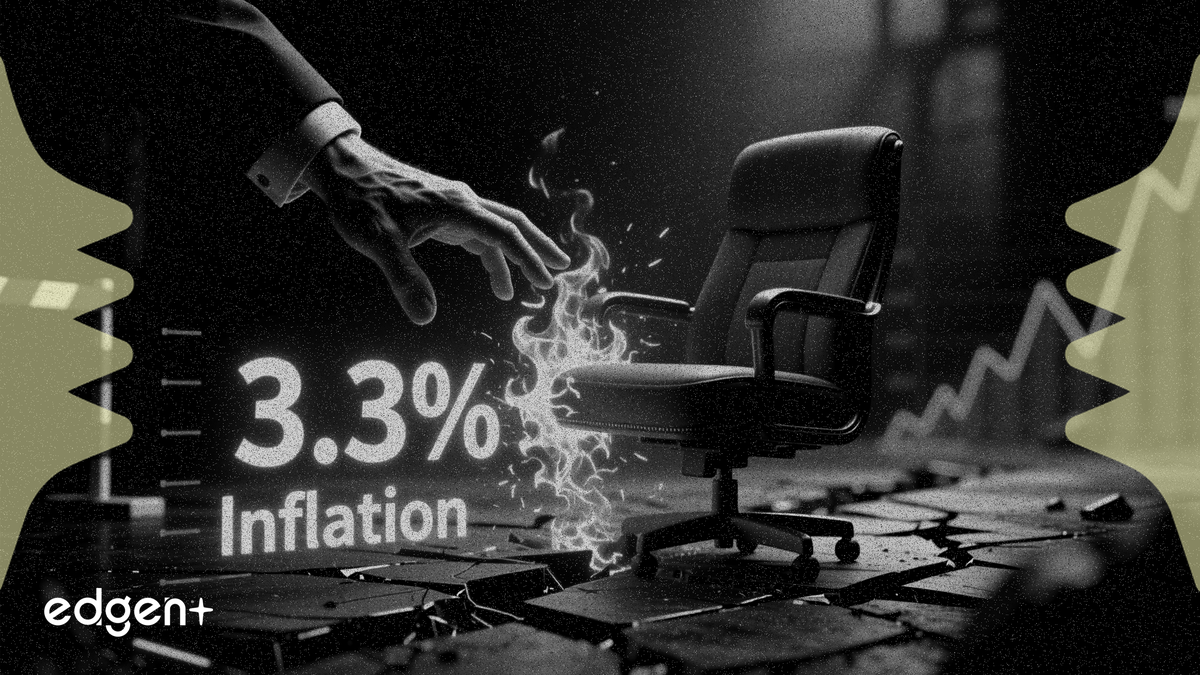
President Trump’s nominee for Federal Reserve chair, Kevin Warsh, is set to testify before the Senate Banking Committee in a hearing that will test his ability to navigate political pressure and concerns over rising inflation. The former Fed governor’s path to confirmation is complicated by an unusual political blockade from a key Republican senator and a recent inflation reading that hit a nearly two-year high of 3.3 percent.
"Fed independence is largely up to the Fed," Warsh wrote in his prepared opening statement, a carefully worded sentence aimed at assuring lawmakers he can withstand political influence from a president who has openly demanded lower interest rates.
Warsh’s confirmation, however, is not guaranteed. Senator Thom Tillis, a Republican on the banking committee, has pledged to block any Fed nominee until the Department of Justice drops its investigation into current Chair Jerome Powell. With a narrow Republican majority, Tillis’s opposition could create a deadlock, preventing the nomination from reaching the Senate floor.
The standoff creates significant uncertainty for the central bank as Powell’s term expires on May 15. The political battle, coupled with rising price pressures, leaves the future of U.S. monetary policy and the Fed's leadership in a precarious position just weeks before the next key policy meeting on June 16-17.
During his tenure as a Fed governor from 2006 to 2011, Warsh was known for his hawkish stance, prioritizing inflation control through tighter monetary policy. More recently, however, he has argued for lower rates, suggesting that productivity gains from artificial intelligence could act as a "significant disinflationary force." This view aligns with President Trump's repeated calls for rate cuts.
That position is now complicated by a jump in the annual inflation rate to 3.3 percent, the highest in nearly two years, largely driven by rising energy costs from the war in Iran. Lawmakers are expected to press Warsh on whether he would still advocate for easing borrowing costs in the current inflationary environment. In his prepared remarks, Warsh stated that "price stability" is the Fed's mission, "without excuse or equivocation," but he has previously expressed skepticism about the precision of the Fed's 2 percent target, suggesting a range might be more appropriate.
Another key area of focus will be Warsh's long-standing call to shrink the Federal Reserve's balance sheet, which currently stands at $6.71 trillion. He has argued that reducing the Fed's holdings of government bonds and mortgage-backed securities could help control inflation and create a better lending environment, potentially opening the door for future rate cuts.
This view contrasts with a growing consensus among Fed officials for a more gradual approach to balance-sheet reduction. Analysts will be watching to see if Warsh signals a willingness to conform to this more cautious path. His history as a key adviser to then-Chair Ben Bernanke during the 2008 financial crisis, where he helped manage the emergency response that led to the balance sheet's initial expansion, will also be under scrutiny. Democrats like Senator Elizabeth Warren have already questioned his role during that period, suggesting he failed to recognize the risks in the subprime mortgage market.
The confirmation hearing places the 56-year-old nominee at the center of a complex web of political intrigue and economic challenges. Warsh must convince senators he is the right person to ensure the Fed’s independence and manage inflation, even as his nomination is championed by a president who seeks to influence its decisions and blocked by a senator from the president's own party.
This article is for informational purposes only and does not constitute investment advice.